Showing posts with label ferruginous duck. Show all posts

Sunday, 27 December 2015

Recent highlights in the city

This blog is a round robin of some birding I carried out just before Christmas around the city. 

On Tuesday at Sawnaut farm, eleven cream-coloured courser were present on a newly ploughed field.

cream-coloured courser

It's not often you see them in the city but Sawnaut is certainly a city farm.

A booted eagle was another highlight but an obvious feature as is often the case was the sheer number of doves.  For once I looked at the laughing dove quite closely.

two sub-species of laughing dove

In the north of Oman, the sub species is cambayensis which is the same as in India. It is plainer and daintier than the nominate sub species.

The birdlife international monograph on the species say the nominate reaches Mukhalla in Yemen from Africa. However there is no doubt it goes further west as nominate is more common than cambayensis in Salalah. Both are shown in a picture from Sawnaut farm (see above).

After visiting Sawnaut farm, Dahariz park (also called East Khawr park) was next. 
forest wagtail

This time I easily relocated the vagrant forest wagtail which has been present for well over a month now.

citrine wagtail

A citrine wagtail has been there even longer. It is unusual to see them in parks.

Bruce's green pigeon

Like cream-coloured courser, Bruce's green pigeon can be seen in the city though it can be seen more frequently. The best places are parks. However they often go overlooked in the canopy of larger trees.

two Bruce's green pigeon

After Dahariz park, I made a short call to the near-by Khawr Dahariz (East Khawr). I was not doing general birding, I was looking out for exceptional ducks. I couldn't help noticing the presence of two pheasant-tailed jacana though.

pheasant-tailed jacana

A large majority of wintering ducks here are either: garganey, pintail, shoveller or teal. Mallard, gadwell, ferruginous duck and tufted duck are less frequent and all other ducks less frequent still.

ferruginous duck (left)

The diving ducks appear later than the dabbling ducks. A female ferruginous duck was the only one out of the ordinary at East Khawr when I visited.

My remaining targets for Oman among the rarer ducks (but which are not vagrants) are common shelduck and red-crested pochard.

ferruginous duck

A visit to West Khawr was partly made for the same reason i.e looking for rarer ducks. It's relatively deep waters are often attracted to diving ducks. However on first pass, more than half of the ducks were shoveller and there were only two ferruginous duck representing all possible diving ducks.

male cotton teal

Observing a male cotton teal was good compensation. I can't remember seeing a male in Dhofar before. I can only remember seeing female-types.

cotton teal (left)

Also at West Khawr was a wintering purple heron which is not so common.

purple heron

Continuing with the less ordinary sightings was a close view of a broad-billed sandpiper.

broad-billed sandpiper

It was much more confiding than the common redshank and little ringed plover near-by.

broad-billed sandpiper 2

In the fresh water sites in the city, Indian pond heron is at the moment almost as common as squacco heron so it hardly rates a mention among the highlights. The highlight here is not so much the sighting of one but instead how many there are here in mid-winter.

Indian pond heron at West Khawr

Just before I left West Khawr I noticed I almost missed a wigeon. Not many come down here.

wigeon

I will continue looking for rare ducks in January. The wintering species are mostly settled now unless there is a major cold snap up north. Late ducks are one of the few predictable changes without it.

Wednesday, 19 November 2014

Juvenile yellow bittern at Mughsail

My last call on Friday was Khawr Mughsail. A quick inspection of the beach section showed nothing surprising so I headed inland to the two pools there. It was the smaller one and the one most inland that held most of the best birds.

Instead of staying in the car facing into the sun as last time, this time I got out on foot. I sat very still with the cliffs behind me overlooking the pool. This meant the sun was behind me too. 

I was very patient. After about thirty minutes a juvenile yellow bittern appeared at the far west end.

first sighting of the yellow bittern

It never left the cover of reeds walking stealthily all the time.

juvenile yellow bittern

It has a longer bill than a little bittern and a juvenile yellow bittern has only rusty streaks on the corn rather than full black one. The overall colouring and patterning is more pastel too.

stealthy yellow bittern

Thanks are due to Bart the birder from Belgium who told me two weeks ago that he had seen yellow bittern there. On my last visit using the car as a hide I failed to see any. I also doubt I wouldn't have stayed so patient without knowing a reward was possible.

male ferruginous duck

The pool also yielded my first ferruginous duck in Oman.

bluethroat on the far bank

There was a bluethroat on the far bank too. This was yet another addition to my list making species 192.

rear view of a distant bluethroat

The pool wasn't finished with there. There was an intermediate egret in the shallow end.

intermediate egret

There were more "normal" birds there as well. Common moorhen were numerous but shy and a grey heron was there throughout.

grey heron

There is a purpose built hide at the larger pool which I use on every visit now. There were many more birds in the larger pool but not of the quality of the back one. Of course this could change on any particular day.

Tufted duck

Three tufted duck were seen near the common moorhen.

Eurasian coot

Eurasian coot numbers are building in Dhofar now. At this pool there were nearly as many coot as common moorhen.

Steppe or greater spotted eagle

Overhead I have seen visiting eagles every time I have been there. This time two eagles appeared together but one is proving difficult to identify but eastern Imperial eagle has been ruled out while the other is a near-adult greater spotted eagle.

greater spotted eagle

I counted four European roller among the land birds this time though the reeds and bushes near the larger lake were a disappointment this time.

European roller

Finally once again I saw Tristram's starling picking out bugs from the backs of camels. 

Tristram's starling on a camel

In the next blog, I will report on a long walk around the east Khawr area but not concentrating on the Khawr. I was pleased with what I saw.

Saturday, 14 September 2013

Kharj and the Kharj road

Lou Regenmorter and I ventured down to Kharj today. It's a farming district 70 kilometres south west of Riyadh. Indeed Kharj and near-by Dillam are the last green areas before the "empty quarter" of nearly pure desert to the south.

spur winged lapwing

We got very mixed results. We chose to start at the east end of wadi Thulaymah. This wadi houses Kharj's waste water river like a mini version of Wadi Hanifah and Al Hayer near Riyadh. It used to end in a small lake system which was good for birds. However we discovered this has been land filled since our last visit. 

spur winged lapwing in flight

Furthermore, when we found the end of the stream, although it looked really good for birds was a shooting alley for illegal hunters.

Despite this we found a decent sized flock of spur winged lapwing in the area and even better a large flock of chestnut bellied sandgrouse flew over. These birds used to drink regularly at roughly the same time most days at the lakes. It appears they still visit the area and have probably found a new drinking spot near-by. 

If you haven't seen chestnut bellied sandgrouse, this is probably the best reason to go to Kharj.

The stream at the east end of Wadi Thulaymah

In the stream were two very jumpy green sandpiper and a single Temminck's stint. Understandably, they didn't allow close contact but I got a few record shots of the stint (not shown).

Namaqua dove

Other birds in this area were a little bittern, two squacco heron, many house sparrow, a marsh harrier, black bush robin, laughing dove, feral pigeon, collared dove  and little green bee-eater.

Time is precious at this time of the year because it heats up rapidly. So we made the quick decision to rapidly tour further upstream and then to move back towards Riyadh down the Kharj road and try our luck at the lake near the cricket club.

On our way upstream we added black crowned night heron, Namaqua dove and Indian silverbill to our sightings. There were also some glimpses of some probable European reed warbler

The reeds are very thick along much of the "river" and that can be quite frustrating.

Lake near the cricket club

The one similarity we found at the cricket club lake with Kharj was the nervousness of the birds. Though that might in part be due to the lack of any real cover for the bird watcher. I had to photograph from great distances but Lou's spotting scope was invaluable. These things apart, the birding was extremely good.

two glossy ibis

Before the car had even parked up, Lou spotted two glossy ibis overhead.

It was immediately obvious the lake had many tens of coot, moorhen and little grebe as usual.

Locally resident pale crag martin and passage barn swallow were hawking for insects overhead.

We didn't know what waders to expect as they come in waves and many pass through quickly at this time of year.

Kentish plover, black winged stilt and common sandpiper

Ruff and black winged stilt were the most numerous with several tens around. The latter is probably a breeder here. Smaller but still significant numbers of both common sandpiper and green sandpiper were present.

The related trio of Kentish plover, little ringed plover and ringed plover were seen. Spur winged lapwing is almost always seen when we visit and was here again.

More, unexpectedly a single grey plover was observed. They are rarely seen this far inland.

two common snipe

Lou first saw it and two common snipe near a large flock of ruff. These were my first snipe since the spring.

Common ringed plover and common snipe

Mallard are known residents here but today I didn't see any. I suspect they hid deep. We have also seen Ferruginous duck here in all seasons but not every time. The good news is that this was seen today.  less commonly, five teal were also on the lake.

Ferruginous duck

I suspect the lake will be good for ducks this winter. 

To finish the picture and name all the observed birds,  graceful prinia and house sparrow were seen in and near the reeds. Little green bee-eater was common too.

The lake proved an excellent end to the morning after a slightly disappointing start.  

Monday, 28 November 2011

Flashback to summer - part 2

This is the second batch of pictures of birds provided by Abdullah Amrou from Al Hayer and taken in June and July this year. I am indebted to Abdullah for allowing me to show them.


As I have said before, I am particularly interested in where his records for these months add to the collective understanding of breeding birds in the area.


The best start is to look at Michael Jennings article in Sandgrouse magazine in 2004 called "The breeding birds of central Arabia 1978-2003".

ferruginous duck

The Sandgrouse article says two ducks breed near Al Hayer and these are same two - ferruginous duck and mallard duck that Abdullah snapped this summer. 

mallard duck

The other most obvious water bird in all seasons is moorhen. This is a common breeder in the area as acknowledged in several sources.

young moorhen

I personally saw black winged stilt at Al Hayer for the first time last Thursday. The Sandgrouse article says it is a local breeder and resident.  All the evidence supports this too.

black winged stilt

White throated kingfisher is a local breeder which another bird photographer, Ahmed, has filmed in its nest (a hole in a sandbank) with young. This was not known in 2004 in the Sandgrouse article but was a correct future prediction in it. 

white throated kingfisher

An unlikely breeder in the area is green sandpiper and it is unmentioned even as a possibility in the Sandgrouse article. Tom Tarrant's observations from the early 1990s state that that he saw green sandpiper in every month except July. The best assumption is that this bird is a non-breeder but it could easily have stayed all summer.

green sandpiper


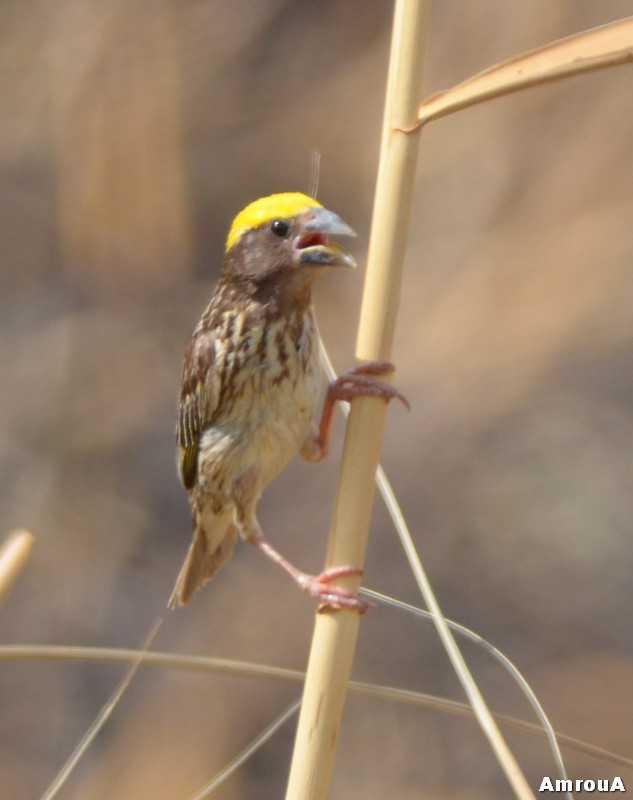
One bird which Michael Jennings was unduly pessimistic about as a local breeder is streaked weaver. He suggested it may have died out as breeder or at least gone into steep decline since the early 1990s. However I have seen many birds and tens of old nests. However the bird did have to survive a fire in one of its most densely populated areas at the end of this summer according to Abdullah. It is clearly still numerous though. 

male streaked weaver

graceful prinia

Another bird which has multiplied locally in recent years is graceful prinia. It is a recognised breeder from the late 1980s but is now very common. 

namaqua dove

Namaqua dove is also a recognised common local breeder.

barn swallow


One of the most interesting photographs for me is of a barn swallow. The Sandgrouse article doesn't look at the possibility of barn swallow breeding at Al Hayer though it acknowledges that a few red-rumped swallow do breed. I will probably have to wait until next summer to find out the truth.