Showing posts with label purple heron. Show all posts

Monday, 16 January 2012

Lagoons south of the pivot fields

In my search for new birding opportunities in the Riyadh area, I walked south of the pivot fields near Al Hayer on Friday.  The Riyadh river here is inaccessible by road and so has no picnickers to disturb the quiet. Though as will become apparent later in the blog something else did.


This is an area of lagoons and slow moving water. For the moment at least, it is my new favourite birding place in the Riyadh area.

male namaqua dove

There is a country lane for the first part of the walk south into the lagoons. The few trees sticking out of the reeds are worth watching for resting chiffchaff, graceful prinia, collared dove,  namaqua dove, laughing dove, little green bee-eater, white cheeked bulbulindian silverbill  and sometimes even streaked weaver (not seen on Friday but the start of the lane was visited before).


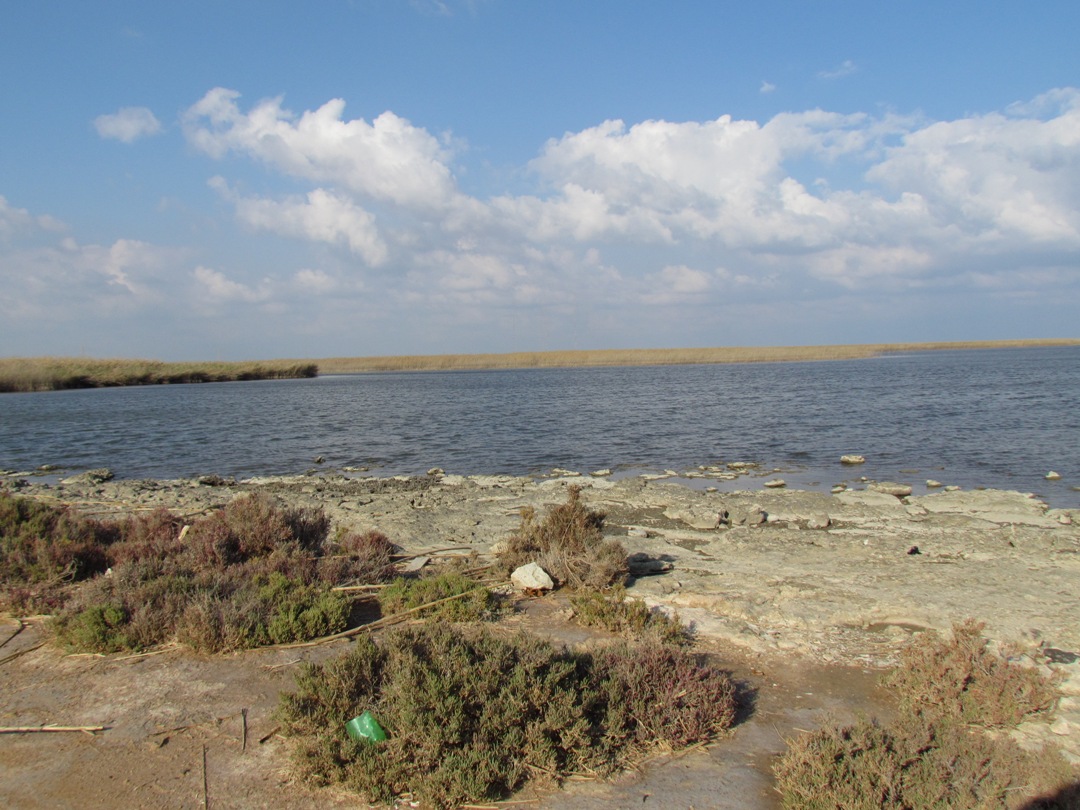
lagoon

The reeds house many of the same species (but not the doves or bee-eaters) and also bluethroat.

moorhen

As elsewhere on the Riyadh river, moorhen are plentiful.

white cheeked bulbul

There are two extremely large fields near-by which are private land. I didn't bird watch these but the odd white wagtail, which probably spend most of the day there, visit the river to drink. A prolonged wait at the waters edge would almost certainly yield other drinking field birds if you have the time and patience.

white wagtail

If you have even more time than this then this is a good place too to try to differentiate between African and Eurasian collared dove. The Riyadh area is one of the few places in the world where the ranges overlap. And this particular stretch of the Riyadh river is awash with collared dove.

collared dove

The exposed trees are a good place to photograph birds which spend a lot of time in the reeds. They are so much easier to see and focus on than in the reeds.

graceful prinia

Two incidents occurred while I was in the area which caused birds to scatter and to give me a temporary opportunity to see them in the open. One incident was natural, the second was not.

marsh harrier

In the first, a marsh harrier moved in close. Then tens of small birds panicked. Indian silverbill, spanish sparrow and graceful prinia scattered in all directions.

purple heron

The second incident was caused by a hunter's gun. This was the first time I had heard one so close since arriving in Saudi Arabia. My understanding is that it isn't legal nevertheless it happened.

This time it was the larger birds who panicked. Suddenly 5 purple heron, which I hadn't seen because they were hidden, were in the air. They flew in five separate directions. Lots of doves took to the air too.

common teal

It all happened so fast but I also counted one little egret, seven common teal and one black stork in the air at the same moment. There were more species I am sure but I couldn't look everywhere at once.

Clive, Abdullah and I had seen three black stork a little further south two weeks ago. This incident gave me a chance to see one of them again!

I really want to see them grazing. The two very large private fields probably offer a good chance. I wonder if I can get permission to visit them?


Sunday, 27 November 2011

Flashback to summer - the herons

A couple of days ago I asked Abdullah Amrou if he would send me some pictures of the birds of the Al Hayer area in June and July this year. I am very pleased to say that he obliged.


I was interested to see if he could shed any new light on breeding birds in the area. 


Tonight I want to share with you some of his pictures on the heron family. 

purple heron

Abdullah has pictures of purple heron, squacco heron and little bittern in breeding plumage.

squacco heron in breeding plumage

Squacco heron, black crowned night heron, and purple heron are reported in a Sandgrouse article by Michael Jennings in 2004 called "The breeding birds of Central Arabia 1978-2003" as sharing a breeding colony in the Al Hayer area.  Little bittern is also a known local breeder. The Helms guide "Birds of the Middle East" reports the same four heron family breeders in the area. 

Incidentally both sources have a question mark over whether cattle egret breed in the area.

little bittern

For me, the most intriguing set of pictures by Abdullah are of little egret at Al Hayer during these months. This is because neither the Helms guide or the Sandgrouse article suggests it breeds there.

little egret in summer at Al Hayer

Tom Tarrant made good records in the early 1990s.  He notes that little egret  are common throughout the year but he stopped short of claiming they breed there.  

Abdullah pictures of little egret at Al Hayer during the summer months add weight to Tom Tarrant's circumstantial evidence that it may breed there.

The numbers of cattle egret in the Al Hayer area have grown from small flocks in Tom's day to large ones today. Abdullah and I believe there may be up to 400 present at this moment in November.  There is still no concrete proof that they breed there. However, the reeds are so dense, wide and long that a cattle egret colony could easily go unnoticed.

Finally Abdullah Amrou hasn't sent me any pictures of grey heron in the summer months supporting the Helms guide and the Sandgrouse article's position on its non breeding status.

Tuesday, 15 February 2011

The surveys of Um Afain

Um Afain is a remote coastal wetland which had only been surveyed once before I went there last Friday. It is vast and because it is so far east its bird life has something in common with the Nile delta.


The previous survey was by the UN wetland winter counters in late January 2006. Remarkably they found pied kingfisher and little bittern. The latter has since been found at other wetlands in the Benghazi area and the former at Ain Al Ghezala which is a larger wetland a little further east of Um Afain (and closer to Tobruk).


I went in search of pied kingfisher!  I didn't find it but I did find a vast fresh wetland with huge reed beds as well as a big variety of habitats (and plenty of good birds). 

the main fresh water section of Um Afain

The reed beds offer protection from the elements and people. However I was still very surprised to see 3 wintering purple heron. This bird rarely winters north of the Sahara. Most of these can be found in the Nile delta.


purple heron at Um Afain photographed last Friday

Purple heron had not been seen in the previous survey. However given the large size of the wetland many species could be missed. I walked round it for five hours and still failed to visit more than half of the perimeter.

second view of purple heron at Um Afain


great egret in the middle of the complex

Another bird which I can add to the local species list is great egret. I saw six of them.

little egret at Um Hafain

I stayed until just before sunset and it looks like the herons and egrets are more in the open then. A hour before sunset a large flock of little egret appeared in the main lake.


grey heron at Um Hafain

Several grey heron were seen. It is the one heron/egret seen in the previous survey though they of course saw little bittern which eluded me. 

cormorant at Um Afain

There were also several cormorant around.

vast reed beds at Um Afain

Given the vast reed beds present it is not surprising we both saw reed warbler and I saw reed bunting too. This bird has very few records mostly near Benghazi. 
marsh harrier at Um Afain

Several marsh harrier were patrolling all day. This is ideal terrain for them. 

Darting over the reeds and tamerisk I saw many barn swallow, crag martin and three house martin. Crag martin is a known resident bird in this part of Libya. House martin was probably on passage. The barn swallow status is more questionable. It is resident in parts of north east Libya - notably around Benghazi but I have seen barn swallow in other places this week such as in-land meadows which are clearly on passage. My instinct is that some of the birds I saw were resident and some were on passage but I can't prove it.

water logged land - another of the habitats at Um Afain

The waterlogged land held some common snipe and green sandpiper.


I have put a list of the species found in the two surveys below. I am sure its still quite incomplete. I will certainly go back there to help fill it out.


Species seen at Um Afain
Late
Jan 2006
by UN
Early
Feb 2011
by
me
Great cormorant
x
x
Little bittern
x

Great egret

x
Little egret

x
Purple heron

x
Grey heron
x
x
Moorhen
x
x
Water rail
x

Dunlin
x

Snipe
x
x
Redshank
x
x
Green sandpiper

x
Pied kingfisher
x

Kingfisher
x
x
Marsh harrier
x
x
Meadow pipit
x
x
Barn swallow

x
House martin

x
Crag martin

x
White wagtail
x
x
Robin
x
x
Stonechat
x
x
Reed warbler
x
x
Chiffchaff
x
x
Starling
x
x
Reed bunting

x


Tuesday, 27 July 2010

They really shouldn't be here. Juliana wetlands

Black winged stilt - Juliana - July

Last Friday was my first proper visit to the Juliana wetlands. I had visited the south western edge in late May. I don't understand why I hadn't re-visited it earlier. My excuse is that the Jardinah farm (see blogs) has been equally enticing.

The Juliana wetlands are the largest fresh water (OK - semi saline) wetlands in Libya in the summer. They are known to house thousands of water birds in the winter. However they are little birded in the summer.

I found the wetlands to be very special as you will see.
Main Juliana lake - July

It was another hot day ameliorated by a sea breeze but still 31C. I took a taxi to Gar Younis tourist resort but unlike hundreds of others I didn't head for the beach. I headed up the coast and inland 200 metres. Here I found first the Gar Younis sebkhet (salt marsh) and then the much larger Juliana lake.

South west Juliana - sometimes called Sebkhet Gar Younis - July

At Gar Younis, I saw many barn swallow and a few pallid swift. But my attention was drawn to a little egret standing on a recently used nest. He flew off a short distance but never left my view. You have to remember that to the best of my knowledge that little egret are unrecorded in summer in Libya and certainly not known to breed.

recently used little egret nest - Sebkhet Gar Younis - July

He flew towards a small pack of dogs. Wild dogs seem to be my main companions throughout Libya at all the salpans which reatain water in summer.

Little egret - Sebkhet Gar Younis - July

This is the same sebkhet I saw a sedge warbler in late May. However this time I had other things on my mind I wanted to visit the main Juliana wetlands for the first time. I started walking the 300 metres between the two wetlands. I saw some surprises before I even got to the lake. First I saw a purple heron. I have a lousy photograph below which just looks "heron like" but it definitely was purple. I always seem to screw up the first time  I see an unexpected birds. Then I take a better and better photo on later contacts. I think it must be psychological. By the way, please remember, the first record of a summer grey heron was last week! (at Jardinah - see last week's blog).
Purple heron - Juliana - July


There were several cattle egret in the fields. I am now so used to seeing this bird even though its not on most distribution maps for Libya. Nevertheless they have been well documented by Gaskell in sandgrouse magazine.

Cattle egret on field near Juliana - July

To add to the entertainment there were also two pairs of stone curlew. This was my first definite sighting in Cyrenaica. A mobile very large flock of house sparrow also kept my attention. Hoopoe were also present. Laughing dove and pigeon made up the numbers
large flock of house sparrow - Juliana - July

But the second best sighting (after the heron) were two common redshank flying from Sebkhet Gar Younis to Juliana lake. Researchers have suggested they breed at Farwa next to the Tunisan border 1500 kilometres away. I suggest they breed here too.

common redshank - Juliana - July

The fun was only just beginning. I saw several recently used little egret nests and several little egret, tens of cattle egret, plenty of black winged stilt and a few kentish plover. The stilts were not afraid of me. If anything they were quite assertive to wards me as if defending the area. I dont usually get as good a photo as the top one of a black winged stilt unless the bird is co-operating!

mostly cattle egret next to Juliana lake - July

Many of the cattle egret were together in one set of reeds. A few little egret and a couple of squacco heron were with them. This was a great sight. I had seen a squacco heron at sebkhet Gar Younis in late May. I can now confirm they stay all summer at Juliana. Once again I believe this is a new record for Libya.

squacco heron - Juliana lake - July

Every week I have been observing new summer records (as I know them and certainly according to the distribution maps of the top two guides) . I was told Cyrenaica (north east Libya) was even more under-reported than Tripolitania (north west Libya) and this is proving to be the case. I suspect I may have exhausted the potential new summer water bird sightings although I have a couple of reservoirs up my sleeve.


more little egret - Juliana lake - July

I nearly forgot to add that there were plenty of little grebe in the water (known fact) and a small number of coot (unknown before).

coot - Juliana lake - July

I have been walking very carefully since the farmers at Jardinah farm told me they have cobra (not on its distribution maps either!). Well I didn't see one at Juliana but I did see this (see below). Its not my area of expertise but I think it would make good heron food!

other life at Juliana - July