Showing posts with label western oliveaceous warbler. Show all posts

Tuesday, 7 August 2018

Late large passage

On June 3rd, I visited the waste water site north of Nouakchott.

  • 28 species seen
  • A dust storm was taking place follow days of exceptional cool weather and a cool spring generally
  • Many late warblers (see types in the list at the end)
  • Evidence of opportunistic breeding by western olivaceous warbler whose numbers were high
  • Barn swallows as expected but also house martins and a red-rumped swallow
  • A single late European bee-eater
  • Very few waders except the resident spur-winged lapwing


western olivaceous warbler 1

western olivaceous warbler 2

apparent young western olivaceous warbler

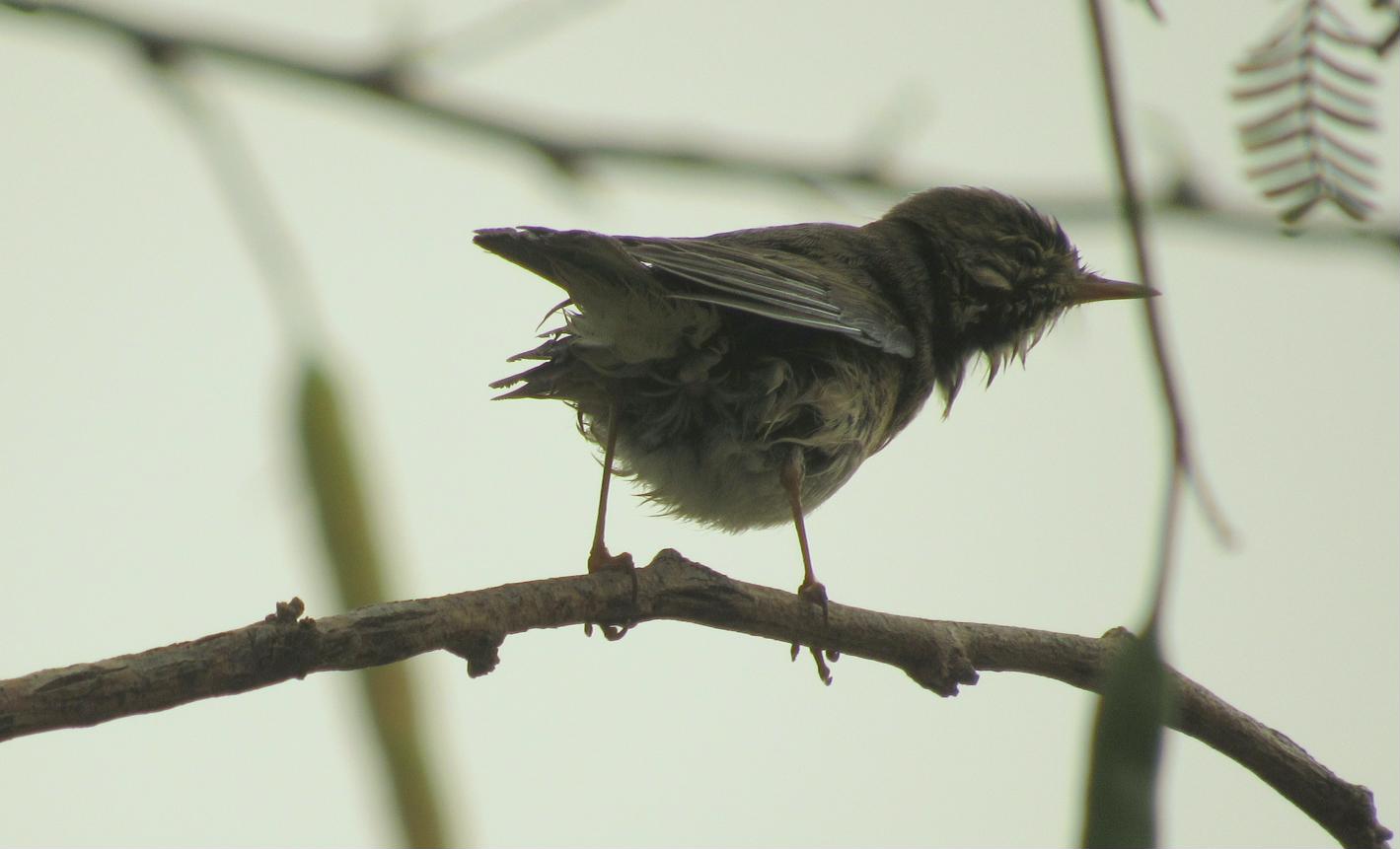
The western olivaceous warbler above has a yellow gape suggesting a young bird. The species may have bred here in spring. It was much cooler than average.
willow warbler

A few warblers were obviously late through illness as the willow warbler above but this was not the rule.

small pond

The small pool above always holds many migrants during the right seasons.

nightingale

A sulking nightingale was seen on three visits running. It could have been the same bird each time.

pied flycatcher 1

A pied flycatcher was also there.

pied flycatcher 2

Elsewhere was a spotted flycatcher.

spotted flycatcher

There is hardly a time when woodchat shrike isn't seen. Surely some must over-summer.

woodchat shrike

Southern grey shrike is resident.

southern grey shrike

Namaqua dove

There can be very large numbers of Namaqua dove.


the main lake

spur-winged lapwing

barn swallow

Species seen at North Nouakchott waste water site. June 3rd 2018
Spur-winged Lapwing  
Common Ringed Plover  
Little Stint  
Speckled Pigeon  
Laughing Dove  
Namaqua Dove  
Blue-naped Mousebird  
European Bee-eater  
Common Kestrel  
Southern Grey Shrike  
Woodchat Shrike  
Black-crowned Sparrow-Lark  
Crested Lark  
Barn Swallow  
Red-rumped Swallow  
Common House Martin  
Willow Warbler  
Eastern Olivaceous Warbler  
Western Olivaceous Warbler  
Melodious Warbler  
Eurasian Reed Warbler  
Eurasian Blackcap  
Spotted Flycatcher  
Rufous-tailed Scrub Robin  
Common Nightingale  
European Pied Flycatcher  
House Sparrow  
Sudan Golden Sparrow  

Wednesday, 14 September 2016

More on central Nouakchott

Early yesterday morning I strolled around the Tveragh Zeina district in central Nouakchott looking for good birding spots. It is where I am currently living and is the leafiest part of the city.

However birding is complicated by the fact it has several government buildings and is home to nearly all embassies. I have to exercise great discretion with my camera and binoculars.

I eventually found a new good spot with bushes, piles of recently cut trees and a small rubbish dump near-by. The combination may not look attractive but it is good for birds.

On the way I caught sight of a vitelline masked weaver as it disappeared into someone's garden. Indeed I suspect these well watered gardens are the reason that this weaver is in the city at the furthest north of its range. It was a lifer.

western olivaceous warbler 1

The bushes I chose as my main birding spot had at least three western olivaceous warbler darting in and out as well as at least two willow warbler.

A common redstart was also seen briefly twice but not photographed. There was probably a common nightingale there too but my view was too short to be sure so it won't be counted.

western olivaceous warbler 2

Near the bushes and high up in a garden I heard rose-ringed parakeet screaming. I took photos as I judged they were high enough and far enough away from the house's windows. I am very aware not to invade people's privacy.

rose-ringed parakeet

In adjacent bush to the main set of bushes and trees a pied flycatcher kept making forays.

pied flycatcher

A high leafless tree was used by blue-naped mousebird and afforded me my best views of this bird since arriving in the city.

blue-naped mousebird

Still in the same small spot, laughing dove, African collared dove and European collared dove were dropping down to ground to scrape for food.

I have now realised that both types of collared dove as abundant in the city. This is one of the few places in the world where their ranges overlap so extensively. 

African collared dove

By the shear volume of blue-cheeked bee-eater I have also concluded that the birds I have been seeing are indeed resident. 

blue-cheeked bee-eater

Elsewhere and earlier in the week, I spotted two additions to my country list at work which is on the northern edge of the city.

white-crowned wheatear

Two white-crowned wheatear were around on Tuesday. One was adult and one was a juvenile. I was a little surprised as the distribution map in my first edition of Birds of Western Africa shows them well east in the desert. 

crested lark

The second species was crested lark and this was much more predictable.

Yesterday afternoon I accompanied a work colleague on his flat hunt. It took me to west Nouakchott where I took the opportunity to bird watch after the business was concluded. In the salt lakes near-by were many waders and one was a lifer. I will blog about that next.