Showing posts with label European scops owl. Show all posts

Thursday, 5 November 2015

Dowkah in early November

Monday was the day of maximum impact of cyclone Chapala in southern Arabia. It's main effect missed western Oman and struck central Yemen instead.

Nevertheless it had some effect on Saeed Shanfari's and my birding when we went out into the desert north of the Dhofar mountains. 

Having set off at 4.30 am we arrived at Dowkah farm at 6.30 am. The cyclone gave us cloudy weather all through the session there. Although the cyclone was very bad news for many, ironically it was good news for us. Birding was very pleasant.

We visited a field that was being watered next to the farm house first. Here we noticed a red-wattled lapwing. This is a bird normally found in northern Oman though some wander including this one.

Saeed Shanfari captured it in flight. Indeed many of the pictures in today's blog are Saeed's and I am very grateful that he has allowed me to reproduce them.

red-wattled lapwing (by Saeed Shanfari)

Two grey heron were attracted to the sprayers.

grey heron

Two little egret were present there too.

little egret

Having looked at this field we headed on foot towards the bushy and wooded area which is famous for its migrants.

steppe grey shrike

On the way we came across a pallidirostis steppe grey shrike. This is an uncommon wintering bird to Dhofar.

In the bushes, we saw several migrants. There was a male common redstart, a male blackcap and two lesser whitethroat.

first lesser whitethroat

I came across them when Saeed and I divided up looking in the bushes. I took one end and he took the other.


second lesser whitethroat

At Saeed's end there was a common whitethroat.

common whitethroat

At both ends and indeed throughout the farm there were spotted flycatcher.

spotted flycatcher

Huge numbers pass through Dhofar especially in autumn.  Though the numbers are highest in September, they still keep coming.

close-up of a spotted flycatcher

Resident house sparrow are numerous in both the bushes and the near-by trees which included rows of palms.


house sparrow by Saeed Shanfari

Only one golden oriole was seen at the farm and this was high in the tallest tree. This was noticed as we moved from the bushes to the trees.

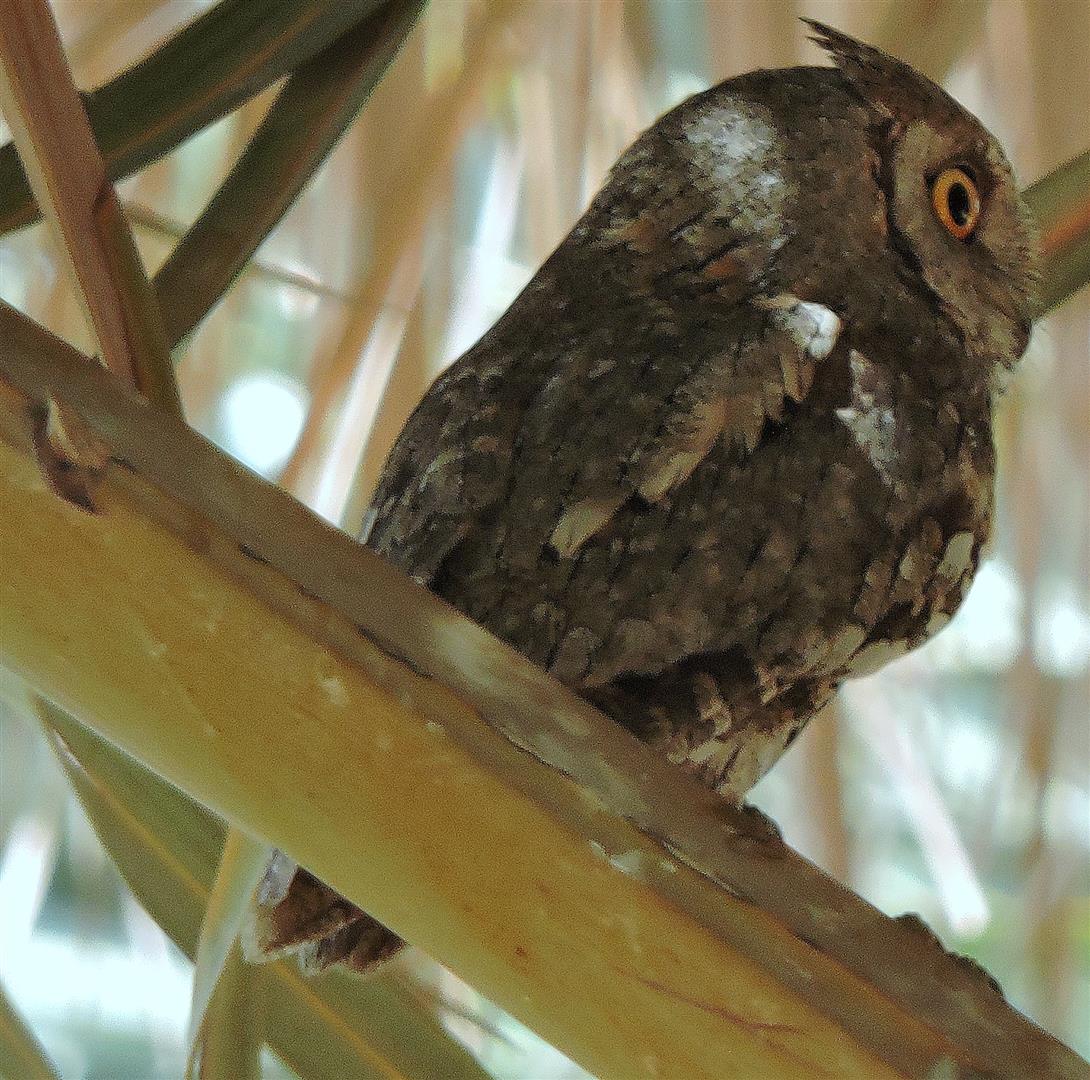
The palms held two European scops owl, presumably the same birds I had seen a month before in the same place.  Saeed has a passion for owls and he took some very good pictures.

European scops owl peeking (by Saeed Shanfari)

I have been told that many European scops owl don't survive the winter in Oman and the main evidence, if I understand correctly, is that they aren't seen much after November. 

European scops owl (by Saeed Shanfari)

I wonder if survival is the issue or whether many seen at desert stops further migrate to places such as the mountains of Dhofar alongside Arabian scops owl.

I don't think that people should automatically assume they have seen an Arabian scops owl just because it is a scops owl in a Dhofar wadi.
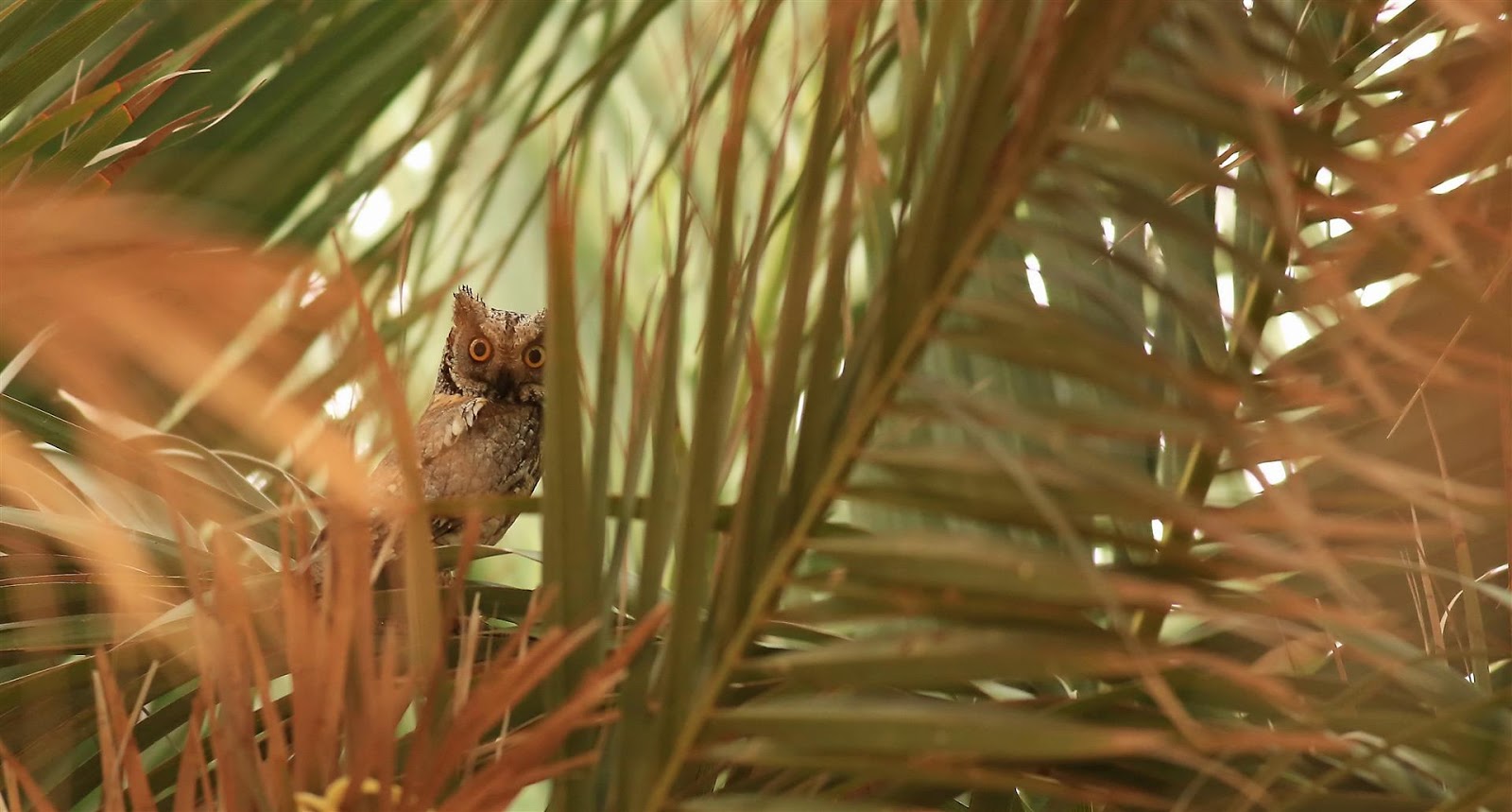
peeking again (by Saeed Shanfari)

All the time we were at the farm we kept seeing three marsh harrier. Mostly they were over the fields but sometimes over the wooded area.
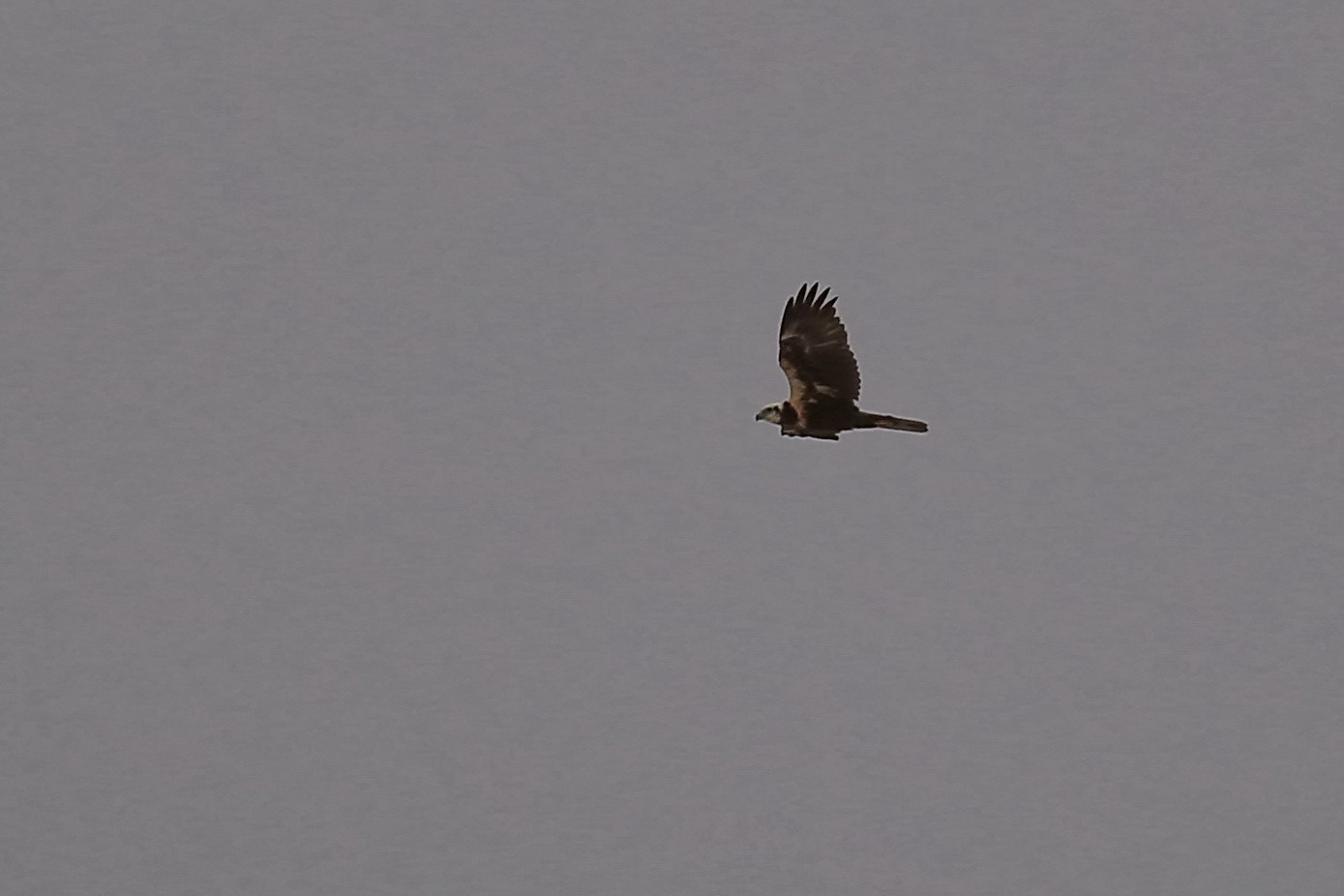

marsh harrier (by Saeed Shanfari)

After the trees, we headed out to more fields. Desert wheatear numbers are now typically high for winter. 

desert wheatear

Although only one golden oriole was seen, several European roller were still present. 

European roller

Towards the end of our session at the farm, a flock of blue-cheeked bee-eater arrived.

blue-cheeked bee-eater

There are groups of tawny pipit as well as white wagtail in the fields.

tawny pipit

While desert wheatear are numerous, there was also a scattering of Isabelline wheatear.

Isabelline wheatear

One late common rock thrush was seen as one of the last birds before we left the site.

common rock thrush

The cloudy sky had meant temperatures were much lower than usual. We left
without the usual tiredness caused by three hours walking in the desert heat. 

We went on to visit three more desert stops during the day. By the end of the day I had another addition to my Oman lst. I will blog about this next.


Sunday, 4 October 2015

Return through the desert

A week ago Saturday was the last day of my Eid trip. I started the morning in Haima which is 480 kilometres from Salalah and visited four of the desert stops on the way back home.

The first one was Ghaftain which I arrived at while it was still very cool.

Like all of the smaller desert stops, the passage can be very variable from day to day. This time it was at best average.

There were the first lesser whitethroat I had seen there. There were also several Daurian shrike and Turkestan shrike. There was also at least one citrine wagtail and one yellow wagtail but there was nothing extraordinary. It can't happen every time.

hoopoe at Ghaftain

Other notable birds there were hoopoe and a single rosy starling.

rosy starling at Ghaftain

I saw only one golden oriole this time at Ghaftain.

golden oriole at Muntasar

In contrast there were at least eight at my next stop which was Muntasar oasis.

There are always moorhen there now and they must be breeding in this remote watering hole. The other two local breeders are Eurasian collared dove and house sparrow.

kestrel

A very tired looking kestrel was on site.

spotted flycatcher

Other evidence of passage included a couple of spotted flycatcher.

Qatbeet was the next stop but there was nothing special.

Dowkah was my last stop and is the largest desert location. It has never failed me for interest.

Once again there were signs of heavy passage including a variety of waders and passerines. For example 25 collared pratincole were observed in one field. I would have missed them altogether if a Montagu's harrier hadn't moved in and created panic. In the same field I counted 10 European roller and 9 golden oriole on the pivot bar. 

Ocassionally a warbler perches on a pivot bar but not often. This time a common whitethroat was out in the open doing so.

common whitethroat

The shaded patch with its palm trees and bushes is where I often get the best results of all. This time for example two European scops owl were accidentally flushed almost as soon as I entered the area.

One went into a neighbouring palm and afforded excellent views though it knew I was there and spent most of its time looking directly at me.

European scops owl looking at me

At one moment, a group of Eurasian collared dove decided to panic and flew off with great noise. The European scops owl stayed rooted but swivelled it head for a moment in their direction before returning its gaze at me.

European scops owl looking aside

The waves of common rock thrush seen in this patch in recent visits is seeming over. However a blue rock thrush was there.

blue rock thrush

Likewise the large wave of European nightjar is apparently mostly over but I still managed to observe two late ones.

European nightjar

While I was on site, a small flock of 9 white stork dropped into the farm. Sometimes white stork stay all winter at these farms. It remains to be seen if these will do so.

white stork

Soon after this sighting I headed on towards to Salalah but this was my last stop on an exhausting and rewarding Eid break.

Monday, 28 September 2015

Dowkah delivers again

My Eid trip lasted from Tuesday afternoon until Saturday evening. It involved 3500 kilometres of travel and took me to several birding locations. This and the next four blogs will chronicle the results.

I headed north out of Salalah on Tuesday and reached one of my favourite birding locations, Dowkah desert farm, with time to bird until dusk.

This farm is the only greenery for many kilometres around and is a magnet for birds especially on passage.

One highlight was seen just before dusk when I got excellent views of a European scops owl.

European scops owl

I had seen one at Qatbeet the weekend before but this one was less flighty. Indeed I left the scene eventually without flushing the bird at all. Records show this species is not uncommon in these desert spots especially in late September, October and November.

This bird was in palms which is the favoured habitat of its close cousin pallid scops owl which is resident in northern Oman.

There was good birding before the owl was seen. Once again over ten each of golden oriole and European roller were observed either in the same area as the owl or in a neighbouring field.

European roller

There were several common rock thrush on site but this time two blue rock thrush were also observed. Both were male.

Blue rock thrush

Chestnut-bellied sandgrouse are on the farm all year and all times of day. While two other types of sandgrouse are best seen at drinking times.


golden oriole with chestnut-bellied sandgrouse

I don't think chestnut-bellied sandgrouse shares a location with golden oriole very often.

common sandpiper and ortolan bunting

Another unusual pairing on the same track in a field was common sandpiper and ortolan bunting.

On my last visit to the farm I found a black-headed bunting. Now ortolan bunting was seen. This had been one of my main hopes from the farm. It made species 296 on my Oman list.

ortolan bunting

As is often the case when birding, you wait a long time to add a bird to your list then you keep seeing it! I had twitched collared pratincole in Raysut days before. Now there were at least four at Dowkah.


collared pratincole

Very close by were a few juvenile white-winged black tern.

white-winged black tern

Birding in the fields was interrupted a couple of times as birds panicked on the arrival of both Montagu's harrier and marsh harrier before settling down again.

squacco heron

Members of the heron family have been present every time I visit Dowkah. This time there were a small number of squacco heron and a lone glossy ibis.

grey heron

The last bird I saw was a grey heron standing still in the sand just before I reached the car.

After leaving Dowkah I drove on to Ghaftain for the night. The next blog will tell what I saw there the next morning and later in the day as I drove on north.