
So you can imagine my surprise when I was walking along the edge of a tall fodder field at al Hayer when a Eurasian bittern was flushed about 2 metres in front of me. By the time I got my camera on it, it was a long way away. Nevertheless I got two record shots.

Bittern in flight
Not only was the bird in the "wrong" geography it was in unusual habitat too.
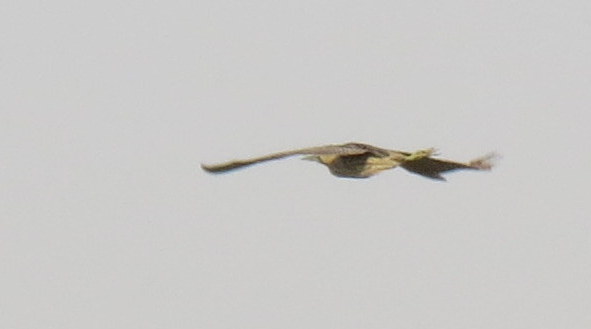
more distant shot of the bittern
This was not a first for me in Saudi Arabia though because I had seen one at Lake Maliki near Jizan during the winter.

grey heron
I also saw a little bittern near-by. Little bittern is a summer breeder at Al Hayer and there is some doubt whether any over-winter too. There are no such doubts about grey heron which is present in varying numbers all year round.

purple heron
The same goes for purple heron as well.

cattle egret with squacco herons
The most common member of the heron family for the past month or so at al Hayer has been squacco heron which also here all year round but seems to be here in largest numbers currently.
Incidentally the field above is the same one that contained the Eurasian bittern. About 3 hours after I saw the bittern the farmer decided to start cutting the field. It always amazes me how quickly cattle egret home in on a field as it is being cut. Some times they even follow the cutting machine round.

little ringed plover
Other water birds in the area included four types of wader and a single spur winged lapwing. One of the waders was little ringed plover. This is a local breeder which goes away in the winter.

common sandpiper
Common sandpiper and green sandpiper can be seen most months except in high summer. The other wader seen was black winged stilt.

moorhen
Of course the most common water bird of all is moorhen. There are many young chicks around.
In the next blog, I will be looking at more of Mansur al Fahad's trip to Zulfi. The focus will be on swallows and martins.

