Showing posts with label northern wheatear. Show all posts

Monday, 12 March 2012

Two more wheatears

There are 10 species of wheatear which have been recorded with some degree of regularity in the Riyadh area. All are possible in March either as wintering, passage or resident birds.


It's a big topic to talk about but if we restrict ourselves to on or close to the pivot fields the picture is a little bit simpler. 


Throughout the winter there were Isabelline wheatear and desert wheatear (and one or two other species near-by in small numbers). Two weeks ago they were joined by an influx of pied wheatear. 

 However the picture is constantly changing at the moment. Lou and I failed to see a single desert wheatear on Thursday (although I did see one a day later a few kilometres way).  The pied wheatear numbers were down slightly but there were more Isabelline wheatear than ever.


Two more wheatears have made an appearance close to the fields.

black-eared wheatear 

A single black-eared wheatear was seen by the river bank. Previous records show this is about 8 times rarer than pied wheatear in the spring passage. It was my first this season or indeed in Saudi Arabia. The chances are it is en route to Turkey or the southern Caucasus.

Isabelline wheatear

Isabelline wheatear numbers were much higher than in winter.

northern wheatear

Also near the river but adjacent to a pivot field was my first sighting of a northern wheatear this season. Unlike with black eared wheatear, I have seen one in the area before back in October.   The sighting of the northern wheatear is early. It was two days earlier than any before in the two main historical records.

male pied wheatear

As there have been so many pied wheatear around over the past two weeks, I am beginning to recognise the the more tricky females as well as the males.

"Siberian" stonechat

Another bird which gives me identification issues is stonechat. As I have said before a majority but not over-whelming majority of the wintering  stonechat in central Arabia are Siberian stonechat. The one above looked Siberian but it was only after seeing it from behind that I was sure. 

second view of  a Siberian stonechat

The white rump combined with the small amount of orange on the breast and the large collar together give me confidence.  Furthermore, I think it is possibly the maura sub species (nominate) as the orange patch is not very small and I can't see any white tail sides. 

female stonechat

I find some female stonechat impossible to separate. This one has no feature I can use to distinguish from the front. 

second view of female stonechat

The wing is quite long which points towards a Siberian stonechat but the rump doesn't look very pale which points to a European bird. So overall I really just can't tell.


Sunday, 19 September 2010

Migrant wheatears and more


northern wheatear, Tulmaythah, September

Another place visited last Friday was Tulmaythah which is about 80 kilometres north east of Benghazi on the coast. This is where my friends relaxed on the beach while I bird-watched 100 metres away inland. This blog is about the birds I saw in the area with the exception of those seen around and in a near-by melon field!  The melon field merits a blog all of its own. It will follow this one. Why? well you'll have to wait and see.

The most noticeable birds in the area by sheer weight of numbers were wheatears. But what surprised me was the proportions of the different types. Over 70% were northern wheatear, 15% were black-eared wheatear and only a similar proportion were isabelline wheatear. All were migrants. The proportions were about the same as I found on spring passage near Tarhunah in Tripolitania, 950 kilometres to the west.


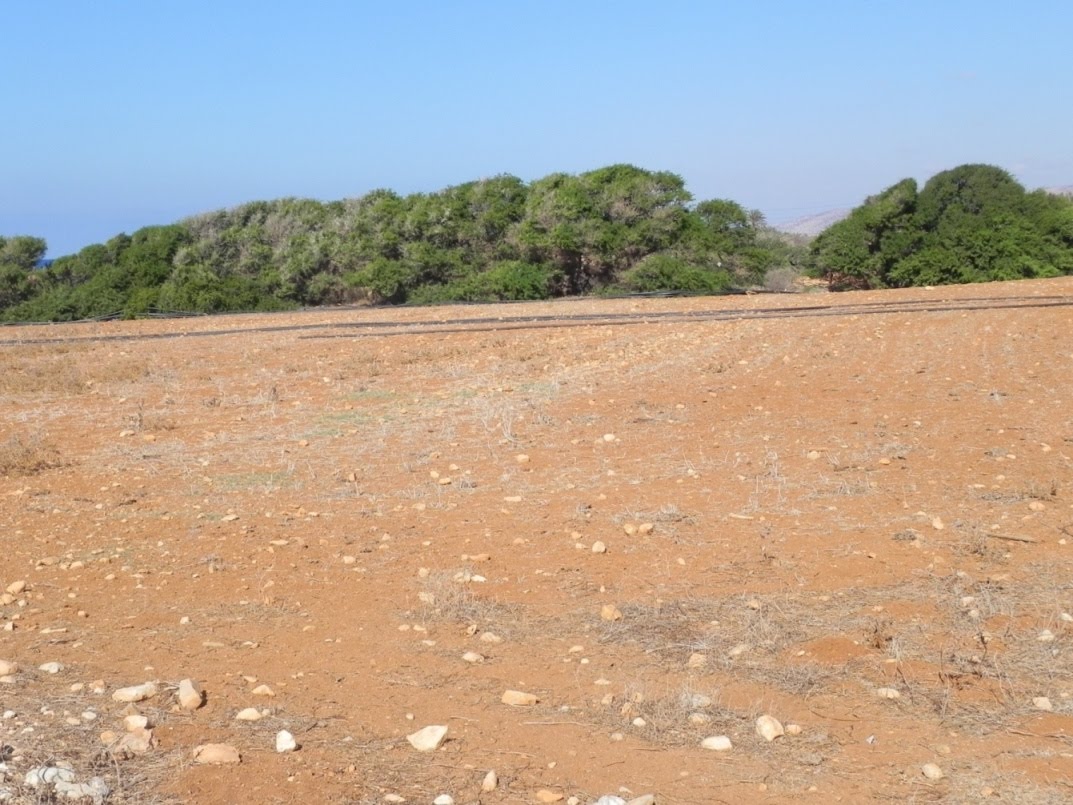
typical ground for wheatears, Tulmaythah, September

In fact there were so few isabelline wheatear that I failed to get a good photo. You will have to wait a couple of blogs for one of those. The presence of so many northern wheatear is once again contrary to the distribution maps in the main guide books. The maps show northern wheatear missing from this area.   Without spoiling future blogs I can reveal they are present in Benghazi and all along the coast between Tulmaythah and Benghazi too.


black-eared wheatear, Tulmaythah, September 

Black-eared wheatear proved easier to photograph than it's isabelline cousin. Here is a dark throated male. Both forms pale and dark throated were there.

There were other migrants too. I suddenly noticed (and so even did my beach loving friends) a flock of about 15 little egret flying down the beach from east to west. I had little time to react but just managed to record the event.


flock of passing little egret, Tulmaythah, September

The blurred photo of most of the flock is above and a clearer shot of three birds is below.


close up of little egrets on passage, Tulmaythah

My clumsy walking flushed two snipe in two different places. Some snipe stay the winter and some go further south. Who knows what these two will do but my guess is that these will move on when they gain strength. This area was not wet enough for them.

There were more migrants around but they were in the melon field so please wait for that blog. 

Meanwhile with all the migrant action, the residents were carrying out there normal business. House sparrow, great grey shrike and laughing dove were plentiful. Indeed every palm tree seemed to have at least one great grey shrike in it. I still checked carefully to see if any migrant sub species of this bird were among them. They weren't.

great grey shrike, Tulmaythah