Showing posts with label wryneck. Show all posts

Monday, 30 October 2017

Nouadhibou allotments

Google earth shows a green area in the north of Nouadhibou right on the border with Western Sahara. Zooming in, you can see that it is a set of allotments.

I am not sure any one has birded there before but we gave it a try last Saturday morning before moving on to more tradtional sites.

The birding wasn't brilliant but that, in part, was because the best allotments were generally the ones with the highest walls. However birds don't totally respect walls.

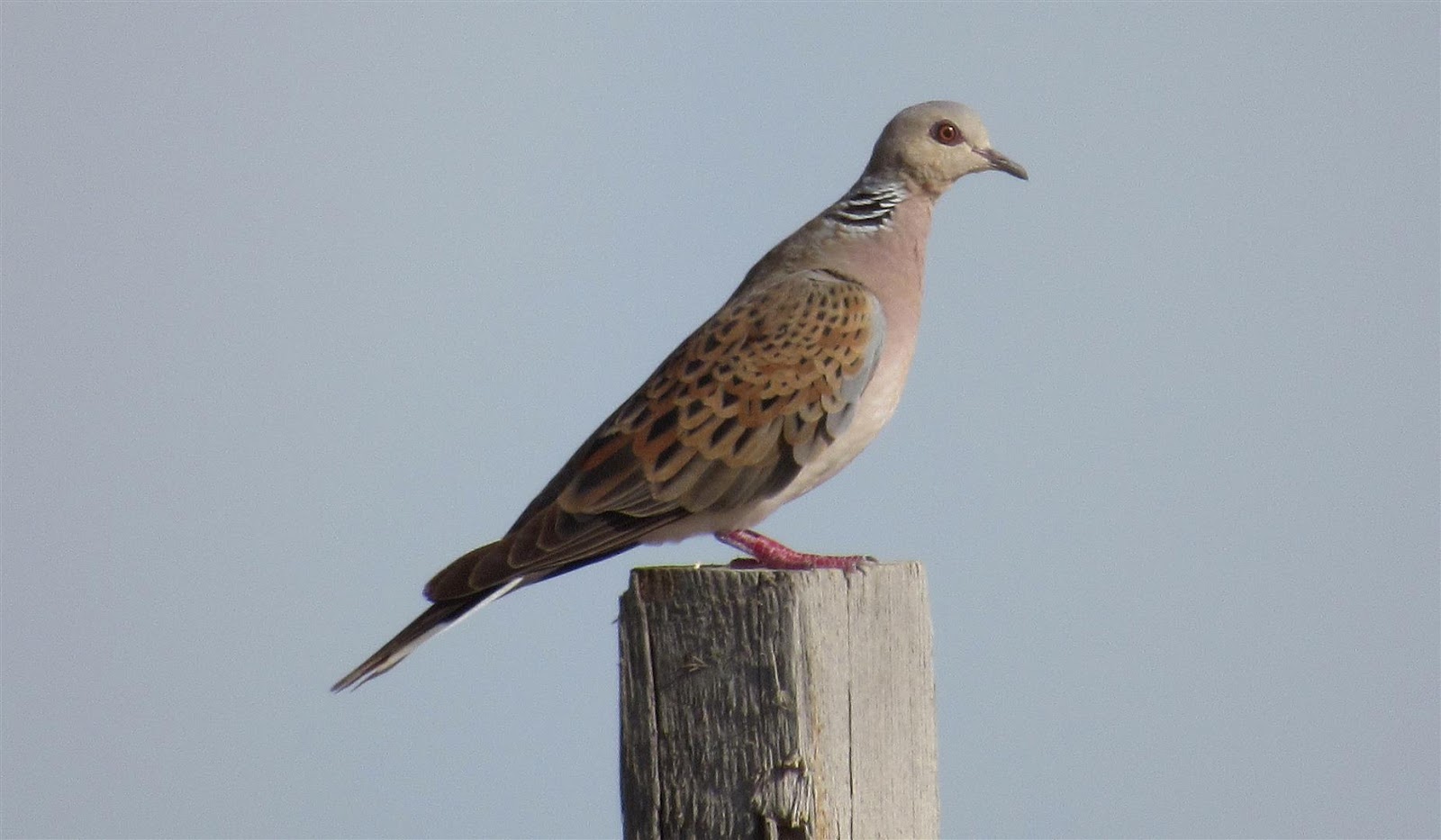
young turtle dove

Given that Nouadhibou is in a desert zone, any greenery is bound to encourage birds. One such species attracted to this site is European turtle dove.

adult turtle dove

There were at least eight birds scattered around the allotments. However this is unlikely to be their final wintering grounds.


whinchat

One early identification headache was this highy streaked bird found half asleep when we first arrived. It was eventually identified as a whinchat though its unusual pose didn't help.

There were warblers as expected. Most were willow warbler though there were small numbers of chiffchaff, reed warbler and western olivaceous warbler too.

I suspect this is a good site for rare northern passerines in mid-winter such spainsh sparrow, stonechat and black redstart. They don't have much choice of habitat if they take this most westerly route.

Unfortunately we didn't see any rarities but we kept adding species to the site list as we went round.

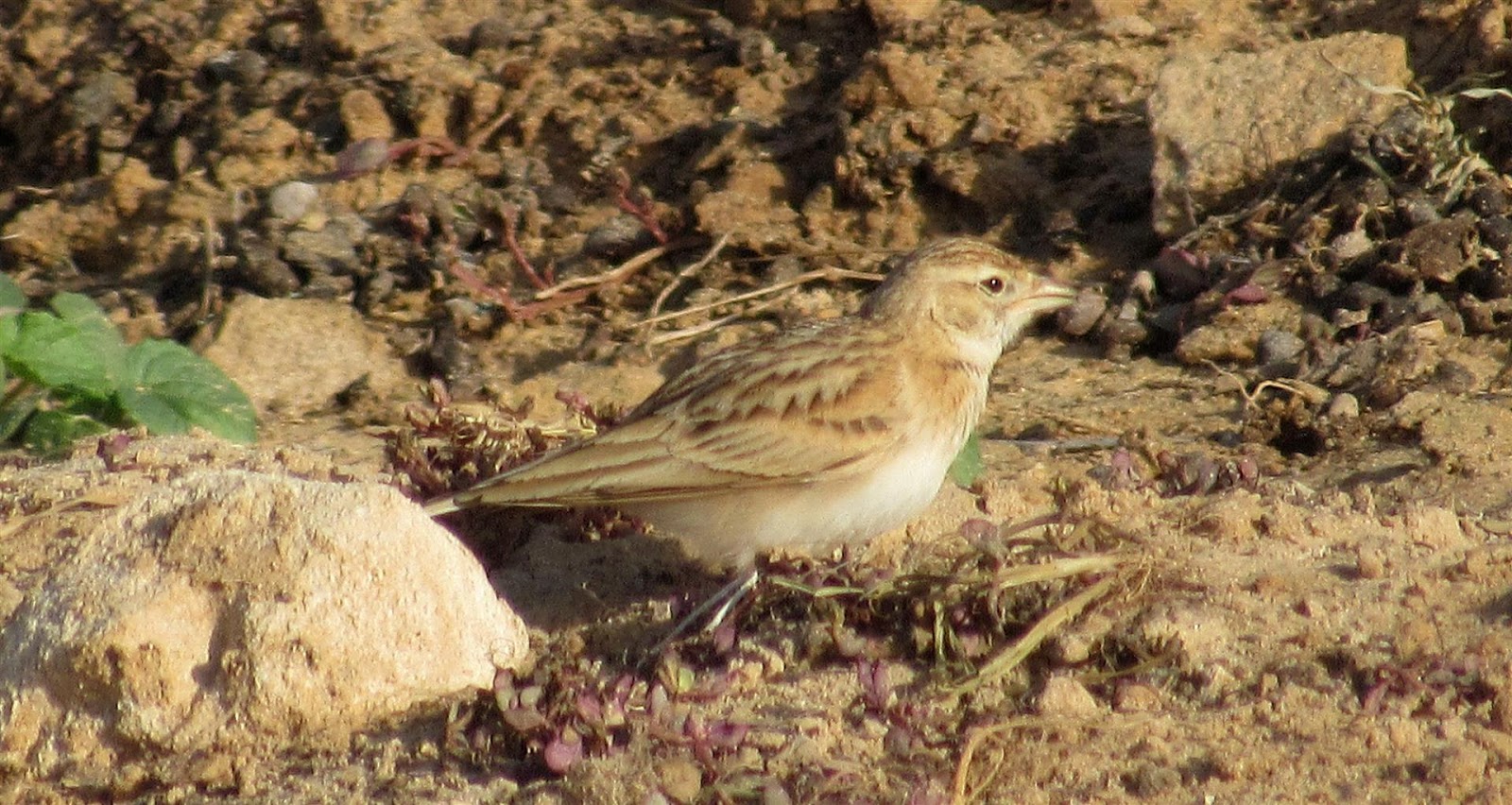
greater short-toed lark

One greater short-toed lark in a garden was the only lark we saw on the whole peninsula. Apparently this is the most accessible place for thekla lark in Mauritania though we saw none.

wryneck

A wryneck was a good bird and shows the potential of the place.

European pied flycatcher

Otherwise we had to make good with house sparrow and a common trio of migrants at the moment: common redstart, spotted flycatcher and European pied flycatcher.

A final short walk outside the allotments gave me a pair of white-crowned wheatear.

After the allotments, Mohamed Vall and I moved on to site we had visited before. This is the sea inlet just east of the airport. This had many hundreds of birds and is an obvious hotpsot. One species was an addition to my country list. The birding there was very satisfying and I will blog about this next.

Wednesday, 18 October 2017

Yet another success at the waste water site

On Saturday October 7th, the previous record number of species at the waste water site was beaten by one. There were 51 species observed. This is a very large number for a small site away from the sea. It speaks volumes for what a migrant trap the place has become.

Almost straight from the start, there was good birding. As well as warblers foraging in the dead branches near where the car dropped me, I soon spotted the first of two wryneck.

wryneck

I lingered at this western edge of the avenue of trees for a long time. White wagtail and northern wheatear were present in the more open areas away from the cut branches.


white wagtail

Yet again for the fourth week running in the Nouakchott area, there were European pied flycatcher passing through in numbers.
.
European pied flycatcher

I don't normally photograph the ever-present crested lark but finding one with such a juicy catch was too good an opportunity to miss.

crested lark

Also for the fourth week, spotted flycatcher were also still coming through.

I have no idea whether some of these flycatchers linger or whether these are new birds each time.  Mauritania is still well north of both species' wintering grounds so they may well be fresh birds on each occasion.

spotted flycatcher

The story is different with hoopoe. Nouakchott is at the northern edge of their wintering range and the birds I am seeing may well stay.

hoopoe

Common redstart numbers started low in late September but became numerous by early October. Most of them prefer to keep close to the avenue of trees.

common redstart 1

Going inside the mini woodland created by the avenue is where I am most likely to see them.

common redstart 2

Once again there were large numbers of European turtle dove present. I can't really count the exact number as they are so flighty and sometimes fly to the far end of site when approached.

European turtle dove

As is my routnie now, I don't get to the water until I have comprehensively looked at the western side of the avenue of trees. On October 7th that was two hours after I arrived.

dunlin

The types of waders were still pretty much the same as they had been for the previous month.

marsh harrier

However, the birds of prey at the site were a little different. At one stage there were five marsh harrier. Three of them moved on southward rapidly but two remained all session. In the distance I picked out an osprey. I think it was just passing and the pools were of no consequence to it.

A common buzzard was more significant. It hovered over the pools for a short time before moving on. Common buzzard are quite rare in Mauritania. The only other one I have seen was at the same place and at the same time of year, last year.

ruff 1

Near the water, I reviewed the ruff as has become a habit over the past few weeks at this site.

I couldn't make any of the young female ruff into anything more exotic.

ruff 2

Close to the ruff, I found another bird of prey. This time it was a kestrel and it was sitting on a small bush right over the water. Kestrel are not resident to Noaukchott or most of Mauritania further south. Indeed I have seen a few more lanner in the country than kestrel. So this was passage bird. This must be a good spot for tired migrants and potential food sources though I didn't see any predatory action from the kestrel.

kestrel

I moved away from the water briefly to track a common redstart with odd behaviour. It was away from trees in very short scrub. It was out in the open much more than is typical. 

common redstart 1

However, I simply could not make it into anything else.

common redstart 2

After this short detour I returned to the water.

marsh harrier

A female marsh harrier was flying ominously overhead.

purple heron

It wasn't just small birds that bolted. A purple heron went up.

European spoonbill

Three European spoonbill which I hadn't noticed before, reacted as well.

A glossy ibis joined them. Indeed ibises often have a preference to associate with spoonbills when theirown kind aren't around. For one moment, I thought the foursome were going to fly straight at the marsh harrier by mistake. They survived their mistake.

teal

Though duck won't take to water here. It's too polluted for them. Nevertheless, they are still attracted to the site on passage.

This time there were garganey and teal.

common snipe

Common snipe was the last of the more interesting waders I saw before I finally moved away from the main pools.

At the eastern end of the site are some minor pools which have more cover near them than the main pools. They tend to be rich in warblers. However on walking towards the minor pools, I observed a whinchat.

whinchat

In one small corner of the minor pools, I decided to just stand still for half an hour or so and see what would come out.

I saw three European reed warbler, a western olivaceuos warbler, a sedge warbler and two ortolan bunting without moving.

garden warbler 1

However my favourite sighting at this spot was a garden warbler. It was fearless and came up right close two or three times. Sometimes, there are advantages in doing nothing but staying still.

garden warbler 2

It is the closest and longest I have ever managed to see one.

garden warbler 3

Like the common redstart mentioned earlier, I found its behaviour out in the open and foraging low rather odd but I am not complaining.

garden warbler 4

I was out in the sun for well over four hours and as normal I walked back westward to my car pick up point under the avenue of trees. Not only does this give me relief from the heat, it gives me more birding possibilities with a final change of habitat.

This time it was especially successful. I flushed two red-necked nightjar. They were tricky birds. They simply would not allow me to get close but identification was relatively straightforward. They are bigger than European nightjar and the white flashes are the wing are even more pronounced. When they land the red neck is easily apparent too.

This was an uplifting end to the session. It was also an addition to my country list.


Species seen at the waste water site on October 7th 2017
Garganey  
Eurasian Teal  
Grey Heron  
Purple Heron  
Little Egret  
Glossy Ibis  
Eurasian Spoonbill  
Osprey  
Western Marsh Harrier  
Common Buzzard  
Spur-winged Lapwing  
Common Ringed Plover  
Whimbrel (European)  
Black-tailed Godwit  
Ruff  
Sanderling  
Dunlin  
Little Stint  
Common Snipe  
Common Sandpiper  
Wood Sandpiper  
Common Redshank  
European Turtle Dove  
Laughing Dove  
Namaqua Dove  
Red-necked Nightjar  
Eurasian Hoopoe   
Blue-cheeked Bee-eater  
Eurasian Wryneck  
Common Kestrel  
Southern Grey Shrike  
Black-crowned Sparrow-Lark  
Crested Lark  
Sand Martin  
Barn Swallow  
Willow Warbler  
Common Chiffchaff  
Western Olivaceous Warbler  
Sedge Warbler  
Eurasian Reed Warbler  
Garden Warbler  
Spotted Flycatcher  
Bluethroat  
European Pied Flycatcher  
Common Redstart  
Whinchat  
Northern Wheatear (Greenland)  
Northern Wheatear (Eurasian)  
Western Yellow Wagtail  
White Wagtail 
Ortolan Bunting  
House Sparrow  

Monday, 17 October 2016

Around but not in the city

On Saturday I linked up with Dr Mohamed Vall again. This time we didn't make a long distance trip. Instead we visited four sites on the edge of the city, Nouakchott.

Our first stop was not glamorous, we made it to the city waste dump in the Riyadh district on the southern edge of the city.

I had hoped for birds of prey and perhaps storks but there were none of either. There simply isn't a high enough proportion of organic material in the waste.

However, there was compensation in seeing other birds including an addition to my steadily growing country list.

The site obviously held many wintering northern wheatear. Some were highly coloured and may well be of the Greenland sub species though it is difficult to be sure in autumn.

northern wheatear

However, luckily for me, nominate and Greenland northern wheatear was not the only wheatears present.

male Seebohm's wheatear

One of the northern wheatear appears to be a "Seebohm's wheatear". This sub species breeds in the Atlas mountains of Morrocco but is known to winter mostly in south west Mauritania. The bird I saw has a close resemblance to a male desert wheatear but  "the shortish tail and primary projection seemingly reaches way past the uppertail coverts. Also the rich orange-buff patch on the upper-breast contrasts a lot with the rest of the underparts". Thanks to Tibaud on BirdForum for his analysis which confirms my initial view. 

black-eared wheatear

Poking its head just above one pile of rubbish was my first black-eared wheatear in the country too.

white wagtail

Other than the wheatears the selection of birds was quite limited. However, white wagtail were everywhere. 

A set of pools near the centre housed ringed plover, a single grey plover and two grey heron. The heron were the only large birds seen.


hoopoe lark

Two types of lark present were crested lark and a few hoopoe lark.

black-headed weaver

The second stop was some fields and trees also in the Riyadh district but back towards the city.

We had noticed it was a greener area than normal on our two previous weekend's travel down this road. We had vowed to investigate it for birds one day and this was our chance.

Mohamed pointed out that the type of trees present had been planted and were not usually good for birds but are used as a quick fix to contain sand encroachment.

Indeed the birding wasn't too good to begin with. Only house sparrow, white wagtail, laughing dove, namaqua dove and crested lark were observed. However a northern wheatear was picked up and then in the largest tree was a desert grey shrike and a black-headed weaver.

The weaver was an unexpected sighting. This particular weaver is normally found only on the Senegal River in the far south of the country. It has certainly wandered.

Our third stop was at Bouhdida allotments as we travelled anti-clockwise round the edge of the city. This is a market gardening area similar to Zataar allotments but further out from the centre.

The gardens held the predicable white wagtail and house sparrow though a late common redstart was also observed.

The prize bird by far though was a plain nightjar asleep high in a row of tall trees. If I hadn't heard the constant chatter of one or more acrocephalus warbler up there, I would never have looked so carefully.  It was an exciting find.

plain nightjar

Thanks are particulrly due to Andrew Bailey for his help with identification. 

plain nightjar 2

A key feature is the row of black spots on the scapulars which are best seen on the third picture but are present on all three pictures. It also shows "spangled coverts, with shiny, copper coin-like feathers" and this is best seen in picture 2.

plain nightjar 3

This was a lifer for both me and Mohamed Vall. I had missed it when I worked and lived in Saudi Arabia. It can be found in the south west of that country.

In West Africa, Nouakchott is the far north of its known range.

Our last stop was on a continuation of our travel anti-clockwise round the city. We ended up in the gardens of the faculty of science of Nouakchott university.

Here were the usual birds such as blue-cheeked bee-eater, white wagtail, speckled pigeon and northern wheatear. 

Just as we were walking to the exit, a wryneck flew straight passed us and landed on a path. It flew off again but we traced it to a piece of ground where it was searching for ants.

wryneck on path

This migrant made bird 130 on my country list which is starting to look quite healthy.

wryneck looking for ants

My thanks to Dr Mohamed Vall for driving us around once again on another successful Saturday.

Wednesday, 9 September 2015

Thrush nightingale at Qatbeet

After visiting Dowkah farm last Friday, it was still only 10am. I decided to travel on to Qatbeet while I was in the desert. It is "only" a further 80 kilometres further up the Muscat road.

The garden of Qatbeet Motel is not as good birding as in the past due to clearance of many of the low lying bushes. Nevertheless good birds are still seen and there are a few parts of the gardens with sufficient shade.

After a bite to eat, I started birding around midday which is very hot at this time of year.

thrush nightingale 1

Most of the best birds were clustered around one small area of the garden. It was in the most shaded area but in particularly that part of the shaded patch which also currently benefits from a leaking pipe.

Here I came across a thrush nightingale. This is a rare passage migrant although I saw a few in the Ayns near Salalah last autumn. It is obviously greyer and slightly darker than common nightingale. It also has a much more streaked front.

thrush nightingale 2

There were a few warblers in this patch too. All birds were keeping to cover as best they could and that's why nearly no pictures show straight views clear of the undergrowth. If I had been there early in the morning I am sure things would have been different.

willow warbler

One of the warblers was a willow warbler. This is surprisingly uncommon on migration in Oman in autumn. There was a Eurasian reed warbler there but it evaded my camera.

common whitethroat 1

Two common whitethroat were of the nominate subspecies which I had seen the weekend before too (at Dowkah farm).

common whitethroat 2

There was also the first common whitethroat of one of the eastern subspecies. The female is very bland bird.

eastern whitethroat 1

The majority of common whitethroat seen further south in the Salalah area are from the east.

eastern whitethroat 2

Elsewhere on site, interesting birds were few with a couple of exceptions. One was an Isabelline wheatear.

Isabelline wheatear

The second was a wryneck. This is not only a passage bird in Oman but a wintering one too.

wryneck

I took the opportunity to drive back towards Salalah during mid-afternoon when the heat was fierce. I managed to stop off at Rabkut as temperatures had cooled down. I will blog about that next.