Showing posts with label Marbled duck. Show all posts

Tuesday, 20 February 2018

Laayoune, Western Sahara

I was in Laayoune, Western Sahara for four days last week. I have visited many oases in the Sahara over the years but this is the largest one.

On Thursday, I visited the oasis and stayed for over five hours. It could have been longer but I had to get back to the hotel.

I saw 54 species on an overcast day. 

The taxi driver dropped me off at the far east of the oasis. When I left the taxi I wondered what all the fuss was about as all I could see was a dry but very wide bed and some patches of tamarisk.

However, my initial disappointment was ameliorated slightly by the sight of a white-crowned wheatear.

young white-crowned wheatear

I headed west. I soon came across a first area of water. It had reeds. Those reeds held no fewer than five sedge warbler. 

sedge warbler

I presume they were a passage group with such a number in a confined area.

common snipe

Other noteable birds here were common snipe and yellow wagtail.
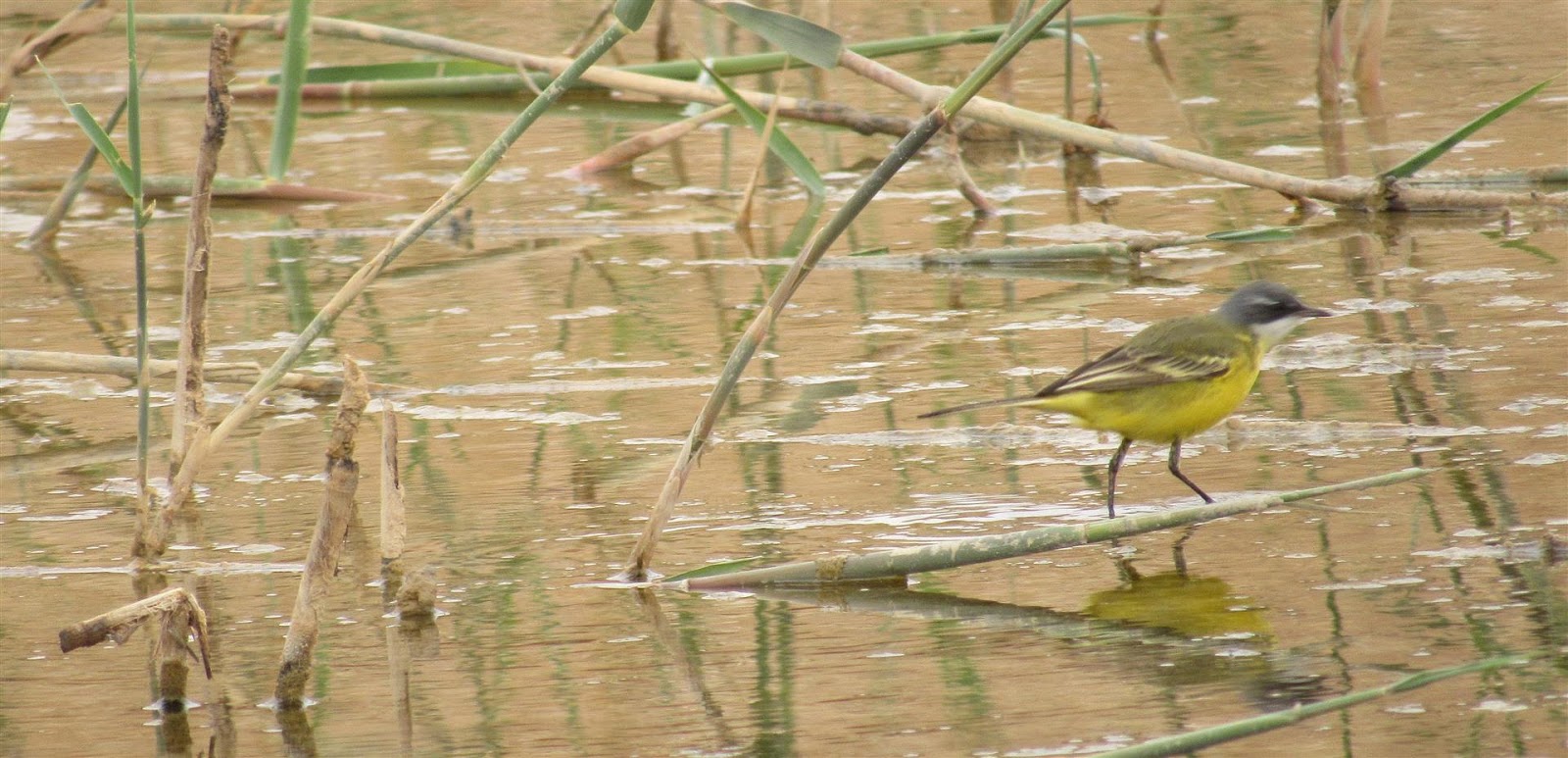
yellow wagtail

I found it interesting that there were more yellow wagtail at the oasis than white wagtail despite its northern location and still being winter.

black winged stilt

The further west I walked the more water there was in the wadi. The water was deep enough for black-winged stilt. 

northern shoveller

I found my first ducks. There was a group of northern shoveller and also a single Eurasian teal.

Eurasian teal

Ironically it was the only Eurasian teal I saw on site.

greater flamingo

In the middle part of the oasis there were large numbers of greater flamingo, common moorhen and glossy ibis.


common moorhen

There were several ruddy shelduck.

ruddy shelduck

Laayoune is certainly one of the most important sites for wintering marbled duck. I saw well over 50. They were most prevlaent in the mid sector and the western end of the oasis.

marbled duck

As well as black-winged stilt, its cousin, pied avocet, was present.

pied avocet

The deepest water is on the western side of the oasis and in particular on the southern bank.

Here the water was deep enough to attract black-necked grebe.

black-necked grebe

A similar number of little grebe were observed and the two species associated.

black-necked grebe (l) little grebe (r)

While there were several tens of gulls present, for the most part they were either black-headed gull or lesser black-backed gull.

black-headed gull

Birds of prey seen were initially restricted to marsh harrier and common kestrel.

marsh harrier

I made a small detour away from the water's edge to a near-by wooded area. Here were no fewer than three black redstart.

squacco heron

The diversity continued. Grey heron and squacco heron had a preference for this western side.

Audouin's gull

On a rock in relatively deep water was an Audouin's gull. It was the only one of a third species of gull observed at the site.

two gulls

Audouin's gull is not trivially separated from immature Mediterranean gull. Size is one of the easiest indicators. Here you can see it is it much larger than black-headed gull whereas as a Mediterranean gull is only marginally so. 

marsh harrier with kill

As I walked further west, I spotted a marsh harrier with a kill. It seemed to be a male northern shoveller.

hybrid pochard x ferruginous duck

The water was deep enough in places to attract common pochard.This is a diving duck and requires deeper water than dabbling ducks. There are relatively few sites in the Sahara which they are attracted to. The bird above was with four common pochard ia a hybrid. Thanks to those who commented. I checked with experts who have identified the type of hybrid. Unfortunately I can't reply to comments to the blog anymore. Somehow google have produced a recent bug preventing me from doing so!

Eurasian spoonbill

Eurasian spoonbill were numerous.

osprey

Over the deep water at the western end, a pair of osprey flew over a few times. I still don't know whether the water contains fish.
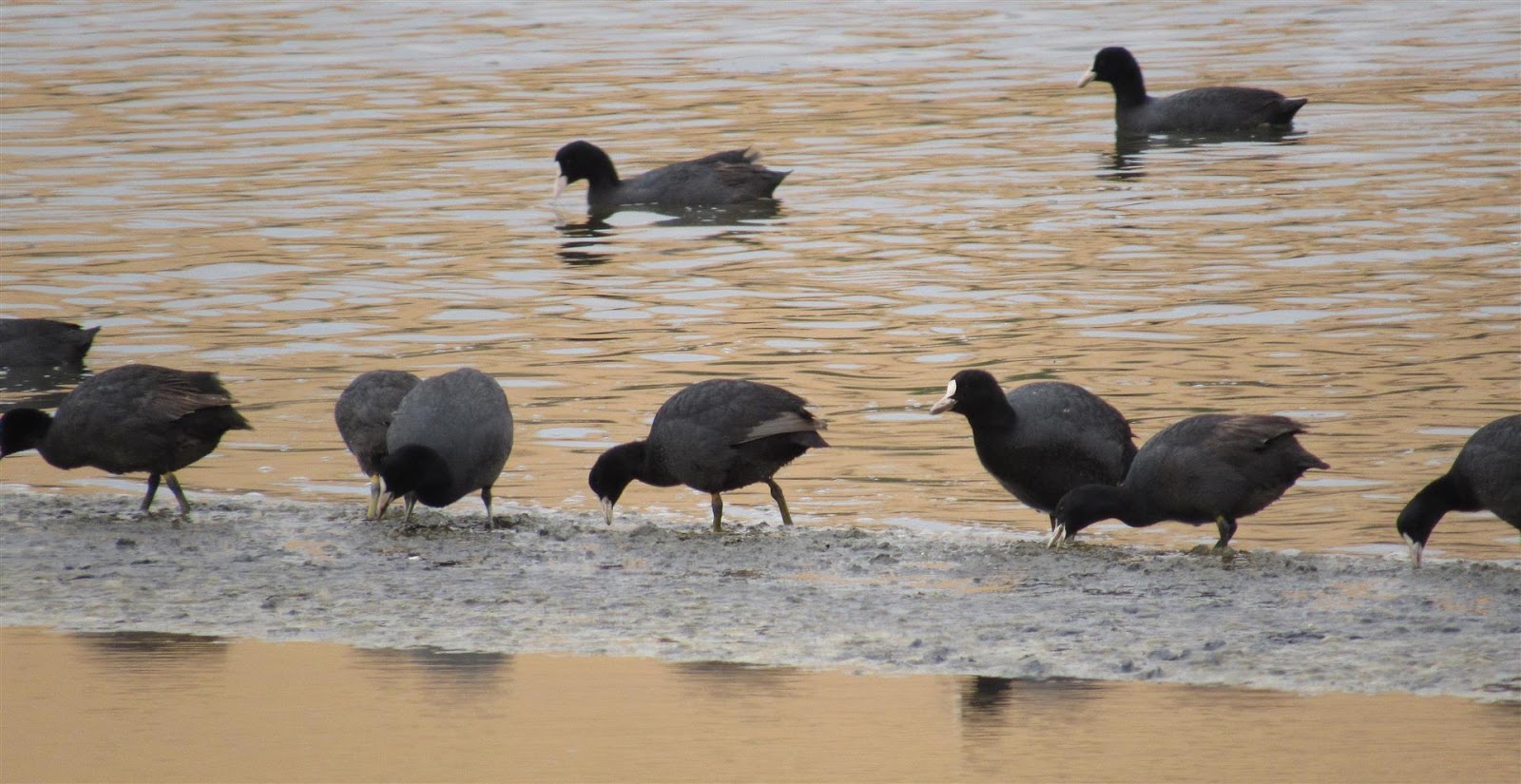
Eurasian coot

This western end kept giving more and more species. There were tens of Eurasian coot. However four white stork, near-by, were a surprise.

white stork

They were found at the extreme western part of the water body. I made my way back after I saw them. I went back with a brisk walk as time was now limited. I didn't get much chance to bird. However a flock of cattle egret were too large and numerous to miss.

cattle egret

The birding had fully lived up to expectations but even with five hours, it felt a bit rushed. I thought it was worth a second look two days later. That time my birding concentrated on the adjacent bushes and cliffs to the water. I was rewarded with a further six species not seen on Thursday. I will blog about that next.

54 species seen on Thursday 15th February at Laayoune
Ruddy Shelduck  
Northern Shoveller  
Common Pochard  
Marbled Duck  
Tufted Duck  
Little Grebe  
Black-necked Grebe
Greater Flamingo
White Stork  
Grey Heron  
Little Egret  
Cattle Egret  
Squacco Heron  
Glossy Ibis  
Eurasian Spoonbill  
Osprey  
Western Marsh Harrier  
Common Moorhen  
Eurasian Coot  
Black-winged Stilt  
Pied Avocet  
Common Ringed Plover  
Little Ringed Plover  
Black-tailed Godwit  
Ruff  
Little Stint  
Common Snipe  
Common Sandpiper  
Green Sandpiper  
Wood Sandpiper  
Common Redshank  
Black-headed Gull  
Audouin's Gull  
Yellow-legged Gull  
Lesser Black-backed Gull  
Feral Pigeon  
Collared Dove  
Eurasian Hoopoe  
Common Kestrel  
Southern Grey Shrike  
Barn Swallow  
Common House Martin  
Common Chiffchaff  
Iberian Chiffchaff  
Sedge Warbler  
Bluethroat  
Black Redstart  
European Stonechat  
White-crowned Wheatear  
Black Wheatear  
Black-eared Wheatear  
Western Yellow Wagtail  
White Wagtail 
House Sparrow  

Tuesday, 20 December 2016

All over the city

On Saturday, Mohamed Vall and I again teamed up. We birding at different places around the city. Some were new and some were already known.

First stop was the fresh lake in North Nouakchott near the Mauricentre. We looked hardest at ducks. The good news was that numbers were up considerably from the last visit two weeks ago.

marbled duck

The six marbled duck were still present.

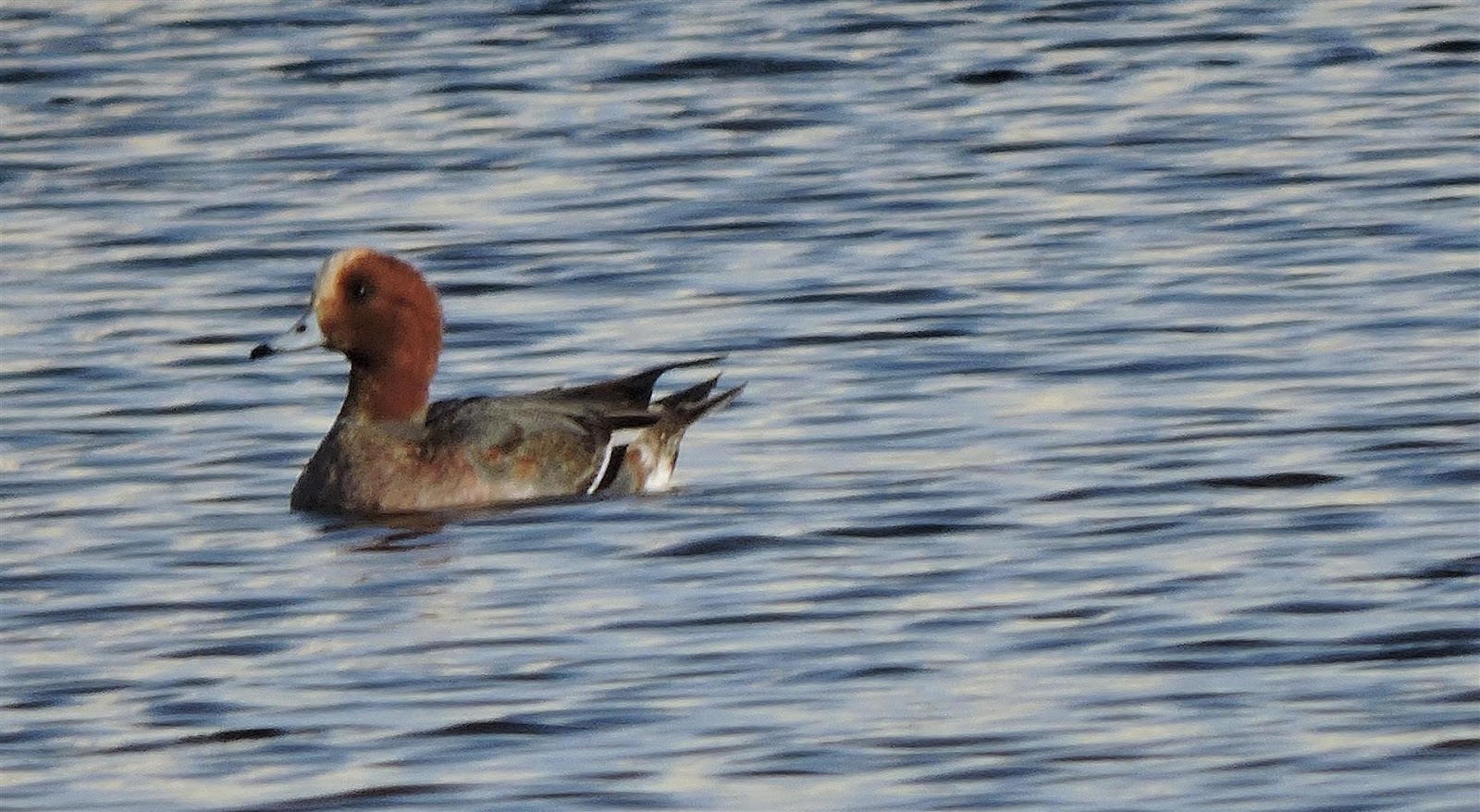
male wigeon

Wigeon have increased from two to six. Some of the males are now close to breeding plumage.

northern shoveller

The most common duck all winter has been northern shoveller. I counted at least 20 there now.

male northern shoveller

Northern pintail is still the second most numerous duck.

male common teal

Teal has hit a new winter high of three.

female common teal

The bad news is that despite the rise in numbers of five species, no new species of duck have arrived.

spotted redshank

Elsewhere at the lake, two black-eared grebe are still there. Several chiffchaff (but no other) warblers were observed. One African swamphen was seen.

Finally there was a spotted redshank. This was only my second sighting in the country.

After the lake we headed east down the Aleg road but only 24 kilometres. This was to the main city rubbish dump. A stop on the way proved fruitless.

The dump itself is out of bounds though one can walk round the perimeter. I did this and was disappointed but not necessarily surprised there were no birds of prey. 

Sudanese golden sparrow

Mobile flocks of African silverbill and Sudanese golden sparrow could be seen in trees outside the dump. Namaqua dove and laughing dove were observed too.

Namaqua dove

Mohamed Vall went further away from the dump into the main wadi and found cricket longtail. Peering into the dump I could only see little swift and barn swallow flying over the rubbish. Two desert grey shrike were on bushes inside the complex.

We saw enough to know that the rubbish dump is probably not worth another visit this winter.

spotted flycatcher 1

With the whole afternoon left we headed north to the small waste water dump north of the city. This was not as productive as it had been probably because recently more industrial waste water than domestic had changed the environment there. A few hardy wood sandpiper and little stint as well as one common ringed plover were the only birds attracted to the water. The blackcap and other warblers were nowhere to be seen.

Nevertheless both a spotted flycatcher and common redstart were observed in the avenue of trees along the road to the dump. 

spotted flycatcher 2

The flycatcher was a big surprise. Why is one still here in mid December? Surely it should be in tropical Africa.

The final stop of the day was the fishing port which is actually a short journey from the waste water site.

The made-made lagoons have been altered so they retain water more completely and only a trickle goes into the sea at any one time. This meant the water levels there were up. However it has probably had little effect on the types of birds present. 

Here I saw my first "pallid heron" which is a sub-species of grey heron that breeds in Banc d'Arguin National Park to the north. 

 "pallid" grey heron 

Once again I inspected the assembled gulls for any rarities. Sadly none were seen. Lesser black-backed gull was by far the most common followed by black-headed gull and yellow legged gull. Slender-billed gull and Mediterranean gull were a small minority.

Mediterranean gull

i thought all our hard work had paid off, almost at the end of our birding day. Mohamed Vall noticed a long winged dark bird out to sea. Intially we thought it might be an arctic skua but closer views and review of photos showed it was another immature northern gannet.

record shot of a northern gannet


This was an good end to a long day in the field.

Friday, 25 November 2016

Lovely ducks at the lake

This morning was a holiday from work. I took the opportunity to visit Nouakchott lake which is within walking distance of my house.

I have said in previous posts that I expected more types of ducks to appear as the winter progressed.

This morning I found out it had happened.

marbled duck

In among the many predominantly northern shoveller were a group of six marbled duck. They spent most of their time sleeping but would occasionally move particularly if a coot encroached on them.


marbled duck early morning

The world population of this species is vulnerable but the western population is in a worse position. Only about 100 pairs are believe to breed in Spain these days and the north west African breeders have declined too.


four marbled duck and a coot

They are known to winter in the Sahel region of sub-Saharan Africa where they can find water. However, it is classified by most sources as a vagrant in Mauritania. All records I can find are from the Senegal River delta. I suspect, though, that these birds will stay.

all six marbled duck sleeping

Marbled duck was a lifer and species 177 on my Mauritanian list.

a pair of common teal

The second new duck for me in Mauritania was common teal. This one had really been expected for some time. 

common teal

Two wigeon first seen two weeks ago are still present and the lake.

male wigeon

Pintail numbers have dropped, at least temporarily.

northern pintail

Mallard is usually the last dabbling duck to arrive at southern places and I have yet to see one. The diving ducks: Pochard and Tufted duck are also usually late arrivals or at least that was the pattern in Dhofar, Oman which is at a similar latitude. So there may be more ducks yet.

Some birders had commented previously that the swamphen at the lake didn't obviously look like African swamphen. Well at least some most definitely do. One I saw today was classic with its large area of green on the back.

African swamphen

Others though are more ambiguous and there may be some western swamphen genes in the local population.

less obvious swamphen

I was on the look out as normal for anything unusual. One grebe caught my eye. The bill looked exceptionally long.

little grebe 1

However, I couldn't make the bird into anything other than an immature little grebe.

little grebe 2

Elsewhere the spur-winged lapwing were ever present. The little swift were joined by two common swift.

spur-winged lapwing

I didn't spend much time warbler hunting this time round. Chiffchaff don't require a close look at the reed beds as most of the others so a few were easily encountered despite special attention.

chiffchaff 1

More surprisingly one of the warblers in the open was a lingering willow warbler.

chiffchaff 2

I hope to go to Nouadhibou in the north of the country this weekend. I don't know the best places around that city but there must be possibilities of some more northerly species if I can get to them.