Showing posts with label sedge warbler. Show all posts

Tuesday, 20 February 2018

Laayoune, Western Sahara

I was in Laayoune, Western Sahara for four days last week. I have visited many oases in the Sahara over the years but this is the largest one.

On Thursday, I visited the oasis and stayed for over five hours. It could have been longer but I had to get back to the hotel.

I saw 54 species on an overcast day. 

The taxi driver dropped me off at the far east of the oasis. When I left the taxi I wondered what all the fuss was about as all I could see was a dry but very wide bed and some patches of tamarisk.

However, my initial disappointment was ameliorated slightly by the sight of a white-crowned wheatear.

young white-crowned wheatear

I headed west. I soon came across a first area of water. It had reeds. Those reeds held no fewer than five sedge warbler. 

sedge warbler

I presume they were a passage group with such a number in a confined area.

common snipe

Other noteable birds here were common snipe and yellow wagtail.
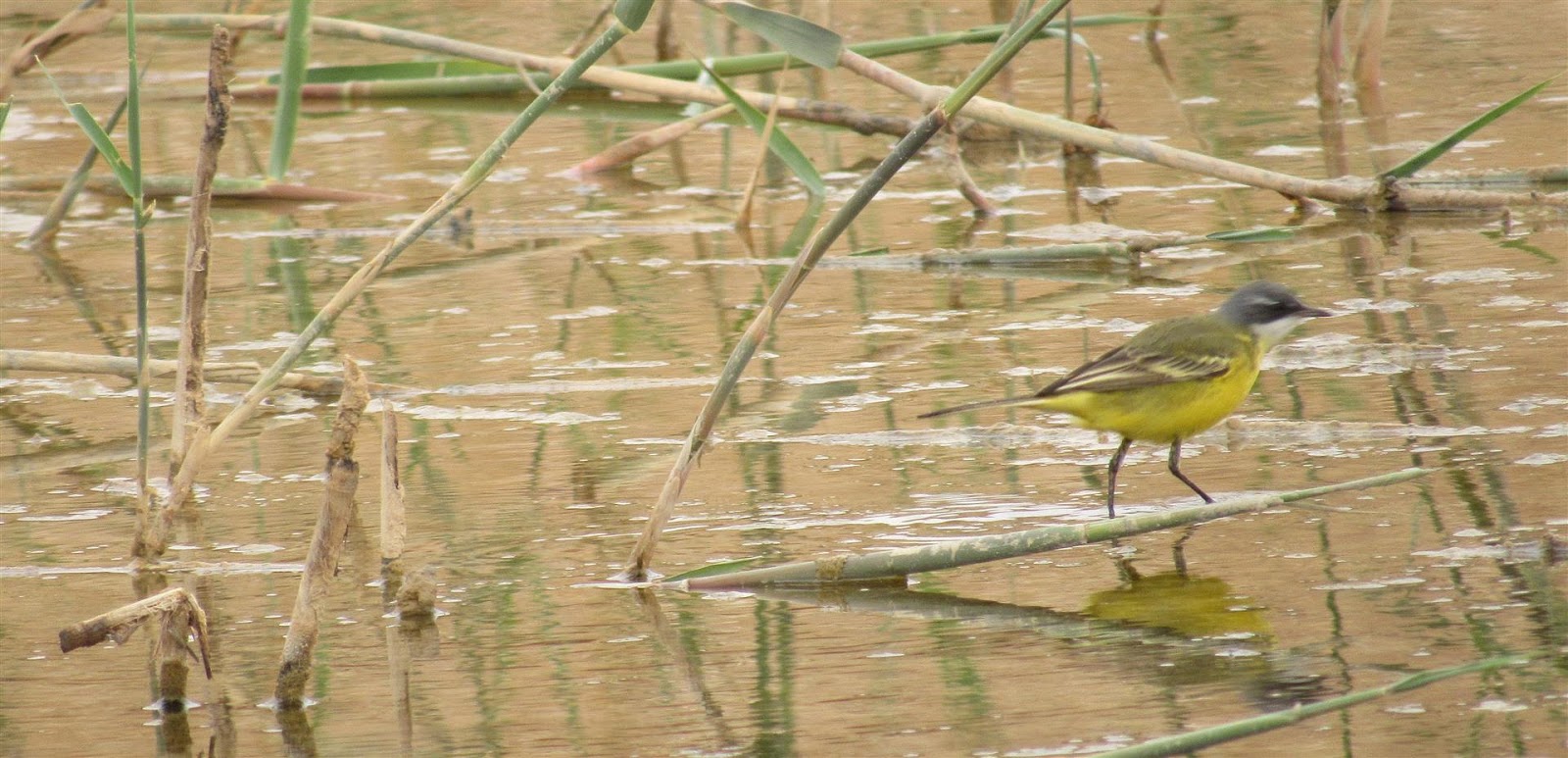
yellow wagtail

I found it interesting that there were more yellow wagtail at the oasis than white wagtail despite its northern location and still being winter.

black winged stilt

The further west I walked the more water there was in the wadi. The water was deep enough for black-winged stilt. 

northern shoveller

I found my first ducks. There was a group of northern shoveller and also a single Eurasian teal.

Eurasian teal

Ironically it was the only Eurasian teal I saw on site.

greater flamingo

In the middle part of the oasis there were large numbers of greater flamingo, common moorhen and glossy ibis.


common moorhen

There were several ruddy shelduck.

ruddy shelduck

Laayoune is certainly one of the most important sites for wintering marbled duck. I saw well over 50. They were most prevlaent in the mid sector and the western end of the oasis.

marbled duck

As well as black-winged stilt, its cousin, pied avocet, was present.

pied avocet

The deepest water is on the western side of the oasis and in particular on the southern bank.

Here the water was deep enough to attract black-necked grebe.

black-necked grebe

A similar number of little grebe were observed and the two species associated.

black-necked grebe (l) little grebe (r)

While there were several tens of gulls present, for the most part they were either black-headed gull or lesser black-backed gull.

black-headed gull

Birds of prey seen were initially restricted to marsh harrier and common kestrel.

marsh harrier

I made a small detour away from the water's edge to a near-by wooded area. Here were no fewer than three black redstart.

squacco heron

The diversity continued. Grey heron and squacco heron had a preference for this western side.

Audouin's gull

On a rock in relatively deep water was an Audouin's gull. It was the only one of a third species of gull observed at the site.

two gulls

Audouin's gull is not trivially separated from immature Mediterranean gull. Size is one of the easiest indicators. Here you can see it is it much larger than black-headed gull whereas as a Mediterranean gull is only marginally so. 

marsh harrier with kill

As I walked further west, I spotted a marsh harrier with a kill. It seemed to be a male northern shoveller.

hybrid pochard x ferruginous duck

The water was deep enough in places to attract common pochard.This is a diving duck and requires deeper water than dabbling ducks. There are relatively few sites in the Sahara which they are attracted to. The bird above was with four common pochard ia a hybrid. Thanks to those who commented. I checked with experts who have identified the type of hybrid. Unfortunately I can't reply to comments to the blog anymore. Somehow google have produced a recent bug preventing me from doing so!

Eurasian spoonbill

Eurasian spoonbill were numerous.

osprey

Over the deep water at the western end, a pair of osprey flew over a few times. I still don't know whether the water contains fish.
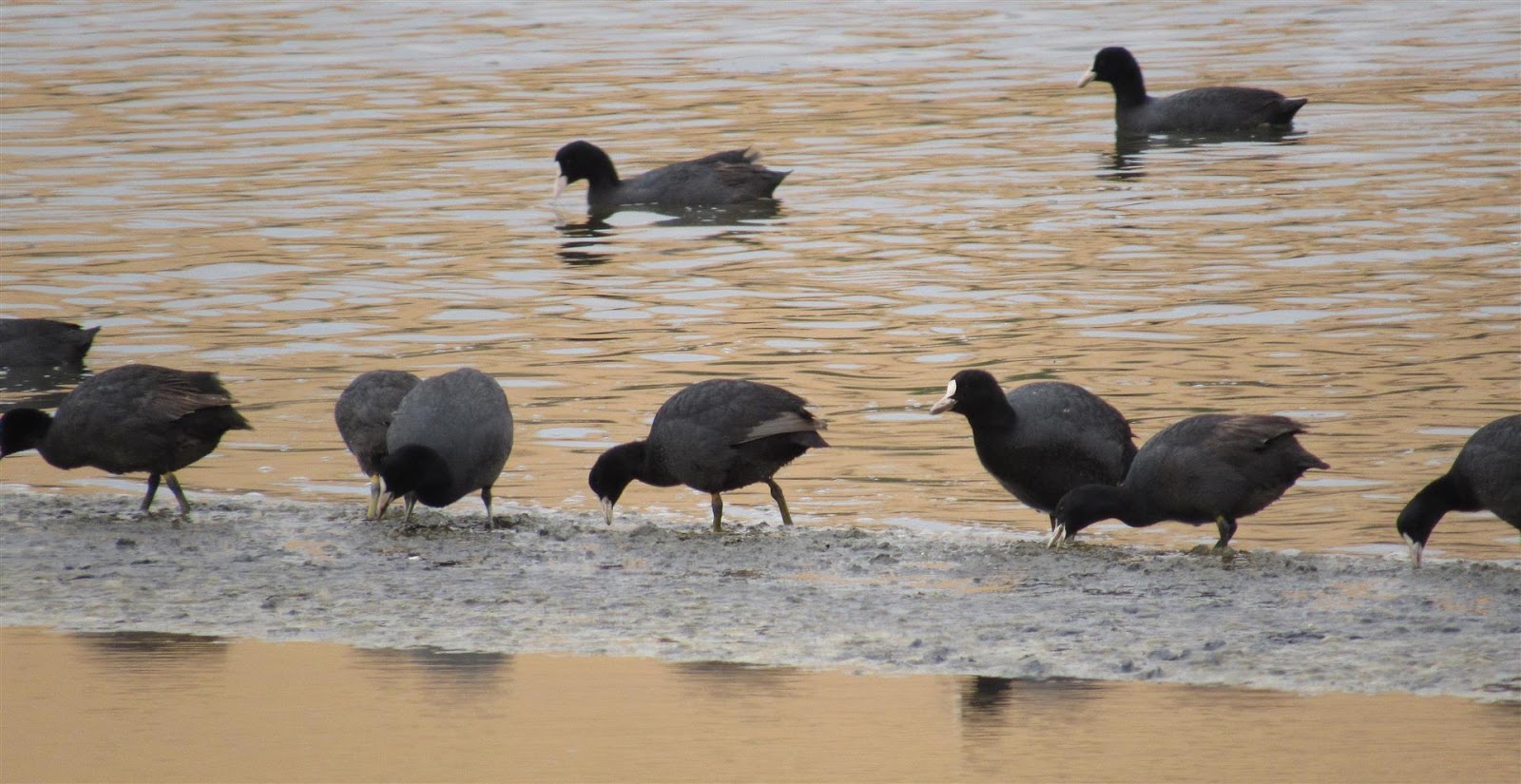
Eurasian coot

This western end kept giving more and more species. There were tens of Eurasian coot. However four white stork, near-by, were a surprise.

white stork

They were found at the extreme western part of the water body. I made my way back after I saw them. I went back with a brisk walk as time was now limited. I didn't get much chance to bird. However a flock of cattle egret were too large and numerous to miss.

cattle egret

The birding had fully lived up to expectations but even with five hours, it felt a bit rushed. I thought it was worth a second look two days later. That time my birding concentrated on the adjacent bushes and cliffs to the water. I was rewarded with a further six species not seen on Thursday. I will blog about that next.

54 species seen on Thursday 15th February at Laayoune
Ruddy Shelduck  
Northern Shoveller  
Common Pochard  
Marbled Duck  
Tufted Duck  
Little Grebe  
Black-necked Grebe
Greater Flamingo
White Stork  
Grey Heron  
Little Egret  
Cattle Egret  
Squacco Heron  
Glossy Ibis  
Eurasian Spoonbill  
Osprey  
Western Marsh Harrier  
Common Moorhen  
Eurasian Coot  
Black-winged Stilt  
Pied Avocet  
Common Ringed Plover  
Little Ringed Plover  
Black-tailed Godwit  
Ruff  
Little Stint  
Common Snipe  
Common Sandpiper  
Green Sandpiper  
Wood Sandpiper  
Common Redshank  
Black-headed Gull  
Audouin's Gull  
Yellow-legged Gull  
Lesser Black-backed Gull  
Feral Pigeon  
Collared Dove  
Eurasian Hoopoe  
Common Kestrel  
Southern Grey Shrike  
Barn Swallow  
Common House Martin  
Common Chiffchaff  
Iberian Chiffchaff  
Sedge Warbler  
Bluethroat  
Black Redstart  
European Stonechat  
White-crowned Wheatear  
Black Wheatear  
Black-eared Wheatear  
Western Yellow Wagtail  
White Wagtail 
House Sparrow  

Saturday, 2 September 2017

F-Nord lake: not dead yet

So F-Nord lake isn't completely pumped out. I went there on Friday to see what remained of the best and only fresh water birding site in the city.

The authorities had started pumping it out. The level had reduced and I had assumed it would all be gone as part of the drive to remove standing water throughout the city.

Whether the heavy rain last week (when 40% of a year's rain fell in one day) has topped the water up or the authorities have decided to allow the lake to remain at the new lower level, I still don't know. I can see that the three low lying houses have already repainted their walls suggesting they believe levels will never rise again.

Either way, I enjoyed the birding while I could.

squacco heron

Large birds are generally the most easily seen and there was some variety of heron family members. Three squacco heron may not sound many but it is the largest number I have observed at this site.

little egret

There are often a reef heron or two on site but rarely do I see its close cousin, little egret.

glossy ibis

Two glossy ibis and a single grey heron were the other members of the extended heron family present.

coot chicks

This may be the only place south of the Sahara in West Africa where coot are present all year round and where they regularly breed. There doesn't seem to be a set breeding season. I have seen young chicks in February, other spring months and now again at the beginning of September. 

It is not the only place in sub-Saharan Africa where they have bred. I am told that they have bred in Northern Senegal though I don't know the scale or regularity. I wonder if sub-Saharan breeding is actually wider spread. It would be interesting to know whether any of the pools off the Niger river in Mali support them too. It is a known wintering ground and I would imagine the conditions are similar.

several coot

There is a high probability that the coot seen at this time of year where born here.

little grebe (left)

Little grebe prefer water at least one metre in depth. I predict they will be the first of the four breeding water birds to leave here if the water goes lower.

African swamphen

None have left yet. African swamphen can still be seen in or close to the reeds.

garganey (left) and moorhen (right)

Moorhen are still present in seemingly their usual numbers too. The one above was swimming next to a garganey. Indeed the garganey was not the only duck on site.

northern pintail

There was also a northern pintail. Before I left for the summer in June, one of each of these species had been seen during that month and I speculated whether they would over-summer. I don't know whether this were the same two birds or not. However, I saw neither species on my first visit back after the summer.

marbled duck

One duck that is definitely new was a marbled duck. The lake had up to six in the early winter last year so this species wasn't a surprise though the timing was. There again no two years are the same.

mostly little stint

Given the lower levels of the lake, a larger number of waders was expected this cycle. There were certainly larger numbers of little stint and even wood sandpiper than I have seen before.

common ringed plover

Several common ringed plover and the odd common sandpiper added to the mix.

common greenshank (left)

Common greenshank and ruff are not observed so commonly at the lake. This is particularly true of ruff.

ruff

Woodchat shrike was expected and seen. Southern grey shrike was much less expected. This one looked like the sub-species algeriensis. As I observed last winter, a few seem to migrate across the Sahara to here. 

southern grey shrike

There were a small number of terns and gulls present. Three black tern were hawking over the water. This is by far the most common marsh tern to migrate along the coast near Nouakchott.

black tern

I was most surprised to see two juvenile black-headed gull.

black-headed gull 1

Last year it was four weeks later until I noticed the first one.

black-headed gull 2

I spotted four types of warbler. More than half were willow warbler. These were mostly out in the open.

first year willow warbler

Deep in one of the few trees that overhang the water I found a western olivaceous warbler. In some reeds I fleetingly saw a European reed warbler.

sedge warbler

I got prolonged views of two sedge warbler albeit from distance and in two quite different parts of the lake. Last winter I saw one or two all winter long. I study them all for aquatic warbler but I have always drawn a blank. I think I deserve one for the effort especially as thier main wintering ground worldwide is only 200 kilometres way on the Senegal River delta.

In birding, everything comes in the end if you are patient and persistent enough.

Species seen at F-Nord lake on September 2nd
Garganey  
Northern Pintail  
Marbled Duck  
Little Grebe  
Grey Heron 
Little Egret  
Squacco Heron  
Glossy Ibis  
African Swamphen  
Common Moorhen  
Eurasian Coot  
Spur-winged Lapwing  
Common Ringed Plover  
Ruff  
Little Stint  
Common Sandpiper  
Common Greenshank  
Wood Sandpiper  
Black-headed Gull  
Black Tern  
Speckled Pigeon  
Laughing Dove  
Little Swift  
Blue-cheeked Bee-eater  
Southern Grey Shrike  
Woodchat Shrike  
Willow Warbler  
Western Olivaceous Warbler  
Sedge Warbler  
Eurasian Reed Warbler  
Western Yellow Wagtail  
House Sparrow  

Thursday, 20 April 2017

Heavy passage at the waste water site

It had been two weeks since our last visit to the waste water site north of the city. Even then there was noticable passage. Both European bee-eater and European roller were added to my country list.

Last Sunday there was heavy passage. 

female pied flycatcher

I had expected to see pied flycatcher given the large numbers that passed through Nouakchott last autumn. I was right.

male pied flycatcher

Once again there were woodchat shrike present. There have been waves of this species passing though for six weeks now. Very many winter in southern Mauritania and they will be included in those passing through.

woodchat shrike

More common redstart were also observed but whinchat were the first seen in the Noaukchott area this season.

whinchat

However it was the warbler passage which was the most significant. No few than seven types were observed. The numbers present were probably much higher than observed as we didn't go into the densest areas of trees.

Melodious warbler was probably the least common.

We spent considerable time next to the main body of dumped water. Only three warblers were easily seen there.

willow warbler

Willow warbler were in the very short scrub and on surrounding ground.

blackcap

Blackcap kept making forays out of a near-by large tree onto exposed dead bushes in the middle of the water. This gave excellent and prolonged views. However I was a little disappointed there were no garden warbler with them. This species has still evaded me in Mauritania.

sedge warbler

There was a third warbler observed over the water. It was sedge warbler.  It appeared to have some sort of damage or moult to its tail but otherwise seemed quite healthy.

rear view of sedge warbler 1

Views were extremely good for a species which is often hidden in reeds. It's relative, Aquatic warbler, should also be possible at this site on passage.

rear view of sedge warbler 2

Many barn swallow were hawking over the water and at least each of red-rumped swallow and house martin were present.

barn swallow

On the last visit two weeks before a lone European bee-eater was seen. This time there was a lone blue-cheeked bee-eater. This was the first time I or my birding partner, Mohamed Vall, had seen one in Mauritania since December 10th.

blue-cheeked bee-eater

It is easy to find the cleanest parts of the water body which is very contaminated overall. You just need to follow the waders.

ruff

Little stint was the most numerous and ruff was arguably the most interesting.

red-billed quelea

Along with the house sparrow and Sudanese golden sparrow, some red-billed quelea ventured out on to the exposed dead bushes. This was arguably the most interesting observation of the day. This is the furthest north I have ever seen them. 

The other most interesting observation were Eurasian golden oriole which were sighted during our walk back to Mohamed Vall's car. This was an addition to my country list. Unfortunately though we caught up with them three times, they evaded the camera each time.

Namaqua dove

The site is very active at the moment. Come the summer the few resident birds such as Namaqua dove, larks and sparrows will probably have it to themselves.

Species seen at the waste water site
Common Ringed Plover  3
Little Ringed Plover  1
Ruff  2
Little Stint  16
Common Sandpiper  3
Common Greenshank  1
Wood Sandpiper  3
Cream-coloured Courser  2    
Speckled Pigeon  11
Laughing Dove  12
Namaqua Dove  16
Common Swift  4
Eurasian Hoopoe  2
Blue-cheeked Bee-eater  1
Woodchat Shrike  5
Eurasian Golden Oriole  4    
Black-crowned Sparrow-Lark  8
Crested Lark  5
Barn Swallow  26    
Red-rumped Swallow  1
Common House Martin  1
Willow Warbler  12    
Common Chiffchaff  1
Western Bonelli's Warbler  2    
Western Olivaceous Warbler  1
Melodious Warbler  2   
Sedge Warbler  1
Eurasian Blackcap  7
European Pied Flycatcher  8
Common Redstart  2
Whinchat  4
Northern Wheatear  2
Western Yellow Wagtail  7
Tawny Pipit  1
Tree Pipit  2
House Sparrow  8
Sudan Golden Sparrow  14
Red-billed Quelea  6