Showing posts with label greater painted snipe. Show all posts

Thursday, 24 August 2017

Greater painted snipe north of Nouakchott

Last Saturday I went to the waste water site just north off of Nouakchott and just off the Nouadhibou road.

This is my newly favoured local site given the demise of F-Nord Lake.

It did not disappoint. I observed 35 species during a morning session there. Furthermore there was quality as well as quantity.

I had expected western paleartic migrants and I got them. However there was one Afro-tropical migrant which had arrived from the other direction which stole the show. More about that later.

spur-winged lapwing

Early on, I visited the row of trees that held so many warblers the week before. Migrant passerine windfalls can be very patchy and the week before had been a good one. On Saturday I found only one western orphean warbler in the same place as many warblers the week before. This was not a good start but things improved after this.

I moved out of the avenue of trees towards the main water body a little disheartened. As I walked there, the now usual noisy reception from a number of spur-winged lapwing greeted me.

They make it difficult to approach without scaring the other birds.

black-winged stilt

A few black-winged stilt were dotted about.

common swift

In the early morning there was alot of action above the water. A group of common swift passed through on their way south. They stayed for about an hour. A similar number of barn swallow lingered longer. Just before I left the site two more common swift arrived.

glossy ibis

There were an even larger number of redshank present than the week before. Though I spent my time trying to get a good look at a group of ibis. They all turned out to be glossy ibis but I scrutinised them thoroughly for potential northern bald ibis. The latter bird sometimes wanders into Mauritania from the north.


four glossy ibis

I admit I didn't even notice at the time that one much rarer bird had photobombed my pictures of the four glossy ibis.

greater painted-snipe on the right

Lo and behold, a greater painted-snipe had been present.

greater painted-snipe (left)

It is well out of range. The Senegal River boundary with Senegal is the normal northern extremity of their range though I do know of one previous report in Nouakchott.

greater painted-snipe (right)

The habitat reminds me of the Sabya waste water site in south west Saudi Arabia where my birding colleagues and I proved they bred.

two glossy ibis and a greater painted-snipe

They can wander as witnessed when I found one at Raysut water treatment plant in Salalah, Oman. It almost feels like deja vu.

greenshank

The variety of waders contributed to the large number of species seen. Greenshank were present in deeper water as were common ringed plover on muddy sections.

blue-cheeked bee-eater 

Constant sorties from blue-cheeked bee-eater distracted me from my wader watch from time to time.

mixed waders

The picture above shown some of the variety of waders. There is a redshank, two wood sandpiper, two little stint and a dunlin all on one small island.

Having thoroughly searched for more rare waders, I moved back to the trees. This time I started my search at the far eastern end of the avenue. It was more successful than my previous look into trees that day.


western olivaceous warbler

This was the week of the western olivaceous warbler. It was the most common warbler.

close-up of the head of a western olivaceous warbler

There is a very dirty small pond which is surrounded by overhanging bushes along the avenue back towards the car. This was the place where my main variation of warbler types came from this time. There were at least two western olivaceous warbler, a reed warbler, a sedge warbler and a willow warbler there.


Near-by I was scanning the bee-eaters again and one proved to be a European bee-eater. This was only my second in Mauritania and both have been at this site.

European bee-eater 1

I saw it in four different places but I still think it was just one bird. There were no calls and no sign of two together.

European bee-eater 2

I did a second circuit of the main water body. I was happy to get close views of one of the dunlin.

dunlin

Ruff were also present.

two ruff

One of the glossy ibis finally allowed me very close.

glossy ibis

A very early yellow wagtail of the sub-species iberiae was walking along the grass.

yellow wagtail 1

It is good to see grass growing in a few patches. In the last few weeks there hasn't been an off-load of really contaminated water which scorches and kills this type of green growth.

yellow wagtail 2

The last wader I saw before I left was a ruff with some remnants of breeding plumage.

another ruff

I hope to go south this coming weekend. If so there will be a good chance of finding new rainy season birds. Let's see.


Species seen at the waste water site, Nouakchott
Glossy Ibis  
Black-winged Stilt  
Spur-winged Lapwing  
Common Ringed Plover  
Greater Painted-Snipe  
Whimbrel  
Ruff  
Curlew Sandpiper  
Dunlin  
Little Stint  
Common Sandpiper  
Green Sandpiper  
Common Greenshank  
Wood Sandpiper  
Common Redshank  
Laughing Dove  
Namaqua Dove  
Common Swift  
Eurasian Hoopoe  
Blue-cheeked Bee-eater  
European Bee-eater  
Southern Grey Shrike  
Woodchat Shrike  
Brown-necked Raven  
Black-crowned Sparrow-Lark  
Crested Lark  
Barn Swallow  
Willow Warbler 
Common Chiffchaff 
Western Olivaceous Warbler  
Melodious Warbler  
Sedge Warbler  
Eurasian Reed Warbler  
Western Orphean Warbler  
Western Yellow Wagtail  

Monday, 17 April 2017

Gouraye

The biggest single session on the trip to Guidimakha was a week ago on Sunday. It was at Gouraye which is 45 kilometres south west of Selibaby on the Senegal River. It is on the border with Senegal and only a few kilometres from Mali too.

We birded from about 8am though to 1pm with only a half hour break for drinks.

I suspected birding would be good before we even properly started. The first birds seen, on the edge of the town, were black-rumped waxbill up a tree.

black-rumped waxbill

They proved to be numerous around the town much more so than house sparrow.

village indigobird

We started walking west out of the town with the Senegal River immediately to our left. Ironically there were very few birds over the river itself though some great cormorant made a fly-by.

In the town along our path we across a small group of village indigobird foraging. I hadn't realised this parasitical bird even formed flocks.

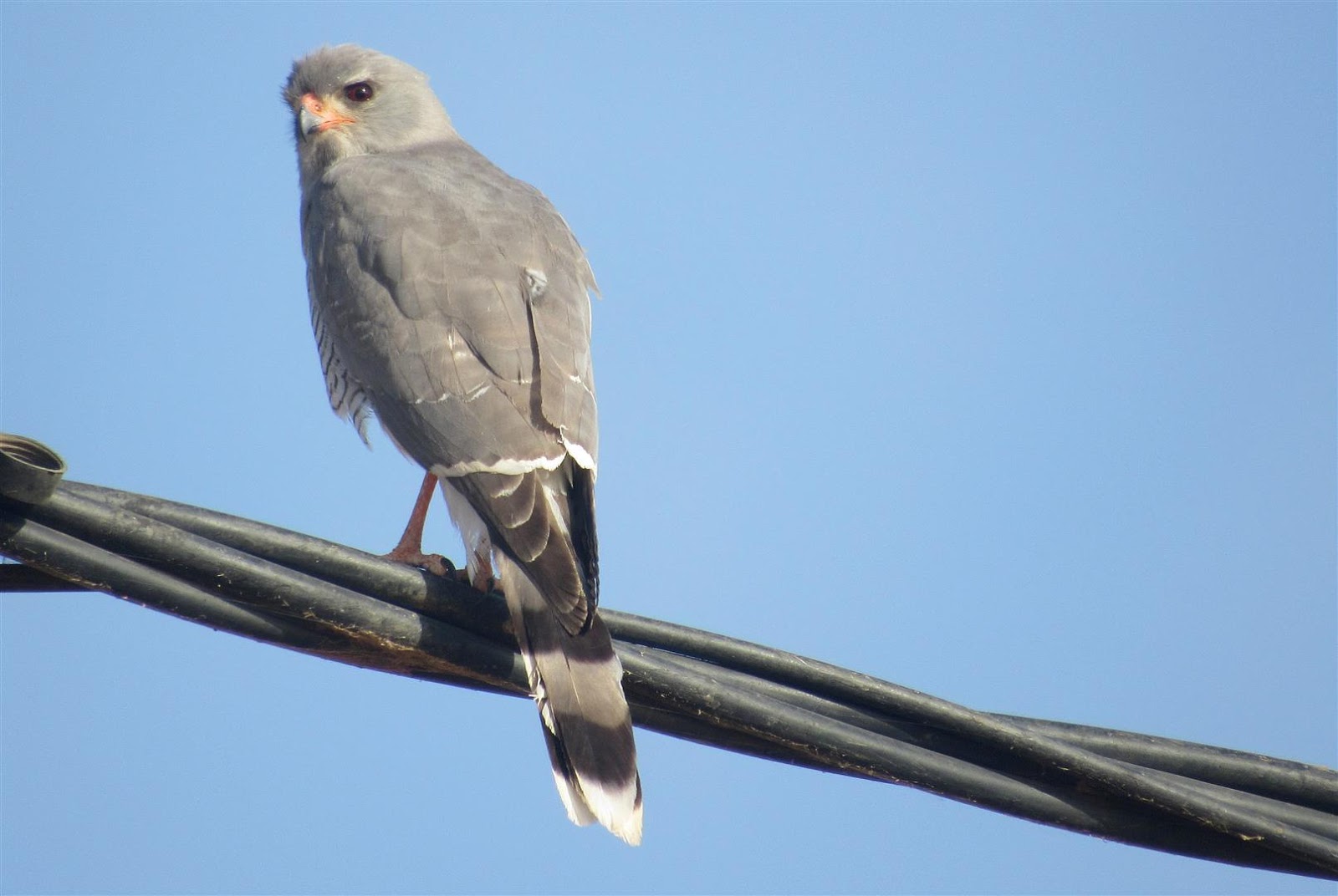
gabar goshawk

An adult gabar goshawk was perched on a wire next to the river.

red-billed firefinch

As well as black-rumped waxbill, two other passerines were common around the gardens of the houses around the edge of the town. These were red-billed firefinch and red-cheeked cordonbleu.

red-cheeked cordonbleu

Further away from the town centre were several Gosling's bunting.

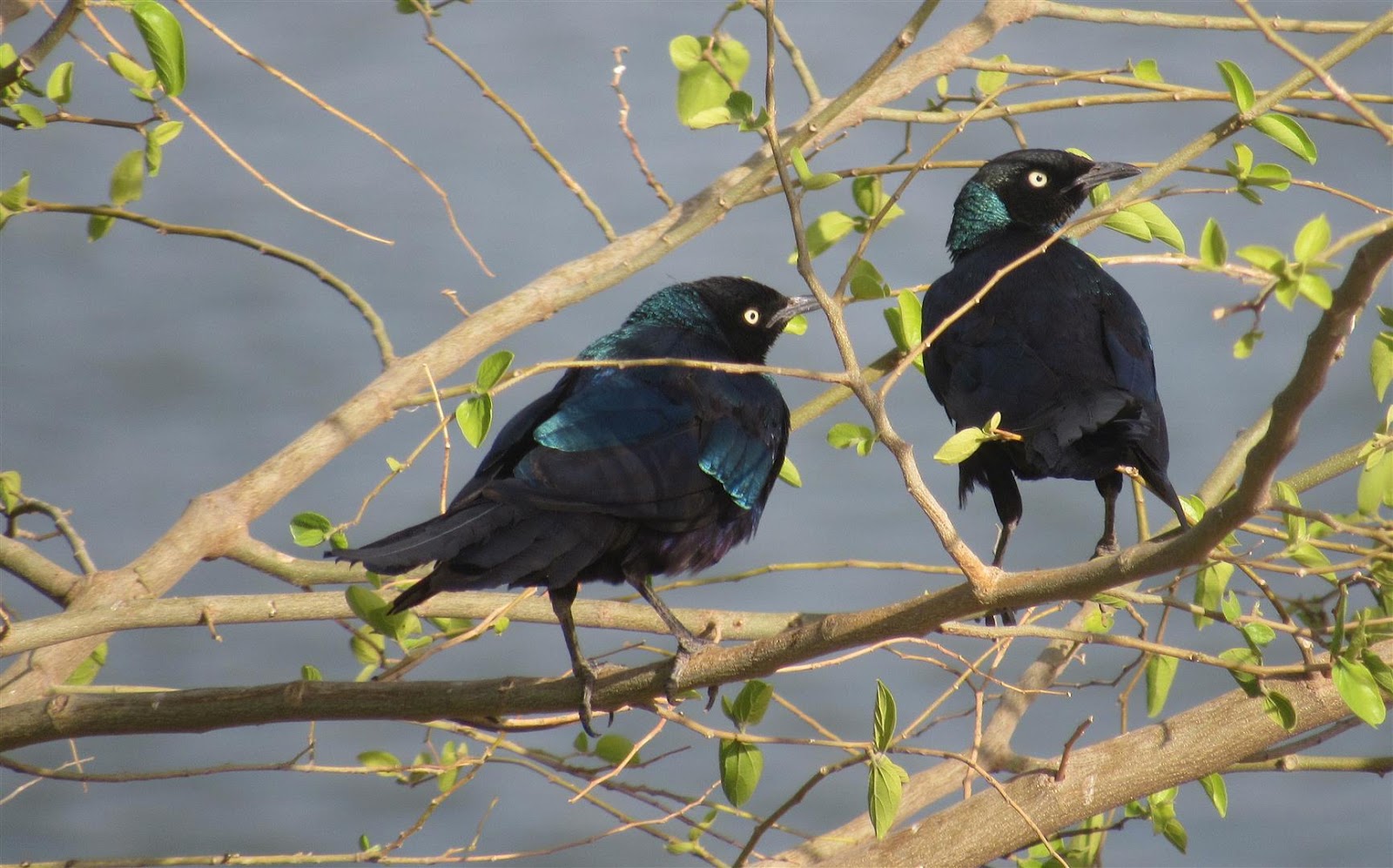
greater blue-eared starling

We continued along the side of the Senegal River out of the town. Some starlings caused identification problems but we later dedcued that they were just young greater blue-eared starling. These are blacker overall than adult birds including the size of the dark area on the face.

tawny-flanked prinia

We had seen a flock of tawny-flanked prinia in woods north of Selibaby on our way down on Saturday but failed to take photos. This time we saw two more which were much more accommodating.

white-billed buffalo weaver

In another tree were two white-billed buffalo weaver.

black-winged kite 1

A black-winged kite flew around but we lost sight of it quickly only for it to return minutes late and land conveniently. This was not only an addition to my Muaritanian list but also a lifer. I once believe I caught a glimpse of one in south west Saudi Arabia but not well enough to be sure.

black-winged kite 2

The western red-billed hornbill did not like the kite on their ground. I don't know whether anyone has reported them mobbing black-winged kite before but at one stage the kite was surrounded by no few than six hornbills.

hornbills mobbing a black-winged kite

Previous birding in Gouraye has descibed the area as a wetland. We could see that water must cover much of the area we were walking along for large parts of the year but we found little standing water. However we continued on our way.

We passed a herd of cattle but quickly noticed that one or two of the cattle had birds hanging from them. They were yellow-billed oxpecker. This is exactly the type of species we came to the deep south to find. It is known only in the wettest parts of the country but we weren't sure whether any would be around in the dry season.

yellow-billed oxpecker on a cow

A few tens of metres further along our way we discovered that the wetland had not all dried up. We had simply not travelled enough from the town. 

African jacana

A medium sized lake awaited us which was surrounded by trees. African jacana was the first "exotic" species we noticed there.


Intermediate egret

Then we had one of those magical minutes that birding very occasionally throws up.

Mohamed Vall was tracking a squacco heron. I followed his line of sight. I noticed a white heron very close-by. To my delight it was an intermediate egret (and not the more common great white egret).

facial close-up of intermediate egret

A close-up of the face showed a lack of the continuation of the yellow gape past the back of the eye found in the great white egret. This was a new bird for me in Mauritania.

Literally seconds later, I realised there were four greater painted snipe in front of the squacco heron and next to the Intermediate egret.

squacco heron and greater painted snipe

This was another addition to the country list.

I like the way that greater painted snipe just walk away from any perceived threat. 

greater painted snipe

A sizeable group of white-faced whistling duck were present at the far side of the lake. A thorough inspection lead to no fulvous whistling duck which remains a target in the country.

white-faced whistling duck

On the far side of the lake we walked into some woodland. There were sounds of several types of dove. One of which we did not recognise. It turned out to be black-billed wood dove which was another first for me in Mauritania.

black-billed wood dove (courtesy of Mohamed Vall)

The temperatures were rising and we decided to turn back. Very few extra species were observed on the way back into town though this time we saw a yellow-billed oxpecker on a donkey.

yellow-billed oxpecker on donkey

Once returned to the town centre, we needed half an hour's drinks break in a shaded shop before we could move on. We decided to go a little east of the main road this time. There was a second wetland here but of a different kind. This was more of a muddy marsh than a lake. 

knob-billed duck and other water birds

There were plenty of water birds including knob-billed duck. This was the only place in the area that we saw yellow-billed kite too.

It was hard work getting close to the birds. In some ways this water reminded me of Lake Aleg: muddy and distant from birds.

We left after an hour's observation there. 

Overall we saw no fewer than 64 species around the town and surrounding areas. It was everything we had hoped it would be.

However the birding trip was not over. Even the same day and on the way back to our night quarters in Selibaby we found another good birding spot with more additions to our lists. I will blog about that next.
Species seen at Gouraye   New additions to my Mauritanian list in bold

White-faced Whistling-Duck  20
Comb Duck  45
Great Cormorant  3
Grey Heron (Grey)  7
Purple Heron  1
Great White Egret  2
Intermediate Egret  3
Little Egret  11
Cattle Egret  18
Squacco Heron  1
Black-crowned Night-Heron  3
Osprey  2
Black-winged Kite  1
Gabar Goshawk  1
Black Kite (Yellow-billed)  2
Black-winged Stilt  5
Spur-winged Lapwing  22
Black-headed Lapwing  4
Greater Painted-Snipe  4
African Jacana  6
Ruff  4
Little Stint  12
Common Greenshank  3
Wood Sandpiper  4
Collared Pratincole  21
Gull-billed Tern  2
White-winged Black Tern  3
European Turtle Dove  2
Mourning Collared Dove  13
Vinaceous Dove  4
Laughing Dove  12
Black-billed Wood-Dove  2
Namaqua Dove  11
Senegal Coucal  4
African Palm-Swift  10
Eurasian Hoopoe (African)  4
Green Woodhoopoe  8
Pied Kingfisher  1
Little Bee-eater  4
Green Bee-eater  6
Abyssinian Roller  7
Ring-necked Parakeet  4
Woodchat Shrike  2
Pied Crow  4
Barn Swallow  35   
Common Bulbul  2
Tawny-flanked Prinia  2
Northern Wheatear  2
Long-tailed Glossy Starling  8
Chestnut-bellied Starling  20
Greater Blue-eared Starling  5
Yellow-billed Oxpecker  6
Western Yellow Wagtail  28
Gosling's Bunting  8
White-rumped Seedeater  12
House Sparrow  5
Northern Grey-headed Sparrow  5
Sudan Golden Sparrow  40
White-billed Buffalo-Weaver  2
Red-billed Quelea  160
Black-rumped Waxbill  35
Red-cheeked Cordonbleu  12
Red-billed Firefinch  9
Village Indigobird  5

Monday, 31 August 2015

Greater painted snipe at Raysut

Just occasionally, there is a special day when birding. One of mine was last Wednesday. I chose to visit Raysut settling pools. I made a big effort to visit all corners of the site despite the hot weather. This proved a very good decision. 

There are a small number of natural-looking pools caused by the overflow of the main large working (and concrete bound) pools. These natural-looking pools are surrounded by marsh which is sodden with up to 25 cms of water. 

I waded through the marshy undergrowth to the second largest of these.

There were several waders there but one was special. It was an adult female greater painted snipe.

greater painted snipe 1

I was very careful not to spook it. I walked very slowly. The common redshank that were also there flew off but the greater painted snipe just walked away, stopping every now and again. It never flew off.

greater painted snipe 2

I had seen this species in Saudi Arabia in very similar habitat. There had been a family group. Indeed our small birding group that day proved breeding in Saudi Arabia for the first time.

greater painted snipe 3

Whilst the bird is rare in Saudi Arabia, it is a vagrant in Oman. Jens Eriksen has told me my sighting (alone this time) was the first in the country for 17 years and there had been only 6 previous records.

greater painted snipe 4

Jens visited the site two days later and the bird was still present.

sooty gull

The overall impression of the site was that there were many more birds present than when I last visited it in late June. Indeed it was the only month when bird density has been low at this site.

This time there were very large numbers of sooty gull presumably because the sea is inhospitable in the monsoon season.

Another bird in very large numbers was African silverbill. 

African silverbill

Returning to waders: there were a few greenshank, wood sandpiper, green sandpiper and common sandpiper. There was at least one little stint too.

green sandpiper

Black-winged stilt is one of the few birds which can be present at the site all year round.

black-winged stilt

There was one early duck there. It was a garganey. This species often migrates earlier than others.

garganey

It is winters further south than many other Eurasian ducks. Nevertheless some do winter in Dhofar.

garganey in flight

It appears the single vagrant spur-winged lapwing and the single red-wattled lapwing stayed all summer.

spur-winged lapwing

They have been inseparable since the other wintering red-wattled lapwing left the site in spring.

red-wattled lapwing

Other notable birds included little grebe and common moorhen whose numbers have increased consistently over the past year. The sight of young little grebe confirms that part of this growth has been through local breeding.

little grebe sunning itself

The little grebe in particular have to careful as some pools have oily patches. The bird above was sunning itself to remove some soiling.

common tern on the ground

Despite the presence of over 200 sooty gull I observed only one tern. Interestingly it was being bullied at time by the resident house crow which did not pick a fight with the gulls.

common tern in flight

Like the little grebe, it had some soiling which masked the true colour of the bill in some shots.

common tern

This one may well be of the sub species hirundo though the soiling makes it difficult to tell if it is that or the more easterly minussensis which is also seen in Dhofar.

Over the weekend, I had a completely different change of scenery. I visited some desert farms in search of passerine migrants. I will blog about that next.