Showing posts with label intermediate egret. Show all posts

Monday, 17 April 2017

Gouraye

The biggest single session on the trip to Guidimakha was a week ago on Sunday. It was at Gouraye which is 45 kilometres south west of Selibaby on the Senegal River. It is on the border with Senegal and only a few kilometres from Mali too.

We birded from about 8am though to 1pm with only a half hour break for drinks.

I suspected birding would be good before we even properly started. The first birds seen, on the edge of the town, were black-rumped waxbill up a tree.

black-rumped waxbill

They proved to be numerous around the town much more so than house sparrow.

village indigobird

We started walking west out of the town with the Senegal River immediately to our left. Ironically there were very few birds over the river itself though some great cormorant made a fly-by.

In the town along our path we across a small group of village indigobird foraging. I hadn't realised this parasitical bird even formed flocks.
gabar goshawk

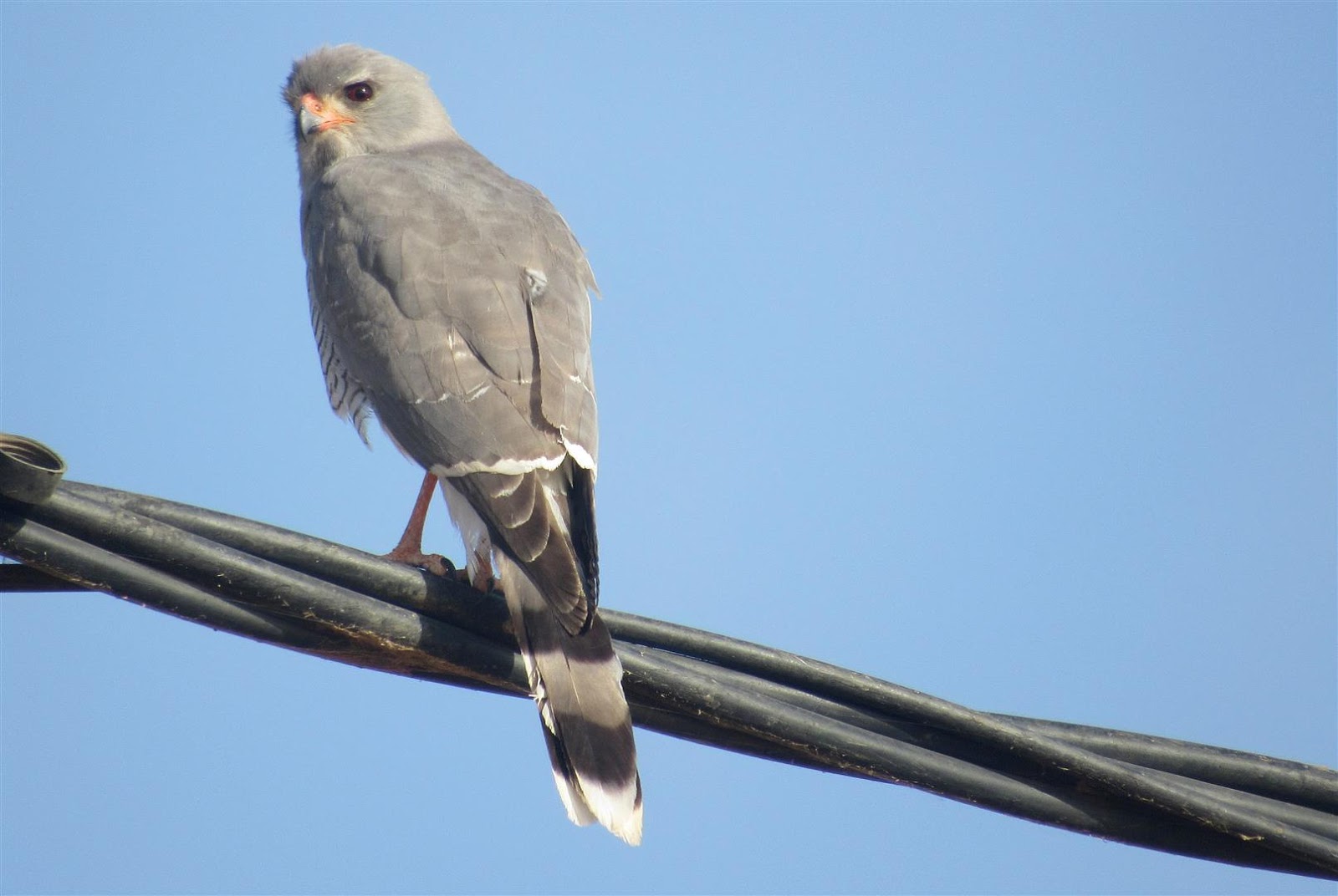
An adult gabar goshawk was perched on a wire next to the river.

red-billed firefinch

As well as black-rumped waxbill, two other passerines were common around the gardens of the houses around the edge of the town. These were red-billed firefinch and red-cheeked cordonbleu.

red-cheeked cordonbleu

Further away from the town centre were several Gosling's bunting.
greater blue-eared starling

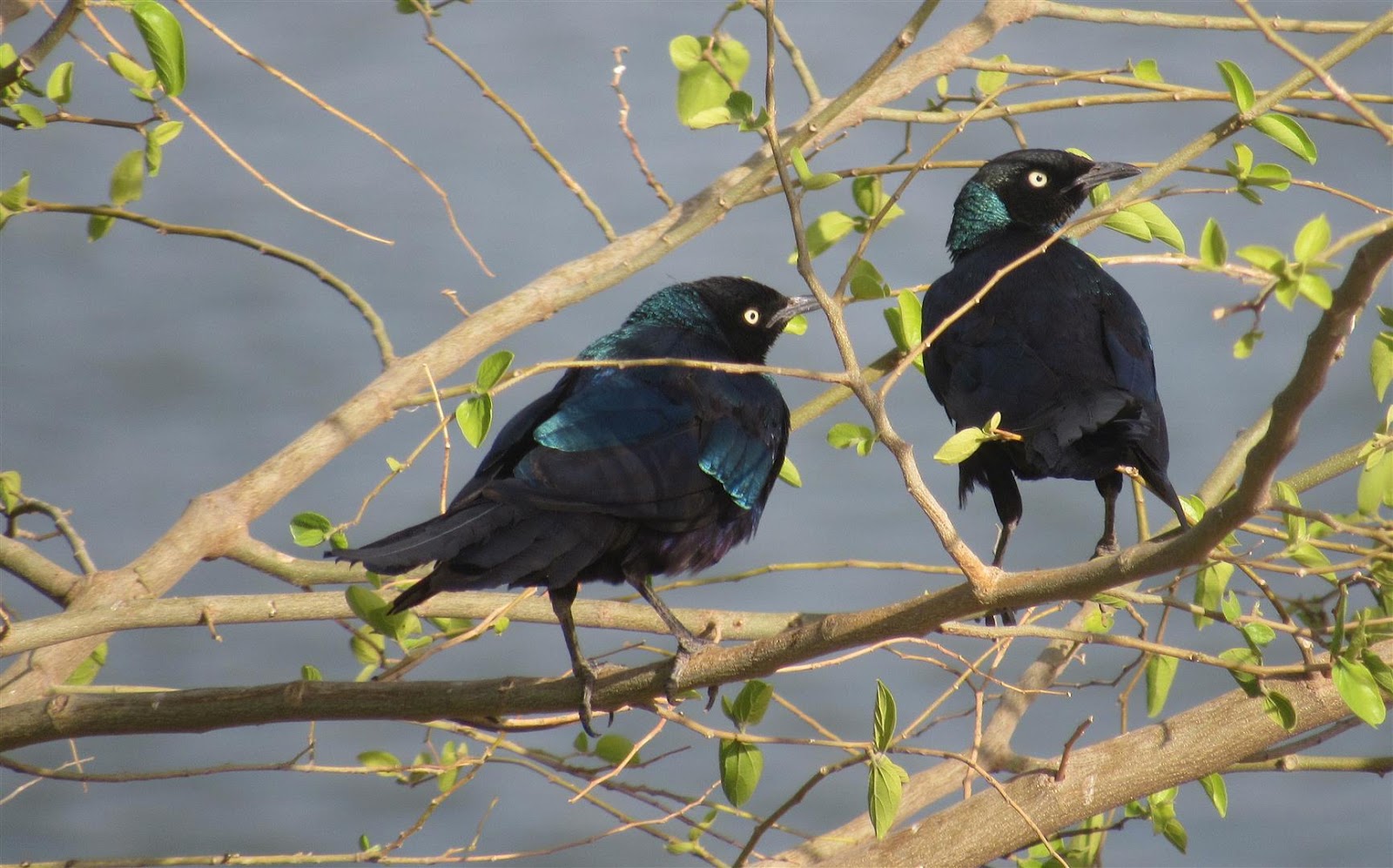
We continued along the side of the Senegal River out of the town. Some starlings caused identification problems but we later dedcued that they were just young greater blue-eared starling. These are blacker overall than adult birds including the size of the dark area on the face.

tawny-flanked prinia

We had seen a flock of tawny-flanked prinia in woods north of Selibaby on our way down on Saturday but failed to take photos. This time we saw two more which were much more accommodating.

white-billed buffalo weaver

In another tree were two white-billed buffalo weaver.

black-winged kite 1

A black-winged kite flew around but we lost sight of it quickly only for it to return minutes late and land conveniently. This was not only an addition to my Muaritanian list but also a lifer. I once believe I caught a glimpse of one in south west Saudi Arabia but not well enough to be sure.

black-winged kite 2

The western red-billed hornbill did not like the kite on their ground. I don't know whether anyone has reported them mobbing black-winged kite before but at one stage the kite was surrounded by no few than six hornbills.

hornbills mobbing a black-winged kite

Previous birding in Gouraye has descibed the area as a wetland. We could see that water must cover much of the area we were walking along for large parts of the year but we found little standing water. However we continued on our way.

We passed a herd of cattle but quickly noticed that one or two of the cattle had birds hanging from them. They were yellow-billed oxpecker. This is exactly the type of species we came to the deep south to find. It is known only in the wettest parts of the country but we weren't sure whether any would be around in the dry season.

yellow-billed oxpecker on a cow

A few tens of metres further along our way we discovered that the wetland had not all dried up. We had simply not travelled enough from the town. 

African jacana

A medium sized lake awaited us which was surrounded by trees. African jacana was the first "exotic" species we noticed there.


Intermediate egret

Then we had one of those magical minutes that birding very occasionally throws up.

Mohamed Vall was tracking a squacco heron. I followed his line of sight. I noticed a white heron very close-by. To my delight it was an intermediate egret (and not the more common great white egret).

facial close-up of intermediate egret

A close-up of the face showed a lack of the continuation of the yellow gape past the back of the eye found in the great white egret. This was a new bird for me in Mauritania.

Literally seconds later, I realised there were four greater painted snipe in front of the squacco heron and next to the Intermediate egret.

squacco heron and greater painted snipe

This was another addition to the country list.

I like the way that greater painted snipe just walk away from any perceived threat. 

greater painted snipe

A sizeable group of white-faced whistling duck were present at the far side of the lake. A thorough inspection lead to no fulvous whistling duck which remains a target in the country.

white-faced whistling duck

On the far side of the lake we walked into some woodland. There were sounds of several types of dove. One of which we did not recognise. It turned out to be black-billed wood dove which was another first for me in Mauritania.

black-billed wood dove (courtesy of Mohamed Vall)

The temperatures were rising and we decided to turn back. Very few extra species were observed on the way back into town though this time we saw a yellow-billed oxpecker on a donkey.

yellow-billed oxpecker on donkey

Once returned to the town centre, we needed half an hour's drinks break in a shaded shop before we could move on. We decided to go a little east of the main road this time. There was a second wetland here but of a different kind. This was more of a muddy marsh than a lake. 

knob-billed duck and other water birds

There were plenty of water birds including knob-billed duck. This was the only place in the area that we saw yellow-billed kite too.

It was hard work getting close to the birds. In some ways this water reminded me of Lake Aleg: muddy and distant from birds.

We left after an hour's observation there. 

Overall we saw no fewer than 64 species around the town and surrounding areas. It was everything we had hoped it would be.

However the birding trip was not over. Even the same day and on the way back to our night quarters in Selibaby we found another good birding spot with more additions to our lists. I will blog about that next.
Species seen at Gouraye   New additions to my Mauritanian list in bold

White-faced Whistling-Duck  20
Comb Duck  45
Great Cormorant  3
Grey Heron (Grey)  7
Purple Heron  1
Great White Egret  2
Intermediate Egret  3
Little Egret  11
Cattle Egret  18
Squacco Heron  1
Black-crowned Night-Heron  3
Osprey  2
Black-winged Kite  1
Gabar Goshawk  1
Black Kite (Yellow-billed)  2
Black-winged Stilt  5
Spur-winged Lapwing  22
Black-headed Lapwing  4
Greater Painted-Snipe  4
African Jacana  6
Ruff  4
Little Stint  12
Common Greenshank  3
Wood Sandpiper  4
Collared Pratincole  21
Gull-billed Tern  2
White-winged Black Tern  3
European Turtle Dove  2
Mourning Collared Dove  13
Vinaceous Dove  4
Laughing Dove  12
Black-billed Wood-Dove  2
Namaqua Dove  11
Senegal Coucal  4
African Palm-Swift  10
Eurasian Hoopoe (African)  4
Green Woodhoopoe  8
Pied Kingfisher  1
Little Bee-eater  4
Green Bee-eater  6
Abyssinian Roller  7
Ring-necked Parakeet  4
Woodchat Shrike  2
Pied Crow  4
Barn Swallow  35   
Common Bulbul  2
Tawny-flanked Prinia  2
Northern Wheatear  2
Long-tailed Glossy Starling  8
Chestnut-bellied Starling  20
Greater Blue-eared Starling  5
Yellow-billed Oxpecker  6
Western Yellow Wagtail  28
Gosling's Bunting  8
White-rumped Seedeater  12
House Sparrow  5
Northern Grey-headed Sparrow  5
Sudan Golden Sparrow  40
White-billed Buffalo-Weaver  2
Red-billed Quelea  160
Black-rumped Waxbill  35
Red-cheeked Cordonbleu  12
Red-billed Firefinch  9
Village Indigobird  5

Thursday, 14 April 2016

Eastern egrets at East Khawr

Yesterday afternoon, I visited east Khawr for the first time in ages even though it is very close to my home.

It proved a good decision. It was teeming with waders and other water birds. The undoubted highlight though was the egrets. Not only was there an intermediate egret (and an Indo-Malay one as determined by the black tip to its bill) but there we also about 75 cattle egret.

Intermediate egret

Some of the cattle egret had considerable areas of orange-buff on their heads and upper breast as they move into breeding plumage.

Two at least were definitely eastern cattle egret as the orange-buff was more extensive and covered all the cheeks and throat as well as the head and upper breast. Others may well also be eastern cattle egret and if they stay a few more days the plumage may well develop further to be sure.

two eastern cattle egret

The Oman Bird Rarities Committee uses the IOU classification. In this list, eastern cattle egret is classified as a separate species. Furthermore there have only been 6 records in Oman before and so it is a vagrant. What's more this means another rarity report for me to fill in. 

These birds were seen independently by Waheed Al Farazi and Haitham Al Shanfari so there are plenty of pictures.

eastern (left) and western (right) cattle egret

There were over 40 glossy ibis at the khawr too as well as the same number of greater flamingo.

glossy ibis

Many of the waders were asleep. This more often happens if they have recently travelled far.

redshank, black-tailed godwit and greenshank

The common redshank and black-tailed godwit were approaching breeding plumage.

curlew sandpiper

A single curlew sandpiper was easy to pick out by its plumage too.

little stint with terek sandpiper

A sole terek sandpiper was also present. This species is long billed but this one was more so than usual. 

terek sandpiper with ruddy turnstone

Other migrants included a large group of ruddy turnstone.

lesser sand plover 1

Similarly lesser sand plover were numerous adding to the crowded feel at the front end of the khawr.

lesser sand plover

Relatively few were yet in their breeding plumage but I picked one out to photograph.

ringed plover

Yet more plovers were around including several ringed plover.

grey plover

A greater sand plover, a grey plover and several kentish plover including a very young bird completed the selection of plovers.

I will return to East Khawr in the next few days to see if any more eastern cattle egret can be identified before they all leave for the summer.

Tuesday, 14 April 2015

Khawrs east of the city

It is now getting hot before midday as temperatures seasonally rise. On Friday I decided to continue birding throughout the day. This is something I probably won't do from now on until the khareef (monsoon) season.

In hot weather in Arabia, a good idea is to head to any water source be it natural or artificial such as a sewage works. My main two sites are Friday were natural: Khawr Taqah and Khawr Dahariz (also called East Khawr by birders).

At Khawr Taqah this year there is a flooded area in the middle surrounded by reeds on three sides. It didn't exist early in the winter but I think earth movements for a new harbour development has shifted water and it appeared.

On arrival I quickly spied three greater white fronted goose. This was totally unexpected as this species has usually left by now.

three goose

I tried to make the one with the longer neck which appears a little larger into a greylag goose. It was also blander with less obvious markings.

two female greater white fronted goose

However it is most probably a gander (male) greater white-fronted goose. Apparently male geese have longer necks generally and this bird seemed to be taking the lead. My experience with geese is limited given most of my birding and expertise has been in MENA (Middle East North Africa).

two geese side by side

The two apparently different gender were often side-by side allowing comparison.

the gander

The neck not only appeared longer but was extended more often.

the approach to flooded area at Taqah

There has been a flock of Pacific golden plover in the Salalah area all winter. I assume it is the same group because I have never found two groups in two different places on any given day. This flock has been very settled at Taqah having moved around. It has been in the same place every time I have visited over the past two and a half months.

Pacific golden plover

Many of the birds are starting to acquire summer plumage.

part of the Pacific golden plover flock

There were plenty of other waders there too. The largest groups were little stint followed by little ringed plover. There were also large numbers of grey heron and squacco heron. The latter were loosely packed and almost certainly on migration.

ruddy turnstone

I hadn't seen a ruddy turnstone in Oman except at the rocky coast at Raysut until I spotted a solitary among the pacific golden plover. This marshy ground is not typical habitat and again probably means this bird is migrating.

crab at Khawr Rori

After Khawr Taqah I actually headed away from Salalah down the road to the north west corner of Khawr Rori. This is the part which id mostly trees and reeds with some marshy edges. It is not the main lake area. I saw very little partly because it was disturbed by a goat herd.My best sighting was probably a fresh water type of crab. 

I didn't stay long. I returned to Salalah but popped into Khawr Dahariz before going home which is 2 kilometres from there.

black-tailed godwit

I haven't been visiting Khawr Dahariz very often recently. It is still a good site despite being so close to development. It is best visited early in the morning. In the early evening there are usually lots of cars about near-by and so plenty of disturbance. The cars have helpers for the fishermen who land every evening about 300 metres away.

At the Khawr I noticed many of the waders are heading towards breeding plumage including the black-tailed godwit.

common redshank

Some of the common redshank were also in summer plumage.

Intermediate egret

There are still some lingering wintering water. One was an intermediate egret.

close up of bill of intermediate egret

This one was from Asia rather than Africa as it had a black tip to its bill.

ruddy turnstone

There was another ruddy turnstone there. Having never seen one in Oman outside the Raysut coast before, I suddenly see two in one day in different locations. Furthermore neither location is typical of a ruddy turnstone. Both are marshy.

glossy ibis

There are still about 30 glossy ibis on site. They spend every day either at the Khawr or 1.5 kilometres away in the fields at Sawnout farm. You can often see them commuting between the two places too. I have been seeing them ever since I arrived in Dhofar at the beginning of September.

It was a pretty exhausting day because of the heat. The next day, Saturday, I birded earlier and finished earlier too. I will blog about that next.

Thursday, 6 November 2014

Intermediate egret and more at Khawr Soly

Every week day, either very early or after work,  I try to visit East Khawr, Khawr Soly (Swali) and Ayn Hamran as they are close to my work and flat. Occasionally I go west of the city instead.

Now East Khawr is crowded with visiting birders! Two weeks ago I had it to myself.

My stops there are often short there to see if anything new has arrived. However Khawr Soly is peaceful and I am getting very good results there.

Yesterday, I added two more birds to my Oman list there.

Intermediate egret

The first one was an Intermediate egret. You may recall from a recent blog I had been looking for this bird and Khawr Soly was my best guess where it might be. It turned out to be right.

The black tip to the yellow bill shows this particular bird is of Indo-Malay and not African origin.

second view of Intermediate egret

I first noticed it in the grass margins of the lagoon with it characteristic S bent neck.

Intermediate egret in grass

The general structure is quite different from great white egret. Also the bill is shorter and more robust. The yellow gape line doesn't extend past the eye as it does with the great white egret either.

There were several other egrets and herons around. I counted four grey heron, one purple heron and a western reef heron (eastern) which is often called Indian reef heron.

Western reef heron

This is quite similar to a little egret but the bill is slightly curved, the bird isn't as elegant and if you look closely there are yellow-green tinges to the legs as well as feet.

Eurasian spoonbill

A confiding Eurasian spoonbill was also present.

Tufted duck

Among the moorhen and common coot was a single tufted duck. It is one of those with white undertail coverts like a ferruginous duck. However it head shape and overall colouration mark it out as a tufted duck. Some pictures also show pale feathering near the base of the bill (just noticeable in this picture). This feature is only seen in tufted duck. Following referral to experts, I have changed my identification from ferruginous duck to tufted duck.


This was also a first for my country list and also the first diving duck I have seen here too.


Northern shoveller

Northern shoveller was the other duck present.

Blue-cheeked bee-eater

Blue-cheeked bee-eater flocks were observed at East Khawr, Ayn Hamran and Khawr Soly yesterday or the day before. This one was at Khawr Soly.

Osprey

Three birds of prey pasted over Khawr Soly too. They were Bonelli's eagle, marsh harrier and an osprey.

What it lacks in quantity, Khawr Soly makes up in quality.

Great reed warbler

The highlight from my last visit to Ayn Hamran was a great reed warbler high up  (6 metres) a tree. This is the only reed warbler that does this.

Second view of great reed warbler

Otherwise a red-backed shrike was a new arrival.

red-backed shrike

Namaqua dove are nowhere near as common in Dhofar. Oman as when I birded in Riyadh. This was the first time I had seen one at Ayn Hmaran.

Namaqua dove

East Khawr had many hundreds of birds yesterday including some special ones but nothing I hadn't seen on previous days. However, I did like to see a common snipe walking around and feeding in the open like the other waders.

common snipe

I am sure I will continue visiting these three venues during the week for some time yet.