Showing posts with label red throated pipit. Show all posts

Tuesday, 8 April 2014

The hinterland at Salbukh

While I visited east Salbukh wetland on Friday I occasionally ventured away from the wetland towards the surrounding countryside.

This blog reports on the birds seen more arbitrarily more than 30 metres from the waters edge.   

My first surprise was just how many birds there were. I am sure this was helped by the fact that it had rained a couple of days before and the land was still wet and the sparse vegetation was reinforced with new growth.
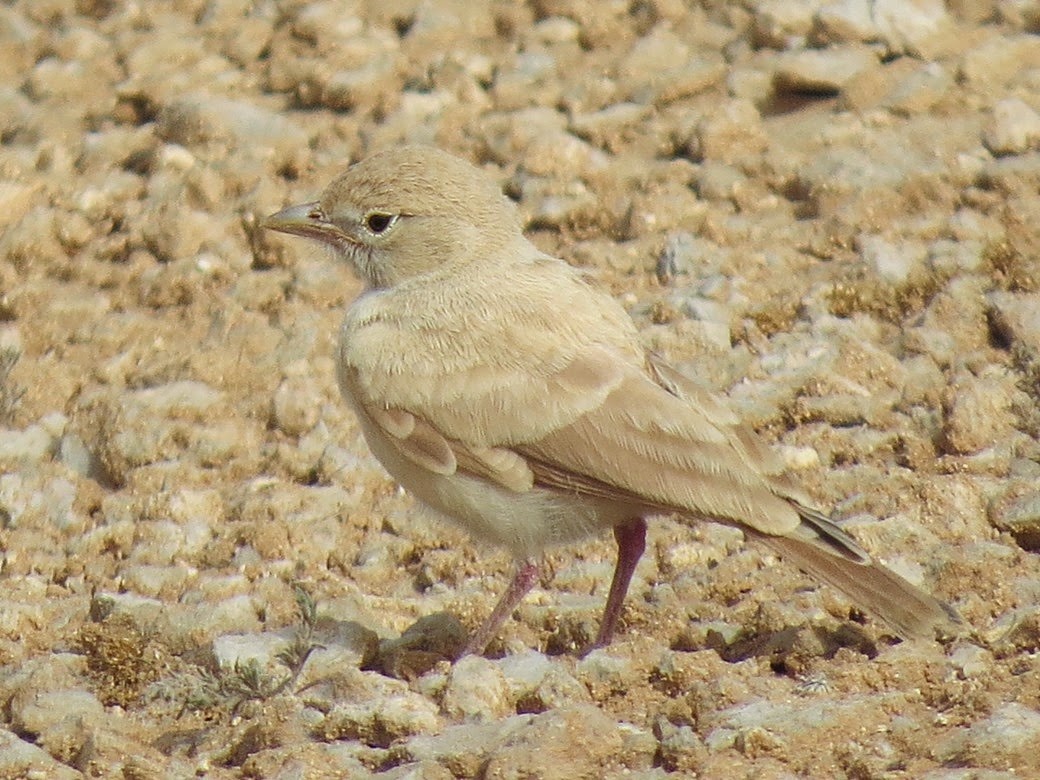
young desert lark

My first encounter away from the wetland was with three desert lark. I didnt immediately recognise the mas the bird I concentrated on had a small bill and was pinkish yellow. 

a second desert lark

However it's face was far too mean looking for bar-tailed lark and I assume it was a young bird but a desert lark nonetheless.

There were crested lark near-by too.

male pied wheatear

Last week I saw just one pied wheatear. This time there were five and they were a mix of males and females.

female pied wheatear

A male black-eared wheatear was the first one I have observed near Riyadh this spring though I saw one almost a month ago near al Birk on the Red Sea coast.

black eared wheatear

Northern wheatear was the third species of passage wheatear seen on Friday.

northern wheatear

There were many yellow wagtail about too. What I found strange was that the big majority were flava sub species with a few lutea also present. I only saw one fledegg out here.

flava yellow wagtail

This was in stark contrast to the ones at the water's edge which were predominately fledegg. I have no idea whether this observation is meaningful but I will be on the look out in future to see if fledegg really does prefer wetter terrain. 

lutea yellow wagtail

As often is the case on passage, red throated pipit were companions of the yellow wagtail. 

red throated pipit

The earth in this area was almost as red as the pipits' throats. They look well camouflaged on sand and were difficult to pick up.

two red throated pipit

Saturday was one of those rare weekend days when I had to go to work so Friday was my only birding day. However next weekend should make up for it as I am visiting the huge Mahazet reserve for the first time.

Thursday, 5 September 2013

Cinereous bunting and other migrants at the farm

The walk from work was arguably every bit as exciting today as yesterday. Admittedly there was no sign of the Egyptian nightjar seen yesterday afternoon but there were other new migrants. 

The best was certainly a (eastern) cinereous bunting seen in the farm's gardens. Friend and fellow birder Mansur Al Fahad, who joined me for the late afternoon, was with me to see it.

It was a lifer for him and it was only the third time I had seen this near threatened bird. The first time was in the same place in April!

cinereous bunting

Mansur has a much better camera than me but I am using my pictures so that it can be blogged the same day.

cinereous bunting facing me

An Isabelline wheatear was observed although probably a different one from yesterday. However today was the first time this autumn that I have seen a desert wheatear.  They winter in large numbers around here but in summer they breed in the north of the country. There was also a male northern wheatear around which is purely a passage bird.

desert wheatear

In among the increased number of yellow wagtail, which have probably been attracted by the near-by pool, was a single red throated pipit. This was another first for this autumn.


red throated pipit

Incidentally most of the yellow wagtail present were the beema sub species also known as Sykes wagtail. These breed in the extreme east of European Russia and western Siberia.

yellow wagtail (beema)

Another first today was an adult woodchat shrike. All the shrikes until now which have passed through have been immature. 

adult male woodchat shrike

One immature woodchat shrike has remained here for nearly two weeks now while the others are long gone.

second view of adult male woodchat shrike

Of the other migrants the thrush nightingale which had been here 6 days was present this morning but nowhere to be seen in the afternoon.

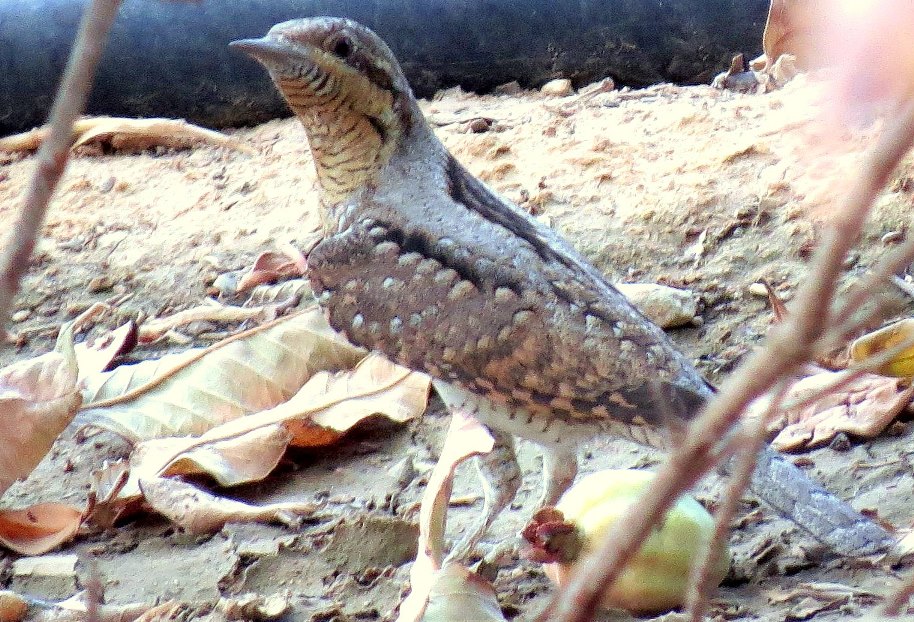
wryneck

Two wryneck were on view at the same time.

spotted flycatcher and laughing dove

Three spotted flycatcher were present and one was an immature. Several common whitethroat were also around but still no other warblers have been through the farm. This is even though other types have been observed at Al Hayer. 

And it's Al Hayer I am visiting again tomorrow.