Showing posts with label black headed gull. Show all posts

Sunday, 29 December 2013

Around Tebrak

On Friday, I went out alone along the Mecca road out of Riyadh since my regular birding partners were on annual leave.

This was speculative birding as I have only travelled 60 or 70 kilometres out west on this road before.

This time I stopped in two areas, one was around Tebrak about 110 kilometres west and again between Quwaiiyah and Ruwaidhah around 220 kiolmetres west.

The area around Tebrak was mostly sandy desert with a few farms courtesy of some advanced water engineering. The area west of Quwaiiyah was altogether different. It was rocky and hilly with several green wadis.

The birding near Tebrak was relatively poor while that west of Quwaiiyah was good.

This blog covers the Tebrak area whereas the next one will look at the much better birding further west.

black-headed gull

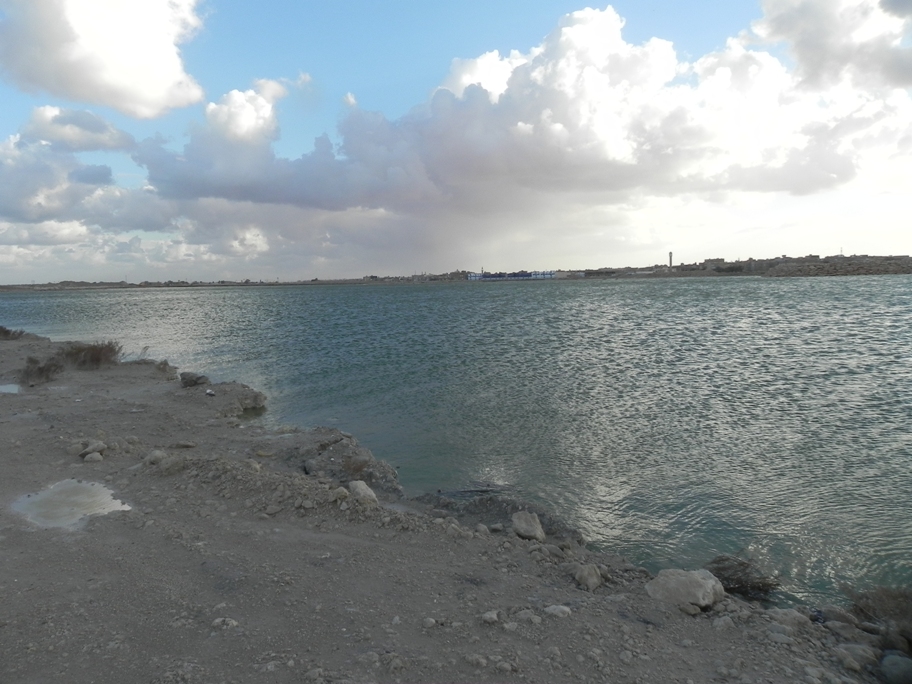
The only high point of the birding near Tebrak was the sight of a black -headed gull swimming in a small temporary lake caused by recent rains. This gull must be close to the furthest point in the whole Arabian peninsula away from the sea!


Spanish sparrow

Otherwise the birding was fairly predictable. Spanish sparrow were roaming the bushes and trees around the few farms.

white wagtail

White wagtail were in the fields and everywhere including service stations where there was a hint of moisture.

laughing dove

Many of the farms were date farms so it is not surprising that laughing dove was the most common dove reminding that its alternative name is palm dove

eight laughing dove

A few house sparrow were seen next to human habitation but at this time of year they were outnumbered in the general area by Spanish sparrow.

house sparrow

Three types of wheatear were seen. They were predictably Eastern mourning wheatear, Isabelline wheatear and desert wheatear

Eastern mourning wheatear

My only excitement with the wheatears was trying to identify a rather grey bird shown in the two pictures below.

Isabelline wheatear

It had hardly any supercilium but a very black tail. I narrowed it down to an immature desert wheatear or immature Isabelline wheatear despite the poor supercilium. I tentatively favour a greyer than usual Isabelline wheatear because of the obvious isolated black alula. 


second view of an Isabelline wheatear

The only other bird in the area was crested lark.

In contrast the birding another 100 kilometres west was diverse and very interesting. I will write about that in my next blog.

Saturday, 18 December 2010

All change at Al Thama

I never knew Al Thama in north east Benghazi when it was an urban wetland. It arguably used to be a natural wetland or an unsightly, polluted tip depending on your perspective.   


When I arrived in Benghazi in May it was already being re-landscaped and tidied up.


By then,most of the natural vegetation had been removed along with the rubbish. However one island was still natural. In May I found breeding black winged stilt, kentish plover and little tern there.


The island has since been re-landscaped too. 

black-headed gull, Al Thama

I am an optimist by nature and I am pretty sure there will be winners and losers among the bird species once the re-development is finished. I am not one of those birders who thinks all re-development is bad news.  

I understand that there will be up to seven lakes in the area replacing the existing two main ones.  

Kentish plover is a great adaptor and I saw them during my visit on Friday morning. I expect them to stay.  However the black winged stilt and little tern won't breed in this area again unless new cover grows.

The area is in transition at the moment so its hard to know which species will benefit and which will lose out. During the UN winter bird count in 2005 over 1,250 waders were reported. I don't think the new scheme will be so amenable to as many waders.

one of the new lakes at Al Thama

Much will depend on the type of landscaping which will be introduced. If its like near-by Buduzeera (very good balance between human recreational needs and the wildlife's needs) there will be tall reeds, trees and grass.

On Friday the largest number of birds at Al Thama were black-headed gull and cormorant. There were tens of the latter on one artificial island. I would expect them to be very comfortable in the new environment. It also seems highly probable there will be more herons and egrets as well as reed warblers in the future if Buduzeera is any thing to go by.

Al Thama by the UN water count team 2005

The picture above shows how degraded the land was.

some of the banking today at Al Thama 

Obviously the area will be very different. 

In this time of transition there were some surprising birds about. I saw several common sandpiper in the various building ditches.

There are more green sandpiper in winter in Libya followed by equal numbers of wood sandpiper and common sandpiper. The presence of the latter two north of the Sahara shocks some people but they are here.

common sandpiper, Al Thama

I have a working rule of thumb as to which sandpiper I am likely to see in which habitat. If the area smells it will be green sandpiper. They don't seem to mind run-off ditches and sewage works. At the other end of the spectrum common sand piper like cleaner water. Wood sandpiper is in between.

kingfisher, Al Thama

The other surprising bird at Al Thama was kingfisher. There were several despite the lack of green cover. Maybe the earth mounds achieved the same trick for them.

I look forward to the completion of the project. It could be an very interesting place. Time will tell.  

Thursday, 16 December 2010

A windy day at Buduzeera

Those who follow this blog regularly will know that Buduzeera is a semi-fresh water, landscaped lake on the outskirts of Benghazi.


For nine months of the year its a popular picnic and walking area. In winter its a bit wild and can be virtually deserted.  One such day was last Saturday when there were only about 10 people around.

Buduzeera last Saturday was wild and windy

There were very large numbers of two birds - cattle egret which breed there and which are there all year round and cormorant.


one of several flock of cormorant which flew over

It has been reported in the past that 300 cormorant winter here. I think that number is very fair. The lake teems with fish and with its shelter must be appealing to them. 

black backed gull

As well as the "big two" birds, there were smaller numbers of several others including black headed gull and black backed gull. Black headed gull is very common in Cyrenaica winter. Black backed gull is very common in Tripolitania but a few make it over further east to here. There were four or five at Buduzeera. 

cattle egret and grey heron

I have said recently that it appears that cattle egret (and little egret - none seen here though) are more hardy than grey heron. This seemed to be the case again. While some of the large number of cattle egret were out and about, all three grey heron I saw were skulking in the reeds, sheltering from the wind.

I saw my first little bittern in Libya here too. It was sheltering in the reeds when we walked past it (unnoticed) causing it to bolt further down the lake but  sadly I lost sight of it. 

Another notable bird was kingfisher which must have an easy time feeding here.

grey wagtail

Finally, on the way to Buduzeera a grey wagtail was pointed out to me near our house. I only see them in the city for a couple of weeks when they first arrive in the autumn and after it has rained (at various times in the winter). Well it had rained the day before and sure enough I saw one or two.

I wonder where they go between rains?