Showing posts with label little bittern. Show all posts

Friday, 2 June 2017

Little bittern at North Nouakchott Lake

It was one of those cooler days in Noaukchott today so I went out straight from work to North Nouakchott Lake.

I am really glad I did. It is often difficult to raise oneself on Friday afternoon after a full week's work.

The reason I am so glad is because I saw my first little bittern in Mauritania at the lake.

I flushed it from the open as I walked round but tracked it in flight and worked very hard to refind it. I wasn't going to let this one go.

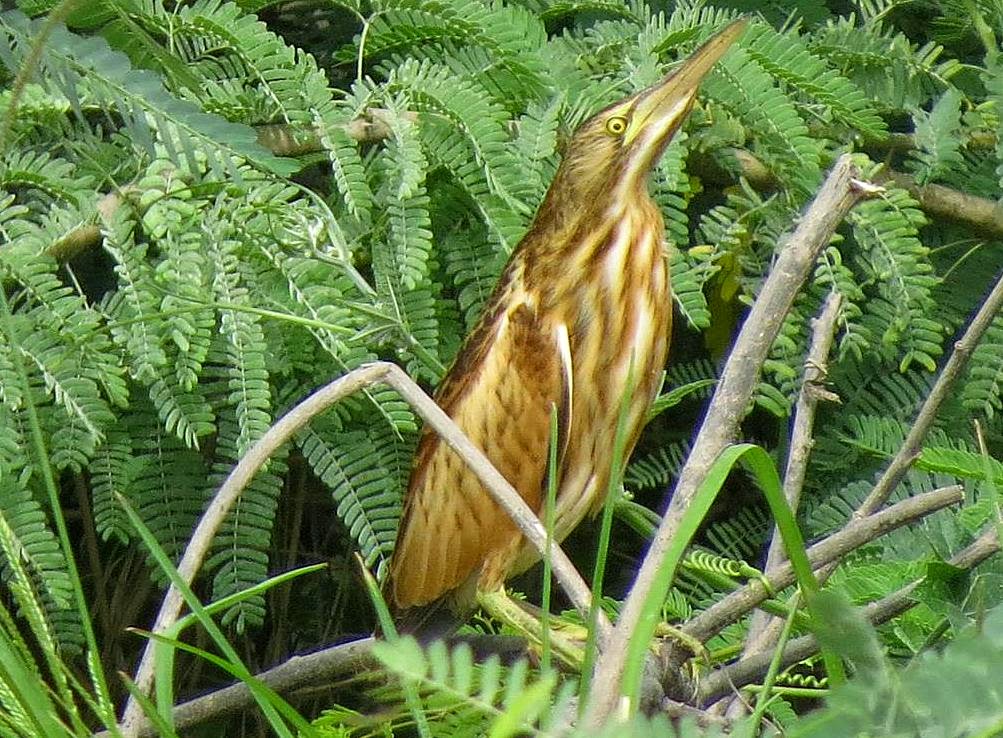
little bittern 1

Luckily it had dropped down at the front of one of the reed beds. Sometimes little bittern fly into the beds and are lost.

little bittern 2

It was not immediately recognisable to me. It has a browner face and neck than the nominate species I am used to.

little bittern 3

I deduce from this that this is not a migrant but a dispersed bird of the African sub-species payesii.
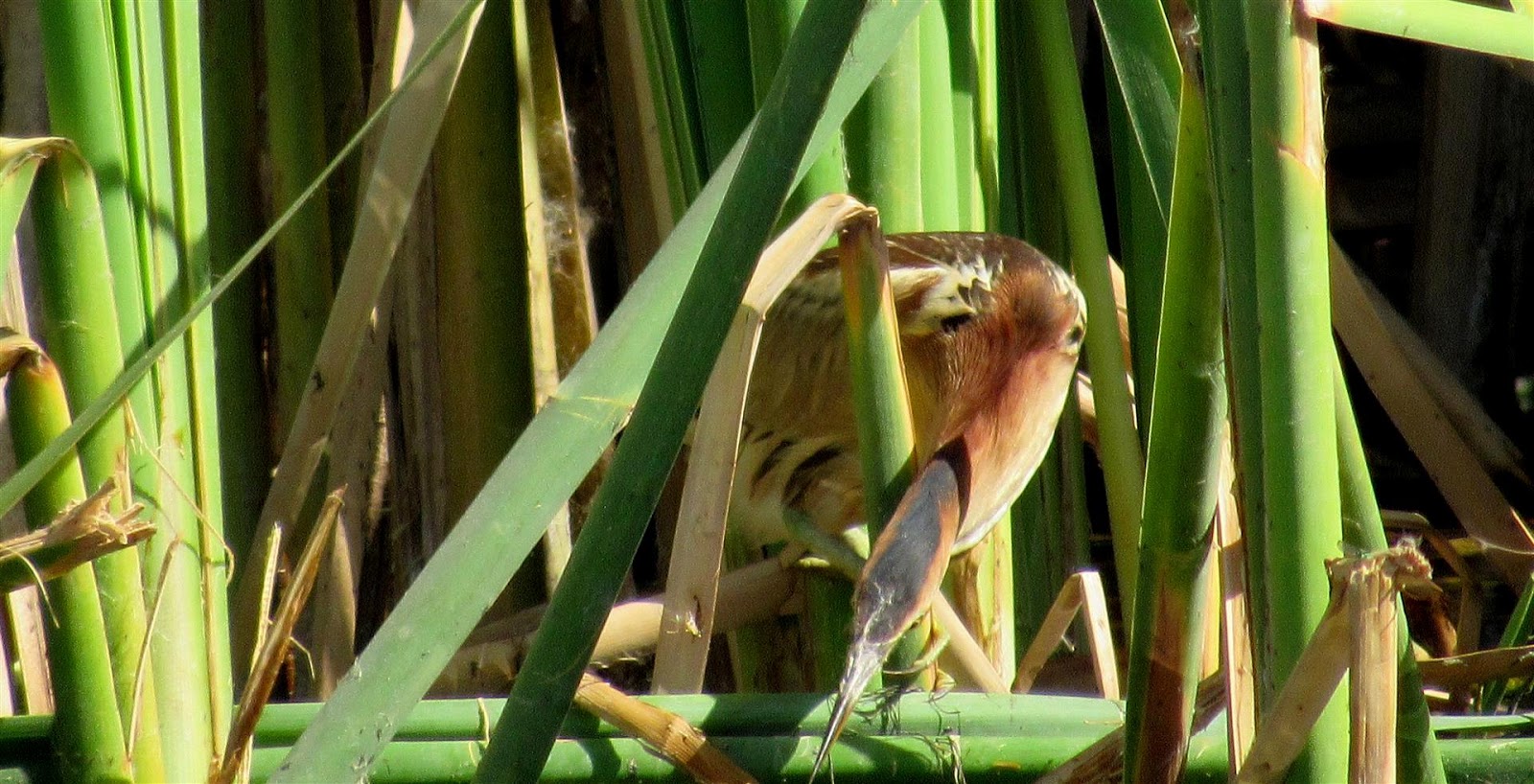
 little bittern showing a chestnut-brown neck

I got very good views of the bird and it allowed me close. You can clearly see from the above photograph that it has the chestnut-brown neck characteristic of payesii.

The distribution maps show it normally only disperses as far north as the Senegal River Delta so this is well out of its known range. North Nouakchott Lake is developing a track record for finding birds doing this. The closest similar result was a dwarf bittern seen there in January.
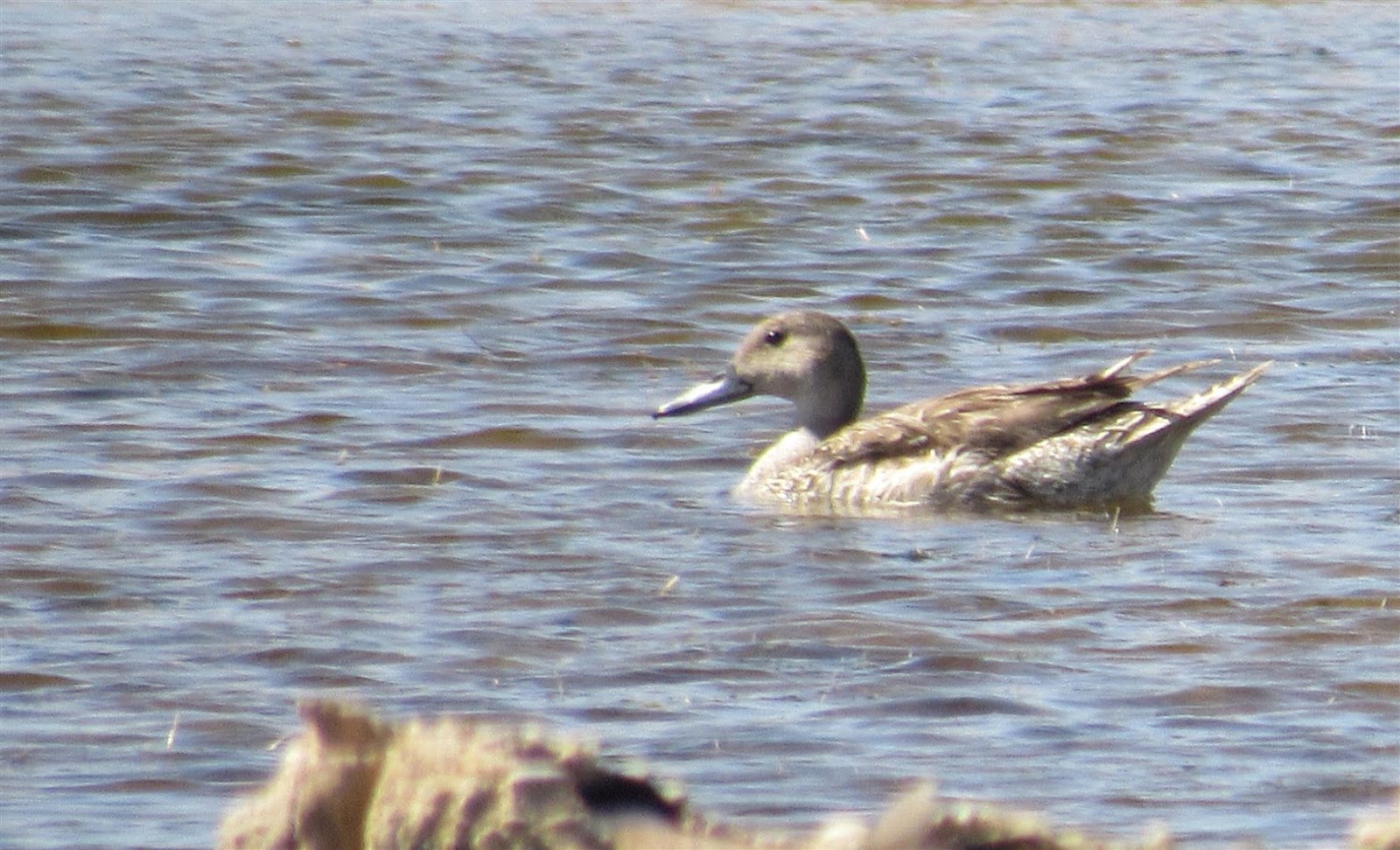
northern pintail

Another odd bird for the location was a northern pintail. This is almost certainly the same bird as was observed two weeks ago. My guess is it will now try to over-summer.

mostly Eurasian coot

The uniqueness of this lake should not be understated. It is the only place in sub-Saharan Africa where Eurasian coot breed.


mostly little grebe

The lake has a high density at the moment of young coot, little grebe, moorhen and African swamphen. Though the coot and Swamphen breed at other times of the year as well.

adult African swamphen

There were no migrant waders at all this time. Indeed the only waders were the resident spur-winged lapwing.

spur-winged lapwing

The only migrants of any type were three barn swallow, one sand martin and a very late common swift.

red-billed quelea

Once again I inspected the sparrow flocks for oddities and came up with one red-billed quelea.

Sudanese golden sparrow

Other species which I don't always see at the lake were western reef heron (2) and squacco heron (2).

Little bittern is species 260 on my Mauritanian list and is a fillip to me as I am grounded in Nouakchott until the end of Ramadan. 

Saturday, 18 July 2015

Oliva north side

I am in Oliva, Valencia, Spain at the moment house hunting for a winter home. This is not a birding trip but I have managed to snatch two sessions of birding over the past week.

As usual for me I start birding by walking directly out of my hotel before attempting any known birding hotspots. 

My hotel is on the north side of the town. There is a water channel a little further north I can walk along which goes virtually all the way to the sea before petering out 30 metres from the it. 

The heron family obviously likes the water channel. 

little bittern

The prize member was an adult little bittern which stayed exposed for a couple of minutes.

grey heron

At least three grey heron were accidentally flushed as I walked along. A single little egret was sighted briefly before disappearing down a side channel.

In that same side channel I glimpsed a common kingfisher.

mallard

In the main channel were several mallard which I presume were domesticated being very tame. In contrast both adult and young moorhen would rapidly take cover as I approached.

House martin are undoubtedly the most common hirundine in the town and over the near-by countryside. Yet I have yet to see one perched on a wire and ironically it was three sand martin which were perched on one alongside the water channel close to the beach. 

sand martin

They were indeed the only sand martin I have seen so far in Oliva.  Near the sand martin and close to the beach I saw two immature yellow-legged gull fly over.

young barn swallow

Barn swallow are more common than sand martin though much less so than house martin. However a trio of young ones sat on a branch over the channel allowing close approach.

distant kestrel

The water channel is along side a road which veers off another which runs through some orange groves towards the near-by village of Piles. Over the junction of these two narrow roads was where I saw the only bird of prey so far, a humble kestrel.

kestrel hovering

The orange groves mostly hold a different set of birds.

an orange in a grove

If you listen and then look carefully there are sardinian warbler about but they are very shy.

goldfinch

In much great numbers are goldfinch and greenfinch.

greenfinch looking left

Blackbird are surprisingly numerous in the groves too though not at all tame. House sparrow are everywhere and I also saw a single serin.

greenfinch looking right

On one of the two walks I reached the edge of Piles which is a village just north of Oliva. There are  collared dove there (also seen in Oliva).

collared dove

White wagtail were seen best there too.

white wagtail

It was the only place I have observed a spotted flycatcher so far.

spotted flycatcher

Back in Oliva there are plenty of hoopoe on the manicured lawns and the screams of common swift flying through the upper parts of the old town cannot be missed even by the most casual observer.

I hope to do some serious birding (as opposed to these informal walks) in the Oliva area over the years if my house search comes off.

Tuesday, 30 September 2014

Raysut treated water lake

I finally made it to Raysut treated water lake on Saturday, a day later than originally planned.

It was not what I expected. The water was very clean so the sewage works is almost certainly state-of-the art.

This meant the lake held clean water and reeds were none existent. Flies were few as well. All this didn't mean there were no birds it just meant they were different than anticipated.

Furthermore, although it is inland the sea is barely a kilometre away and so coastal birds were present.

Little grebe

Nevertheless one of the first birds seen was little grebe. There appears to be a reasonable population there including young birds (see picture above).

The Raysut treated water lake

Black winged stilt was also seen right at the start.

black winged stilts

White cheeked tern was there showing how close to the sea the site is.


white cheeked tern

There was one clump of trees which Indian house crow were claiming for themselves.

Indian house crows

This was yet another water body in the Salalah area with glossy ibis.

glossy ibis

There are a few small pools at the edge of the main water body.

pools at the side of the lake

Temminck's stint was quite common at these.

Temminck's stint

The pools and the sides of the main water were teeming with citrine wagtail. I also saw two yellow wagtail.

citrine wagtail

Although there were a small number of white cheeked tern, the main tern was white winged black tern.

juvenile white winged black tern

Gulls were far more numerous still. Indeed there were well over 150 sooty gull in the area and probably 20 or so Heuglin's gull. It was difficult to assess the exact number because they spent much of their time within the treatment plant out of sight of the general public.

Steppe gull

I was looking out for other gulls. One or two of the large white headed gulls were too pale for Heuglin's gull.The one above was identified with the help of BirdForum as a Steppe gull. This was my first addition to my Oman list of the day.

stained grey heron

A stained grey heron caught my attention and at one stage I thought I may have found a vagrant black-headed heron.

adult little bittern

I had been glimpsing a small bittern all session when I accidentally flushed a juvenile bird over to the far bank. To my surprise when I scanned where it had gone, an adult bird flew straight into view. It was an adult little bittern.

juvenile little bittern

It disappeared from view, only for the juvenile to come straight out into the open giving me better views than the adult.

second pose of juvenile little bittern

I was a little disappointed it wasn't a yellow bittern but that will surely come now i am based in Salalah.

black crowned night heron

Soon after the views of the little bittern, I saw the second addition to my Oman list of the day. Two men were walking in the wadi who flushed a juvenile black crowned night heron. I just  managed a photograph before it disappeared.

I worked hard at the water all day and only got good rewards towards the end. 

However before I left the area completely, I chose to cross the road and spend a few minutes in the dry part of the wadi.


spotted thick-knee

I seem to have the knack of stumbling across spotted thick-knee. This time there were at least three and probably four birds.

two spotted thick-knees

My tip for seeing this bird, is get out of your car and walk. They are unlikely to be seen from a car unless they are within 3 metres of your window. Even then you could miss them.

Sunday, 15 June 2014

East Salbukh settled down for the summer

Sometimes during a birding session, you can have one small area and moment which produces a totally disproportionate part of your birding enjoyment.

This happened to me as I birded East Salbukh early on Saturday morning.

One corner on the western side of the wetland was a treat to stop at, listen and observe.

little bittern

It was noisy but initially there seemed to be nothing to see. One of the noises was little bittern screaming calls. I soon saw both an adult and a juvenile.

little bittern screaming

Sounds lower down were competing with the little bittern calls. There were intermittent screeches which I suspected were water rail.

young water rail

When I finally saw one it wasn't an adult. The bill was not completely red but had some black. The underparts still had some mottling of a juvenile bird. The black and white stripes on the flanks were not fully developed. This bird was a young bird.

I am now confident that water rail breed there. I also saw four others scattered over the west, north and east side of this rectangular wetland. They aren't going anywhere and its mid June.

Evidence of breeding among little bittern and water rail was not all that I observed in this small patch of the wetland.

young Eurasian reed warbler

Young Eurasian reed warbler were darting around. Luckily they often rested on a small tamarisk bush in the middle of the low lying reeds making views easier than usual.

adult Eurasian reed warbler

I saw incidents of adult Eurasian reed warbler feeding young birds too. The picture below was taken from distance but you can see this happening.

feeding Eurasian reed warbler

Elsewhere in the wetland, there was other evidence of breeding. I was continually mobbed by black winged stilt over part of my walk even though I was nowhere near the water's edge in that area due to the deep mud that fringed it.

black winged stilt

In contrast both Kentish plover and little ringed plover breed earlier.


Kentish plover

There was little sign of adults still caring for young at least as far as feeding is concerned.

Little ringed plover

The overall picture is one of a wetland left for the summer with only the breeding birds left around. It should stay that way for about 6 or 7 weeks before the first birds are once again on the move.


moorhen

Funnily enough I don't recall seeing any young moorhen since I started visiting the wetland. However they are known to breed very early in central Arabia. 

graceful prinia

Likewise with graceful prinia. They are lots of old graceful prinia nests to see in the the tamarisk bushes.

Namaqua dove

Other sightings at the wetland  included hoopoe and a young Asian grey shrike.

hoopoe

The pink bill on the Asian grey shrike is one of many signs this is a young bird too.


young Asian grey shrike (Aucheri)

Other species seen at the wetland were: Eurasian collared dove, laughing dove, little grebe, crested lark. pale crag martin, house sparrow and perhaps surprisingly barn swallow.

lizard

As I left, an unknown lizard  with a distinctive blue face was seen sunning itself. 

In other news, earlier in the weekend, on Friday, I spent an hour in the early morning visiting a site within walking distance of my flat in the Nakheel district. I was acting on a tip off from a friend.

wadi at Nakheel

I had been missing an very good prospect so close to home. The wadi is a mix of orchards, grassland, trees and vines.
more of the wadi at Nakheel

In summer the birding won't be too exciting but in the passages seasons and in winter, I am sure it will be very good indeed.


young common myna

At the moment though birds were the most common birds were common myna, house sparrow, collared dove, laughing dove and black bush robin.

little green bee-eater

There were also little green bee-eater, white eared bulbul and rose ringed parakeet.


white eared bulbul


How could I have missed such a place under my nose?