Showing posts with label common snipe. Show all posts

Tuesday, 18 November 2014

Raysut revisited

On Friday morning, I went to Raysut again and visited the lagoons and the treated water lake. I did not go to the rubbish dump this time.

The lagoons were full of white stork and steppe eagle.

white stork

The white stork population has increased since my last visit and I calculate there were over 250 present.  I understand their numbers usually continue to increase for the next month or so.

white storks

There were so many white stork grounded that I made a decision not to take a close look at the other birds in the lagoons. i would have made up to 250 resting white stork fly and that was too much for me. I have no idea what other birds were in the water or at the water side.

Next time  I visit and if there are only a few storks around, I will go to the water's edge.

steppe eagle

There were steppe eagle of all ages scattered on the ground and on the hill side. One of the birders reported last week that there were 810 in the Raysut area though I have not seen numbers quite that high. In the lagoon on Friday I saw about 120. Many would have been nearer the rubbish dump.

juvenile eastern imperial eagle

I looked for exceptions and came across a juvenile Eastern Imperial eagle.

My time in the lagoons was much shorter than planned. I then moved on to the treated water lake.

The interesting terns I found last week had unfortunately moved on.
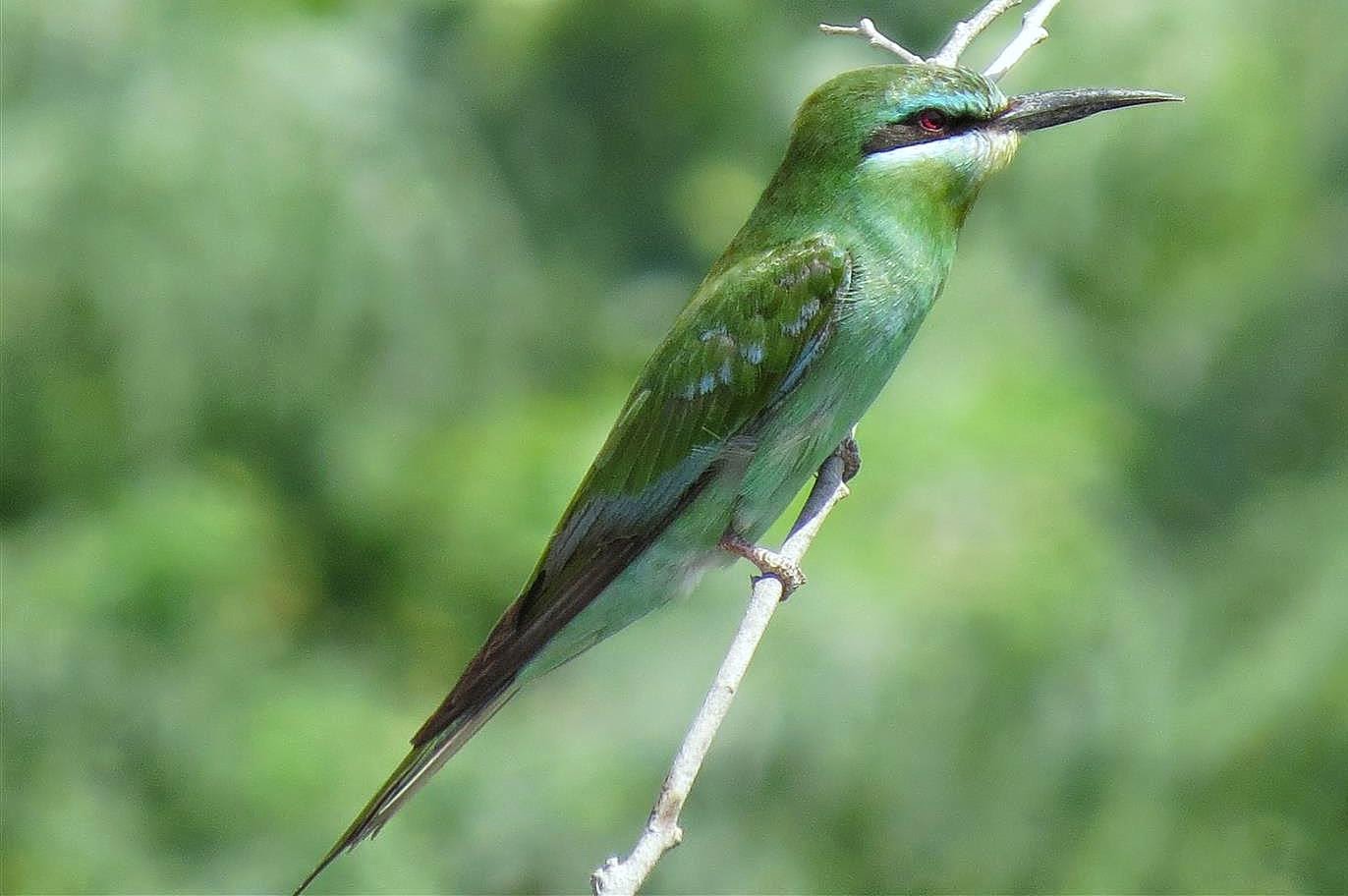
blue-cheeked bee-eater

Blue-cheeked bee-eater are still passing through and can still be seen near any water body with bushes.

"fulvescens" greater spotted eagle

Although I had left the parts of Raysut were most of the eagles can be found, a small number drifted over this area. One was a "fulvescens" greater spotted eagle

second view of "fulvescens" greater spotted eagle

I sent these pictures to BirdForum which established they were the fulvescens variant of greater spotted eagle.

head-on view of "fulvescens" greater spotted eagle


Meanwhile back on the ground, I didn't find any new additions to my Oman list at the treated water lake.

However, there were flamingo there for the first time.

juvenile little grebe

More evidence that little grebe breed there with the presence of a juvenile little grebe.

Daurian shrike

In September all the red-tailed shrike were Turkestan shrike in the Salalah area. Slowly the proportion which are Daurian shrike has increased but Turkestan is still more common.


two common snipe

One of the better moments at the treated water lake was the views of two common snipe. I managed to get close to them without them noticing. This is always tricky with snipe.

common snipe

This lake is one of the best places in Dhofar I have been to to guarantee the presence of snipes.

second view of common snipe

After leaving the lake I headed further east to Khawr Mughsail which is 40 kilometres out of the city.

The birding here proved to be excellent. I had prolonged views of one difficult bird in particular. I will blog about Mughsail next.

Wednesday, 2 April 2014

North of Hayer part one

On Saturday, I visited a section of the Riyadh river along Wadi Hanifah that I haven't been to for a long time. This is a section north of Al Hayer town. In part I chose to go there because there is so much disruption south of Al Hayer at the moment caused by the building of a leisure area along the river.

This northern stretch of the river gave me so many species and photographs I am splitting the write-up into two. This one looks at what I saw in the morning. The next one will look after midday.

graceful prinia

I remember visiting this northern area a few times in my first year in Saudi Arabia and I don't really understand why I stopped. One memory I have is of easily seeing graceful prinia. This was before I realised how common they are and in so many habitats in Saudi Arabia.

another angle on the graceful prinia

As you can see they gave me good views once again.

pied wheatear

However the first bird of any note that I saw on Saturday morning was a pied wheatear.  Ironically this was the first bird Bernard Bracken and I saw on Friday morning when we visited east Salbukh wetland. The co-incidence didn't end there. In both cases, it was the only pied wheatear seen all day.

laughing dove

As I descended into the valley I kept an eye out for birds on the slopes. Most were lone laughing dove or collared dove sitting out. 

sand partridge

However, one wasn't. It was a sand partridge.  Indeed I remember them when I used to visit.

second view of the sand partridge

I was a bit concerned that this was just a single bird.

brown-necked raven

Flying across the valley early on were two brown necked raven.

Turkestan shrike

Another early sighting was a male Turkestan shrike.

streaked weaver

Down in the wadi itself, there are clearings in the reeds and a few places where the water spills out.  In one such place I stopped for half an hour and stood still to see what would happen.  

I noticed a newly constructed streaked weaver nest. The male in full breeding plumage was around and seemed to be attracting female visitors.

common snipe

I must have been well hidden in some reeds because a common snipe flew in and landed two metres in front of me. Being well hidden also meant I couldn't get a full picture through the reeds either. 

red avadavat

Both red avadavat and Indian silverbill visited the same place though I only managed to photograph the former. Unlike the weavers, the avadavats strangely breed in November (or at least that's when I have seen them in breeding plumage). I believe the photographed bird is non breeding male by the grey appearance below.

white-eared bulbul

White eared bulbul as usual along Wadi Hanifah was common in many habitats. A single white spectacled bulbul was also observed. 

tree pipit

In among newly planted palms were two of only a few passage birds seen all day. There were two tree pipit.


Siberian stonechat

During the morning I moved slowly down towards the Al Hayer dam.  Birds seen near-by included a male Siberian stonechat. 

At the dam itself was a white throated kingfisher, an osprey and a marsh harrier.  The marsh harrier would not tolerate the osprey and chased it off.

the river by the dam

All the reeds have been totally cleared north of the dam. It looks like another leisure project.

little green bee-eater

Even in this denuded area, some extra species for the day were seen. These were little green bee-eater, barn swallow and pale crag martin.


common moorhen

Further upstream, the reeds are intact. Here is an area with many moorhen

grey heron

There were also eight grey heron near-by mostly spending their time on the valley's slopes rather than by the water.


juvenile moorhen

At one point along the river, I came across six juvenile moorhen feeding together. They must all have been recently fully fledged and chose to spend time together. This was a new observation for me.

This observation occurred just before noon. The next blog continues the report on the area with what was seen in the afternoon.


Saturday, 14 September 2013

Kharj and the Kharj road

Lou Regenmorter and I ventured down to Kharj today. It's a farming district 70 kilometres south west of Riyadh. Indeed Kharj and near-by Dillam are the last green areas before the "empty quarter" of nearly pure desert to the south.

spur winged lapwing

We got very mixed results. We chose to start at the east end of wadi Thulaymah. This wadi houses Kharj's waste water river like a mini version of Wadi Hanifah and Al Hayer near Riyadh. It used to end in a small lake system which was good for birds. However we discovered this has been land filled since our last visit. 

spur winged lapwing in flight

Furthermore, when we found the end of the stream, although it looked really good for birds was a shooting alley for illegal hunters.

Despite this we found a decent sized flock of spur winged lapwing in the area and even better a large flock of chestnut bellied sandgrouse flew over. These birds used to drink regularly at roughly the same time most days at the lakes. It appears they still visit the area and have probably found a new drinking spot near-by. 

If you haven't seen chestnut bellied sandgrouse, this is probably the best reason to go to Kharj.

The stream at the east end of Wadi Thulaymah

In the stream were two very jumpy green sandpiper and a single Temminck's stint. Understandably, they didn't allow close contact but I got a few record shots of the stint (not shown).

Namaqua dove

Other birds in this area were a little bittern, two squacco heron, many house sparrow, a marsh harrier, black bush robin, laughing dove, feral pigeon, collared dove  and little green bee-eater.

Time is precious at this time of the year because it heats up rapidly. So we made the quick decision to rapidly tour further upstream and then to move back towards Riyadh down the Kharj road and try our luck at the lake near the cricket club.

On our way upstream we added black crowned night heron, Namaqua dove and Indian silverbill to our sightings. There were also some glimpses of some probable European reed warbler

The reeds are very thick along much of the "river" and that can be quite frustrating.

Lake near the cricket club

The one similarity we found at the cricket club lake with Kharj was the nervousness of the birds. Though that might in part be due to the lack of any real cover for the bird watcher. I had to photograph from great distances but Lou's spotting scope was invaluable. These things apart, the birding was extremely good.

two glossy ibis

Before the car had even parked up, Lou spotted two glossy ibis overhead.

It was immediately obvious the lake had many tens of coot, moorhen and little grebe as usual.

Locally resident pale crag martin and passage barn swallow were hawking for insects overhead.

We didn't know what waders to expect as they come in waves and many pass through quickly at this time of year.

Kentish plover, black winged stilt and common sandpiper

Ruff and black winged stilt were the most numerous with several tens around. The latter is probably a breeder here. Smaller but still significant numbers of both common sandpiper and green sandpiper were present.

The related trio of Kentish plover, little ringed plover and ringed plover were seen. Spur winged lapwing is almost always seen when we visit and was here again.

More, unexpectedly a single grey plover was observed. They are rarely seen this far inland.

two common snipe

Lou first saw it and two common snipe near a large flock of ruff. These were my first snipe since the spring.

Common ringed plover and common snipe

Mallard are known residents here but today I didn't see any. I suspect they hid deep. We have also seen Ferruginous duck here in all seasons but not every time. The good news is that this was seen today.  less commonly, five teal were also on the lake.

Ferruginous duck

I suspect the lake will be good for ducks this winter. 

To finish the picture and name all the observed birds,  graceful prinia and house sparrow were seen in and near the reeds. Little green bee-eater was common too.

The lake proved an excellent end to the morning after a slightly disappointing start.  

Sunday, 13 May 2012

Wadi Arar

There are probably two main reasons very little birding has ever taken place in Arar, northern borders, KSA.


The first is perceived lack of accessibility. Its in the proverbial middle of nowhere. And yet its easy and cheap to fly in from Riyadh or Jeddah.

The second is the lack of rain and the presumption that there is very little water on the ground and associated vegetation.

Arar averages only 14mm of rain a year which even compares unfavourably with 95mm in Riyadh.  This seems to support the case.

However, the presumption of no water and lack of vegetation is wrong. The city is well watered and so trees and greenery grows in the urban areas. More importantly and perhaps the most exciting development is the new city waste water treatment plant.


purple heron

The cleaned up waste water is diverted into wadi Arar north of the city. Here it goes into the first of four lakes which are connected by streams. The lakes cascade down the wadi.  Reeds and bushes are springing up all around the new lakes. And because its in the middle of a very dry area for a hundred or more kilometres, it acts as a magnet for birds.

wadi Arar

I was only there for four and a half hours on Thursday but I identified 29 species.  Three were new to me in Saudi Arabia. Two of them were warblers and I am going to write about warblers separately in the next blog.


water inlet pipe from the treatment plant

The biggest birds were mostly from the heron family. There were purple heron, several squacco heron, little bittern and one little egret on the day. My guess is their population will grow with the reed beds. Until then they are vulnerable to hunters.

squacco heron

There are shallow sides and wetland at several points along the lakes. These were supporting some waders.

common sandpiper

I observed three types of sandpiper: common sandpiper, wood sandpiper and green sandpiper.

wood sandpiper and common snipe

Next to one of the wood sandpiper I was extremely surprised to see a common snipe. It has been at least a month since the last one left the Riyadh area but of course Arar is a long way further north.  

ringed plover

Two other waders there were ringed plover and black winged stilt.

yellow wagtail

Yellow wagtail were attracted to the wetlands. I failed to see a feldegg among them even though this is the breeding sub species in most of the middle East. This is in accord with historical recorders in Saudi Arabia who also noticed that feldegg is an earlier returner than most other yellow wagtail sub species.

tawny pipit

Tawny pipit was also present. Once again they have already left the Riyadh area.

woodchat shrike  

Three types of shrike were in the area. One was woodchat shrike which is an early passage bird . Another was red-backed shrike which is a late passage bird. I can only assume the woodchat shrike seen are lingering because they are close to their target breeding area a few hundred kilometres to the north.

red-backed shrike

The third one was Turkestan shrike. I have no idea whether it winters in Arar or whether these are all passage birds. 

spotted flycatcher

Like red backed shrike, spotted flycatcher is a late spring passage bird.


black-eared wheatear

There were several northern wheatear in the area but no Isabelline wheatear were seen all weekend. The only other wheatear was a single bird above. I had trouble deciding between Finsch's wheatear and black-eared wheatear. However the tail pattern fits black-eared wheatear

whinchat

As in the city itself, a few whinchat were seen.  

namaqua dove

Apart from the warblers which I will report on in the next blog, the other species in the wadi were barn swallow, rufous bush robin, namaqua dove, house sparrow, a beautiful if flighty European roller and a pair of trumpeter finch.

house sparrow

The trumpeter finch were exceptional because they weren't seen at the waters edge but in the hinterland among some building rubble. This was the first time I had seen this bird in Saudi Arabia and was a welcome addition to my Saudi list.