Showing posts with label white stork. Show all posts

Friday, 10 April 2015

The homeward journey

It has been said the spring passage in the desert here is very patchy and I agree. At any one place and on one day it can be huge such as at Ghaftain on Saturday morning. In other places and times you can barely see it.

It was thin on my way back to Salalah last Saturday even though I visited three places: Muntasar Oasis, Qatbit motel gardens and Al Beed farm. Of course none of these sites were seen in early morning or early evening but I am confident I would have found most of the birds. I look deep.

At Muntasar, four unidentifed sandgrouse flew off just as I arrived. The total passage selection was common redstart, lesser whitethroat, yellow wagtail, green sandpiper, barn swallow and house martin.

common redstart

There was only one each of common redstart and house martin.

yellow wagtail

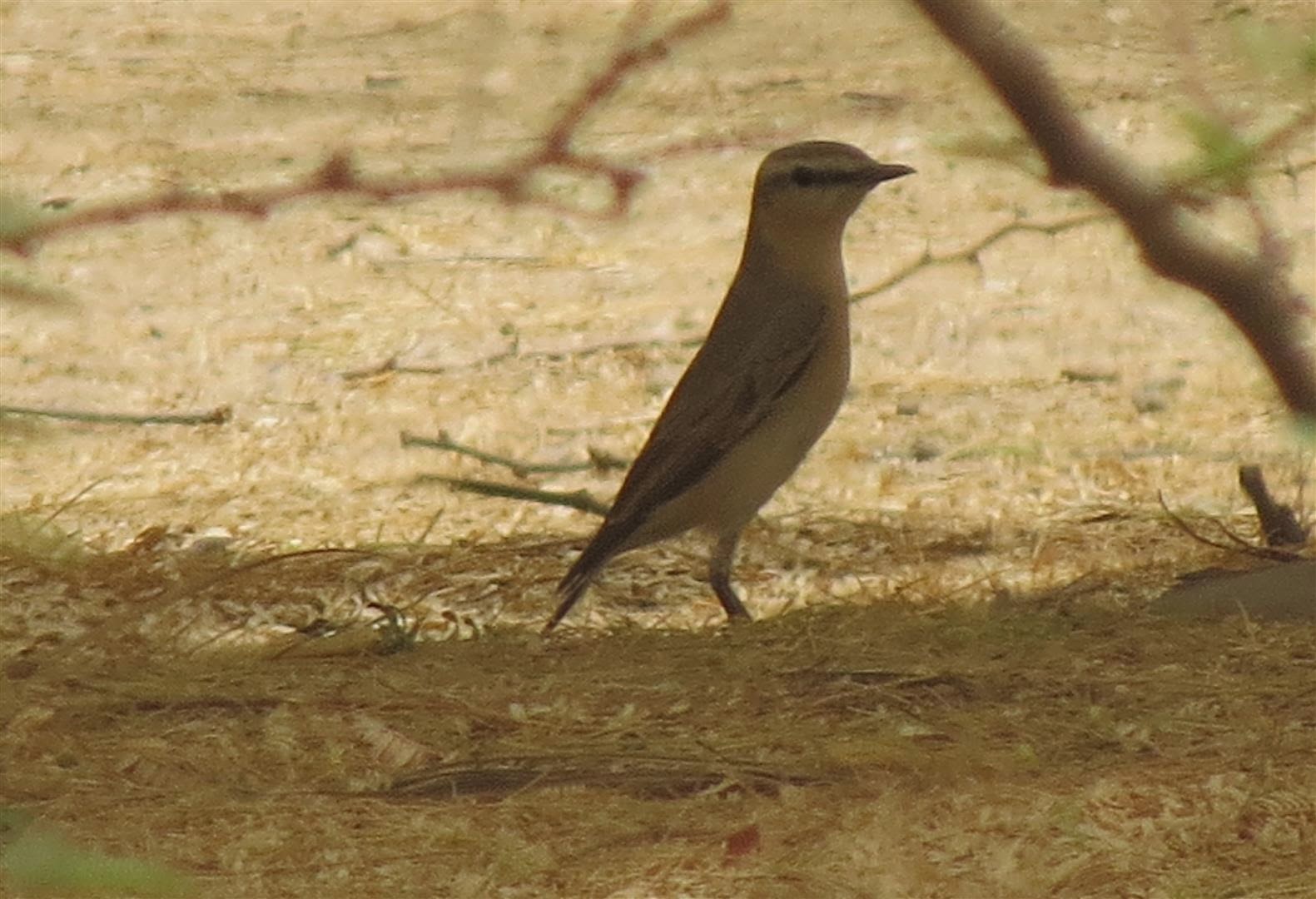
There was also a desert wheatear. This one could have been there all winter or passing through. Most have left the region now.

desert wheatear

Next stop was at Qatbit which many of you will know is upsetting me. Many low bushes have been cleared, part of the front is having new buildings and there is big disturbance. It simply can't be as good as it used to be.

tree pipit

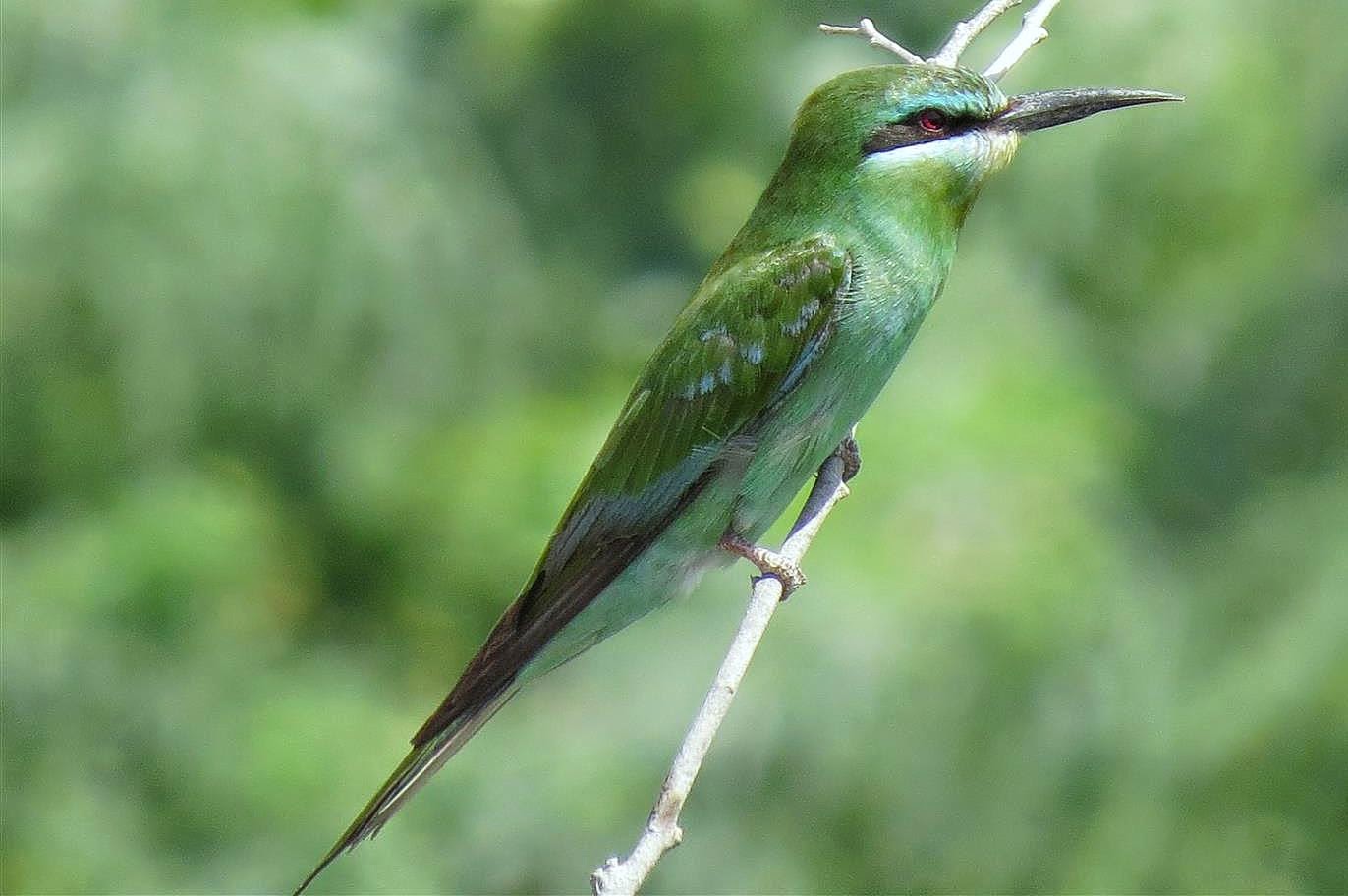
Passage birds were restricted to tree pipit, barn swallow (very many), lesser whitethroat and a single blue-cheeked bee-eater. This was actually the first and to this point only larger bee-eater I have seen all spring. European bee-eater is still not on my Oman list.

Isabelline wheatear

On to Al Beed farm by early afternoon and the temperatures were soaring.

In the little cluster of trees and bushes which can produce very good results, this time were only two migrants: Menetries's warbler and rufous bush robin.

male black-crowned sparrow-lark

Out in the fields, I saw only one migrant. The rest were either house sparrow, black-crowned sparrow-lark, collared dove or kestrel.

house sparrow

The one migrant was a white stork.

white stork cooling off

There have been between 2 and 4 white stork at Al Beed all winter. This time there was just one bird which could be a different one.

It was cooling off my spending much time directly under the water sprays. This is a well known trait of white stork in hot conditions. Indeed with water sprays available they are known to stay in much hotter conditions.

white stork on the move

This was almost the last bird seen before I headed back to Salalah non-stop on the final leg of a successful weekend away.

Thursday, 22 January 2015

A twitch at Al Beed farm

I drove a 325 Km round trip on Tuesday to Al Beed desert farm. I didn't go for larks though I saw black crowned sparrow lark, greater crested lark and hoopoe lark.

Instead I went to twitch a juvenile lanner falcon that had been reported there twice in the last month.

black-crowned sparrow lark

As luck would have it I saw it almost on arrival over the first field but from great distance.

I headed in the general direction of where I thought it had gone and found it up a tree in the the cluster of about 8 trees on the driveway to the main entrance.

This small cluster of trees has generated some wonderful birds over time.

first winter lanner falcon

Although I got good views of the bird in flight, it was so close and fast I failed to get good photos. When it landed trees three times, each time it was totally obscured.

The plumage fooled me at first because I was looking for the reported juvenile bird yet this bird had adult body markings but juvenile upper parts. In the Middle East and North Africa that means cinnamon brown upper parts. Furthermore its yellow leg and cere colour are the adult colours. Juveniles start out with bluish-grey legs and cere.

All is explained in "Field identification in large falcons in the Western Palearctic" by Hadoram Shirihai, Dick Forsman and David. A Christie for British Birds 1998.

 "Juveniles (meaning  of the large falcons) undergo a partial body moult during their first winter and a complete moult in the first spring/summer, although a few juvenile feathers, especially wing-coverts, are sometimes still retained".

As for the legs and eyes: "Juveniles are, in general, longer-tailed and narrower winged than adults, and in most cases have bluish to greyish (not clear yellow)
feet, cere and orbital ring; on some species, this colour may be retained through
to their first winter".

So a combination of adult body, leg and eye features but juvenile wing features is expected at this time of year.

Others before me have identified this particular bird as a lanner falcon and I totally concur.

The very long and narrow wings with blunt ends favours lanner falcon over saker which is the only alternative with the cinnamon-brown upper-parts.

blunt wing edge with juvenile markings

The head pattern (not easily seen on the top photo) and the cross-barring on parts of the body (just visible on the photo) are also consistent with the lanner falcon identification.

a pile of collared dove feathers

Lanner falcon favour eating birds while saker favours rodents. Three of the tall trees had plenty of piles of collared dove feathers under them.

collared dove at the farm

I can see why it has chosen this spot to winter with at least 40 collared dove and a small number of laughing dove sharing the small small space.

The same trees are housing three or more common chiffchaff at the moment too.

common kestrel

There are many locusts in the fodder fields which had the attention of at least three common kestrel. 

desert wheatear

Back by the cluster of trees a desert wheatear and an Asian desert warbler had paired up. Wherever the wheatear went the warbler followed.

Asian desert warbler

This pairing is known to take place with both African desert warbler and Asian desert warbler with desert wheatear.

Asian desert warbler takes off

Elsewhere there was a Asian grey shrike (aucheri) on top of a tractor.

Asian grey shrike (aucheri)

House sparrow are on the farm. Most of them were seen near the cow sheds but one was on one of the tall trees that the lanner falcon likes.

house sparrow

There is another cluster of trees and bushes in another part of the farm. I headed towards it before leaving. Unfortunately it was being tended by a gardener and was too disturbed at that moment for good birding. Nevertheless I passed a large field on the way there and as I did so the two white stork and one grey heron I had seen at the farm on previous visits flew over me.

white stork

Very close to the car, I passed a small group of tawny pipit. The first bird had a crown feathers raised which I have never seen in a pipit before. It gives it an almost lark-like feel.

tawny pipit with raised crown feathers

A more normal looking tawny pipit in the same group is shown below.

tawny pipit

In summary this was a twitch that paid off. It was a long way to go if there had been no dividend.

I am satisfied with the result. I had good views of the bird but it is a shame I couldn't get more pictures. In birding you can rarely have it all.

Tuesday, 6 January 2015

Al Beed farm in January

Once a month I have been travelling north into the desert to bird. My destinations vary but usually at least include Al Beed farm and Qatbeet motel gardens. These were my two stops last Sunday.

I arrived at the driveway to the farm just as dawn had broken and immediately found large flock of black-crowned sparrow lark.  I stopped and checked them out.

black-crowned sparrow lark

There were all ages and both genders present in a flock of about 30 birds. The bird above seems to be moulting into his first adult male plumage.

adult male black-crowned sparrow lark

The females and more particularly some older juveniles are sometimes mistaken for rarer larks especially Dunn's lark. The very young birds have breast streaking and are not confused but older ones often have pinkish bills (like Dunn's lark)  and have very weak breast markings. Their head streaks (again like Dunn's lark) can look surprisingly bold in certain light too.


young black crowned sparrow lark

The reason I checked the flock so thoroughly was to seek out any rarer larks.

close up of another young black crowned sparrow lark

The only find were three hoopoe lark near-by which cannot be mistaken for anything else.

hoopoe lark

On the farm itself in a pivot field there was a large mobile flock of greater short toed lark which were extremely flighty. I couldn't get close enough to them to see if there were any odd birds out. This was quite frustrating.

young desert wheatear

Nearer the farm outhouses the bird life was more varied. There were four desert wheatear around including this young bird.

second view of desert wheatear

I counted six Asian desert warbler in and around a row of bushes. They often follow desert wheatear around but I found no signs of this behaviour this time.

Asian desert warbler

A lanner falcon has been reported at the farm recently but I could only see two kestrel.

kestrel hovering

Trying to make sense of the picture above, the kestrel is facing away and is using is tail (in the foreground) like a rudder to keep in a hovering position.

white stork

Elsewhere on the farm two white stork were in almost the same position in the same field as I saw them four weeks ago.

two white stork

In the middle of this field next to the pivot bar were a few patches of water where the sprayers had placed too much water. These types of pool are often some of the best birding on any desert farm. 

wood sandpiper

These pools had a common snipe, two Temminck's stint and three wood sandpiper. In the passage season much more can often be seen at places like this.

After two hours at Al Beed farm I headed on north towards Qatbeet motel gardens. The birding here was excellent. I added three birds to my Oman list including a vagrant. This place has proved itself special time and time again for birders. The next blog will recount what I saw. 

Tuesday, 18 November 2014

Raysut revisited

On Friday morning, I went to Raysut again and visited the lagoons and the treated water lake. I did not go to the rubbish dump this time.

The lagoons were full of white stork and steppe eagle.

white stork

The white stork population has increased since my last visit and I calculate there were over 250 present.  I understand their numbers usually continue to increase for the next month or so.

white storks

There were so many white stork grounded that I made a decision not to take a close look at the other birds in the lagoons. i would have made up to 250 resting white stork fly and that was too much for me. I have no idea what other birds were in the water or at the water side.

Next time  I visit and if there are only a few storks around, I will go to the water's edge.

steppe eagle

There were steppe eagle of all ages scattered on the ground and on the hill side. One of the birders reported last week that there were 810 in the Raysut area though I have not seen numbers quite that high. In the lagoon on Friday I saw about 120. Many would have been nearer the rubbish dump.

juvenile eastern imperial eagle

I looked for exceptions and came across a juvenile Eastern Imperial eagle.

My time in the lagoons was much shorter than planned. I then moved on to the treated water lake.

The interesting terns I found last week had unfortunately moved on.

blue-cheeked bee-eater

Blue-cheeked bee-eater are still passing through and can still be seen near any water body with bushes.

"fulvescens" greater spotted eagle

Although I had left the parts of Raysut were most of the eagles can be found, a small number drifted over this area. One was a "fulvescens" greater spotted eagle. 

second view of "fulvescens" greater spotted eagle

I sent these pictures to BirdForum which established they were the fulvescens variant of greater spotted eagle.

head-on view of "fulvescens" greater spotted eagle


Meanwhile back on the ground, I didn't find any new additions to my Oman list at the treated water lake.

However, there were flamingo there for the first time.

juvenile little grebe

More evidence that little grebe breed there with the presence of a juvenile little grebe.

Daurian shrike

In September all the red-tailed shrike were Turkestan shrike in the Salalah area. Slowly the proportion which are Daurian shrike has increased but Turkestan is still more common.


two common snipe

One of the better moments at the treated water lake was the views of two common snipe. I managed to get close to them without them noticing. This is always tricky with snipe.

common snipe

This lake is one of the best places in Dhofar I have been to to guarantee the presence of snipes.

second view of common snipe

After leaving the lake I headed further east to Khawr Mughsail which is 40 kilometres out of the city.

The birding here proved to be excellent. I had prolonged views of one difficult bird in particular. I will blog about Mughsail next.

Friday, 24 October 2014

Raysut treated water lake revisited

Yesterday late afternoon, I visited Raysut treated water lake for the second time. The water level was higher but still incredibly clean. The treatment plant must be working to very high standards.

This does of course mean there are very few reeds which need more nutrients and less flies than most plants!

However there were still a good variety of birds and it was a pleasure to bird in such a clean environment.

I have very mixed emotions about my visit. I thought I glimpsed a long-tailed shrike which is a vagrant to these parts but never saw it long enough or got a photo. I searched very hard for it again but failed. I won't claim this sighting but I will go back as soon as I can to look again.

Blue-cheeked bee-eater

As partial compensation, I came across five blue-cheeked bee-eater.  This was the first sighting by me of them in Oman. I have yet to see a European bee-eater here.

Two blue-cheeked bee-eater

In the same tree as a blue-cheeked bee-eater at one stage were a few Tristram's starling. The lake is popular with house crow too.

Tristram's starling

Other land birds included Ruepell's weaver and African silverbill.

The lake

The African silverbill were spending much of their time preening.

African silverbill

Nearer the water's edge, several citrine wagtail were seen. The numbers have increased since last time.

citrine wagtail

Some were moulting. I assume from juvenile monochrome into brighter colours.

white stork in the sky

Large numbers of white stork spend the winter at the near-by Salalah lagoons and Raysut rubbish tip so it wasn't surprising that 45 or so passed over the far end of the lake at one stage. Three steppe eagle were with them.

black winged stilt

Waders included several black-winged stilt, grey heron, squacco heron and a single glossy ibis. 

green sandpiper

All of trio: wood sandpiper, common sandpiper and green sandpiper were there.

wood sandpiper

The far end looks good terrain for collared pratincole but non seen so far. Lets see what the winter brings.