Showing posts with label spotted thick-knee. Show all posts

Thursday, 27 August 2015

Al Baleed in August


My first birding session when back in Oman was on Monday afternoon when I made it over to Al Baleed, Archaeological Park. Sadly it is being developed in a way that I don't believe is sympathetic to the environment. However there are still good birds to be seen. 

There is always a good chance to see spotted thick-knee here. In my case I have seen them on roughly 60% of my visits but never in the same place as yet.

spotted thick-knee bird 1

This time I saw three together just as I was leaving around 30 minutes before sunset. This was in the tended garden area which displays flora from different parts of the country.

spotted thick-knee bird 2

It was good bird to see even if it was left late.

Indeed the birding started very quietly and got better as time progressed.


European collared dove

On arrival, the most obvious birds were European collared dove out in the open. The odd Ruppell's weaver was also seen in the bushier areas.

little grebe

On the water, birds were restricted to little grebe, common moorhen and the odd sooty gull.

common moorhen

The sand bar between the fresh water and the sea is usually a good place for waders like so many other khawrs in Dhofar. However building has been allowed a little too close to the bar. Nevertheless there were some waders at the end furthest away.

mixed waders

The majority of waders there were greenshank though there were a small number of redshank and ruddy turnstone too.

common greenshank

Over the stretch of fresh water closest to the bar, a single small tern, most probably a Saunders's tern was seen.


Saunders's tern

I almost missed seeing one of the largest birds at the bar as it was well camouflaged. There was a juvenile striated heron.

juvenile striated heron 1

It's bent profile and slow movement nearly fooled me.

juvenile striated heron 2

The beach at Al Baleed is an important part of any birding visit to the park.

sooty gull

All year round on most Dhofar beaches, you can come across sooty gull and great crested tern. Once these are accounted for, then I start looking what else is there.
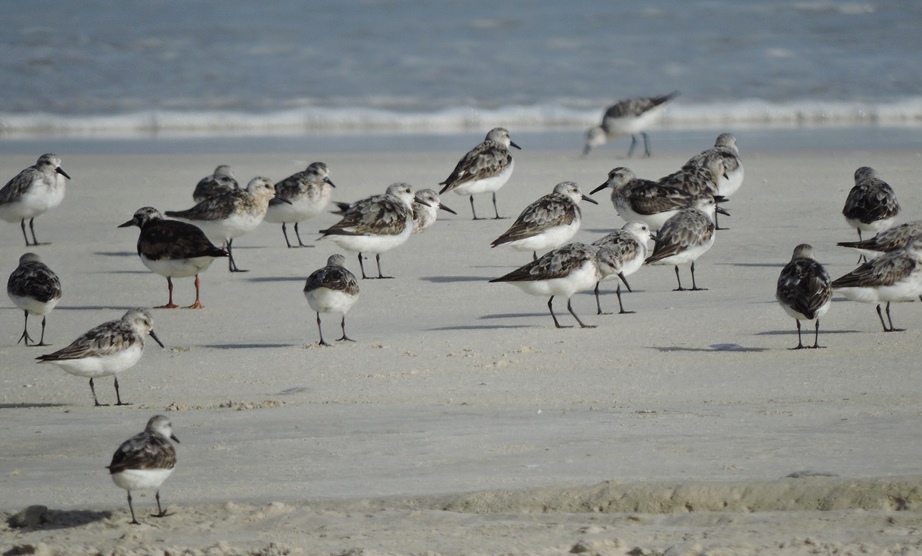
mostly sanderling

This time there was a large flock of sanderling. This species is rarely seen in the winter but large numbers pass through in early autumn and late spring.

ruddy turnstone

The presence of ruddy turnstone follows a similar pattern.

squacco heron

Moving back from the beach and before I saw the spotted thick-knee, I had a second look at the freshwater inlet. I got better views of the squacco heron on the banks. There was no sign of any of the closely related Indian pond heron. Al Baleed is a good place to see them in winter.

In the gardens, I fleetingly saw a Bruce's green pigeon.

African silverbill

Passerines were mostly restricted to African silverbill and cinnamon-breasted bunting. Though there was one migrant red-backed shrike.

I managed to find time to go birding on both Tuesday and Wednesday. I will blog about that next.

Thursday, 20 November 2014

A walk near East Khawr

On Saturday I stayed close to home with a walk in the area around East Khawr. I started in the bush north of the Khawr, walked passed the khawr and into Dahariz Park.


I got off to a good start seeing a family group of spotted thick-knee under a tree.

I have seen spotted thick-knee regularly in Salalah but never in the car.

one adult spotted thick-knee

The two adults were either side of the juvenile which was further under the tree.

the other adult spotted thick-knee

There are no spots, only streaks on juveniles birds.

juvenile spotted thick-knee

I turned away for a moment and when I turned back the juvenile must have walked into deeper cover. All I could see was the two adults looking like they were standing guard.

spotted thick-knees

Apart from the thick-knees the bush held remarkably few birds although I did spot a Namaqua dove along with the normal array of collared dove and laughing dove.

blue-cheeked bee-eater

A small flock of blue-cheeked bee-eater dropped down for a short while too.

marsh harrier

The khawr was not the primary object of my viewing on Saturday. As I walked passed I saw two greater spotted eagle and four marsh harrier. At the seaward end were a typical group of a few hundred waders of which ruff and Kentish plover were the most common. Obviously I made a quick scan for any thing extraordinary.

flamingo squabbling

There are still increasing numbers of flamingo in the lagoon which now include several adults. There seem to be squabbles going on between them with lots of posturing.


two flamingo give ground

The three greater white fronted goose were still there and are quite tame.

greater white fronted goose

Three hundred metres west of East Khawr (Khawr Dahariz according to the locals) is Dahariz Park. I have visited there before chiefly to look for passerines.

Dahariz Park

Indeed that is what I was looking for on Saturday.

yellow wagtail

There were plenty of yellow wagtail, white wagtail and Ruepell's weaver as expected. There was also lots of noise from the resident Indian house crow.

Suddenly they flushed the target they were mobbing. It was a dark morph male Crested honey buzzard. The tail pattern is quite characteristic.

male crested honey buzzard

As I moved round the park, I came across a second crested honey buzzard which was an adult female. This time the gorget is quite diagnostic as the tail pattern is similar to a male European honey buzzard.

female honey buzzard

The photo above shows the tail pattern whereas the photo below is a more classic pose.

second view of female crested honey buzzard

There is a strong possibility these were the same two birds I saw in flight over my home five days before.

Ruepell's weaver

The buzzards were eventually chased out of the park by the crows and I returned to looking at smaller birds. This young male Ruepell's weaver made me wonder if they breed twice a year. certainly they breed in the khareef season (monsoon) in summer but will they breed again in early spring which is February here. 

Hoopoe

Parks are among the best places to see wintering hoopoe.

Bluethroat

Finally, having seen my first bluethroat in Oman the day before, one popped up in the park. It was much more approachable too.

During the week, I have been taking a closer look at Sawnowt farm, I 'll report on that in the next blog.

Tuesday, 30 September 2014

Raysut treated water lake

I finally made it to Raysut treated water lake on Saturday, a day later than originally planned.

It was not what I expected. The water was very clean so the sewage works is almost certainly state-of-the art.

This meant the lake held clean water and reeds were none existent. Flies were few as well. All this didn't mean there were no birds it just meant they were different than anticipated.

Furthermore, although it is inland the sea is barely a kilometre away and so coastal birds were present.

Little grebe

Nevertheless one of the first birds seen was little grebe. There appears to be a reasonable population there including young birds (see picture above).

The Raysut treated water lake

Black winged stilt was also seen right at the start.

black winged stilts

White cheeked tern was there showing how close to the sea the site is.


white cheeked tern

There was one clump of trees which Indian house crow were claiming for themselves.

Indian house crows

This was yet another water body in the Salalah area with glossy ibis.

glossy ibis

There are a few small pools at the edge of the main water body.

pools at the side of the lake

Temminck's stint was quite common at these.

Temminck's stint

The pools and the sides of the main water were teeming with citrine wagtail. I also saw two yellow wagtail.

citrine wagtail

Although there were a small number of white cheeked tern, the main tern was white winged black tern.

juvenile white winged black tern

Gulls were far more numerous still. Indeed there were well over 150 sooty gull in the area and probably 20 or so Heuglin's gull. It was difficult to assess the exact number because they spent much of their time within the treatment plant out of sight of the general public.

Steppe gull

I was looking out for other gulls. One or two of the large white headed gulls were too pale for Heuglin's gull.The one above was identified with the help of BirdForum as a Steppe gull. This was my first addition to my Oman list of the day.

stained grey heron

A stained grey heron caught my attention and at one stage I thought I may have found a vagrant black-headed heron.

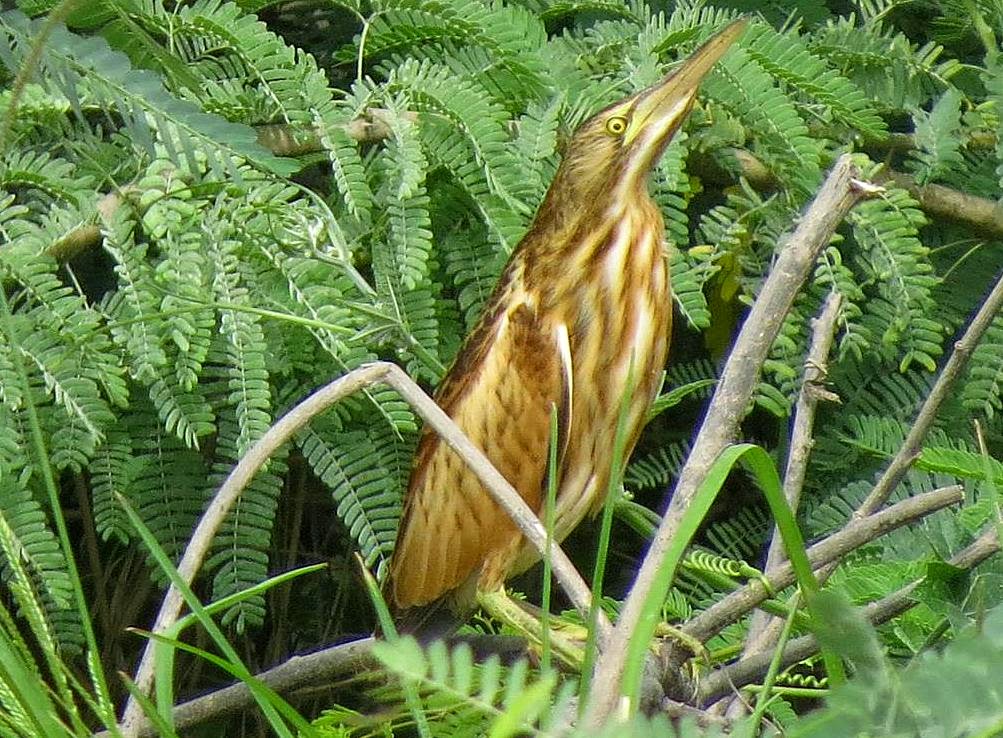
adult little bittern

I had been glimpsing a small bittern all session when I accidentally flushed a juvenile bird over to the far bank. To my surprise when I scanned where it had gone, an adult bird flew straight into view. It was an adult little bittern.

juvenile little bittern

It disappeared from view, only for the juvenile to come straight out into the open giving me better views than the adult.

second pose of juvenile little bittern

I was a little disappointed it wasn't a yellow bittern but that will surely come now i am based in Salalah.

black crowned night heron

Soon after the views of the little bittern, I saw the second addition to my Oman list of the day. Two men were walking in the wadi who flushed a juvenile black crowned night heron. I just  managed a photograph before it disappeared.

I worked hard at the water all day and only got good rewards towards the end. 

However before I left the area completely, I chose to cross the road and spend a few minutes in the dry part of the wadi.


spotted thick-knee

I seem to have the knack of stumbling across spotted thick-knee. This time there were at least three and probably four birds.

two spotted thick-knees

My tip for seeing this bird, is get out of your car and walk. They are unlikely to be seen from a car unless they are within 3 metres of your window. Even then you could miss them.